Author: News

  • Criticism of Akiba Driven More by Politics Than Principle — Victor Egba

    Criticism of Akiba Driven More by Politics Than Principle — Victor Egba

    Admin

    The recent wave of criticism directed at the Special Adviser on General Duties to the Cross River State Government, Barr. Ekpeyong Akiba, appears to be driven more by politics than principle. In every administration, officials who consistently defend government policies and communicate its achievements often become targets of coordinated political attacks.

    According to public affairs analyst and legal practitioner, Barr. Victor Egba, has stated that the sustained criticism of Akiba is not based on facts but is instead aimed at undermining one of the most visible defenders of Governor Senator Prince Bassey Otu’s People First administration.

    Egba contends that Akiba’s growing influence in the state’s political discourse has unsettled both opposition figures and individuals seeking political relevance. He maintains that much of the criticism reflects political rivalry rather than an objective assessment of the Special Adviser’s role and performance.

    He further notes that Cross River State’s political landscape is evolving and that significant reforms often attract resistance. While acknowledging that criticism is an essential component of democracy, Egba emphasizes that it should be constructive, evidence-based, and focused on issues rather than personalities.

    He argues that public officials should be judged by their service, performance, and contributions to governance, rather than by politically motivated campaigns intended to diminish their influence.

  • Gov Otu Approves Automatic Employment For Two NYSC Doctors At Passing-Out Parade

    Gov Otu Approves Automatic Employment For Two NYSC Doctors At Passing-Out Parade

    By Admin 

    Cross River State Governor, Senator Prince Bassey Otu, has approved the automatic employment of two medical doctors who successfully completed their National Youth Service Corps (NYSC) programme in the state.

    The beneficiaries, Dr. Prince Chinonyerem (State Code: CR/25B/0158) and Dr. Kingsley Udochukwu (State Code: CR/25B/0233), served at the General Hospital, Calabar, where they distinguished themselves through their dedication and outstanding service during their one-year national assignment.

    The announcement was made on behalf of the Governor by the Cross River State Commissioner for Health, Dr. Henry Egbe, during the 2025 Batch ‘B’ Stream I Passing-Out Parade held at the Calabar Municipal Council Hall.

    Speaking at the event, Dr. Egbe said Governor Otu was pleased with the doctors’ selfless commitment to improving healthcare delivery in the state and approved their immediate employment in recognition of their exemplary service.

    Responding to the gesture, the NYSC State Coordinator in Cross River State, Mrs. Joke Oyenuga, who represented the Director-General of the Scheme, commended the state government for rewarding excellence and supporting young professionals.

    She urged the outgoing corps members to remain worthy ambassadors of the NYSC by applying the knowledge, experience, and skills acquired during their service year. Mrs. Oyenuga also encouraged them to embrace entrepreneurship and innovation, leveraging their acquired skills to create employment opportunities for themselves and others.

    The ceremony also featured the presentation of commendation letters to corps members who excelled in various aspects of community service. Several of the outgoing corps members expressed gratitude for the opportunities and memorable experiences they gained during their service year in Cross River State.

  • Cross River Terminates Sydney Construction’s Road Contract Over Poor Performance

    Cross River Terminates Sydney Construction’s Road Contract Over Poor Performance

    By Admin 

    The Cross River State Government has terminated the contract awarded to Sydney Construction Company for the construction of the Obanliku–Obudu–Abucheche–Mfom–Okpoma Road, citing poor performance and failure to meet contractual obligations.

    The Commissioner for Works and Infrastructure, Hon. Pius Edet, announced the decision following a comprehensive inspection of the project carried out by a team of engineers from the ministry.

    According to the commissioner, the assessment revealed that the contractor had made unsatisfactory progress and failed to execute the project in accordance with the approved specifications, quality standards, and the terms of the contract.

    Edet said the government’s decision to revoke the contract was in line with its commitment to ensuring quality infrastructure delivery and safeguarding public resources.

    “The contractor failed to meet the expected standards and contractual obligations. Consequently, the government has terminated the contract in the interest of the people of Cross River State,” he said.

    He added that the road project would be reassessed before a new contractor with the technical capacity and competence to deliver the project to specification is engaged.

    The commissioner reaffirmed the state’s commitment to providing durable infrastructure that meets acceptable engineering standards, stressing that the administration would not compromise on quality or accountability in the execution of public projects.

    The Obanliku–Obudu–Abucheche–Mfom–Okpoma Road is considered a strategic route expected to improve connectivity, facilitate economic activities, and enhance access to communities in the affected areas upon completion.

  • Transforming Science Laboratory Technology at the University of Calabar: The Impact of Dr. Ivon Ettah’s Visionary Leadership

    Transforming Science Laboratory Technology at the University of Calabar: The Impact of Dr. Ivon Ettah’s Visionary Leadership

    By Elijah Ugani 

    When Dr. Ivon Ettah assumed office as Head of the Department of Science Laboratory Technology (SLT), University of Calabar, in August 2024, he inherited a department with enormous potential and a number of longstanding challenges. Rather than maintaining the status quo, he embarked on an ambitious programme of reform and development aimed at repositioning the department as a centre of academic excellence, innovation, and professional relevance.

    Less than two years into his administration, the department has witnessed an impressive transformation that spans infrastructure, academic development, staff welfare, student support, and institutional growth. Significantly, these achievements were realized through the prudent management of the department’s Internally Generated Revenue (IGR), demonstrating that visionary leadership and financial discipline can produce remarkable results.

    One of the most visible indicators of this transformation is the substantial improvement in the department’s physical infrastructure. Under Dr. Ettah’s leadership, an ultra-modern Animal House was constructed and has since become fully operational, providing a valuable facility for practical teaching and research.
    Dr Etta has successfully stocked the department’s Animal House with Wistar rats, rabbits, and other experimental animals to support teaching, research, and practical laboratory training.

    The Animal House now provides a reliable supply of experimental animals for a wide range of scientific applications, including toxicological studies, pharmacological research, dissection, and other approved laboratory investigations. The availability of these animals is expected to enhance hands-on learning experiences for students while strengthening the department’s research capacity.

    The department also boasts a newly constructed postgraduate laboratory equipped to support advanced learning and scientific investigation. To complement this facility, forty durable laboratory stools were produced, ensuring a conducive environment for postgraduate students.

    The administrative block has also received a facelift with the installation of a modern departmental signage, while insect-repellent window nets have been fitted in all staff offices to improve safety and provide a healthier working environment by preventing insects and reptiles from entering office spaces.

    Academic advancement has equally been a defining feature of Dr. Ettah’s administration. For the first time in the history of the department, Postgraduate Diploma (PGD) and Master of Science (M.Sc.) programmes have been successfully introduced and mounted, opening new opportunities for postgraduate education and research. The acquisition of a digital projector has further enhanced teaching, seminars, conferences, workshops, and academic presentations within the department.

    Perhaps one of the most commendable aspects of Dr. Ettah’s leadership has been his commitment to staff welfare and administrative efficiency. Recognizing the invaluable contributions of part-time lecturers, his administration facilitated the payment of outstanding honoraria to 141 lecturers who had remained unpaid since the department’s inception. This landmark achievement addressed a long-standing issue and restored confidence among adjunct academic staff.

    To improve administrative operations, the department procured a multifunctional 3-in-1 photocopier for scanning, printing, and photocopying official documents. Academic staff offices have been equipped with air conditioners, creating a more comfortable working environment, while the Examination Officer received a brand-new HP laptop to enhance the management of examination processes and departmental records.

    Beyond infrastructure and administration, Dr. Ettah has worked to strengthen the department’s professional standing. Through sustained advocacy and engagement, the University of Calabar was successfully designated as one of the official examination centres for the Nigerian Institute of Science Laboratory Technology (NISLT). This milestone has made professional certification more accessible to students and practitioners within the region.

    The administration has also successfully organized two induction ceremonies, eliminating the backlog of graduates awaiting induction into the profession. Furthermore, more than 600 students have graduated during Dr. Ettah’s tenure, substantially reducing the accumulation of graduating students inherited by the administration and ensuring that students complete their academic programmes without unnecessary delays.

    Equally important has been the emphasis on institutional culture. Dr. Ettah has championed ethical and behavioural reorientation among staff and students, promoting professionalism, accountability, discipline, and mutual respect. His administration has also maintained a responsive approach to student welfare, ensuring that students’ concerns receive prompt attention and reinforcing confidence in the department’s leadership.

    Taken together, these accomplishments paint the picture of a department that is undergoing purposeful renewal. From expanding academic programmes and modernizing infrastructure to improving staff welfare, clearing long-standing backlogs, and enhancing professional recognition, the Department of Science Laboratory Technology has experienced a period of significant progress under Dr. Ivon Ettah’s leadership.

    While every administration faces its own unique challenges, the achievements recorded since August 2024 demonstrate what can be accomplished through clear vision, prudent resource management, and an unwavering commitment to institutional development. As the department continues its journey of growth, the foundations laid during this period are expected to serve as a catalyst for even greater academic excellence, research innovation, and professional distinction in the years ahead.

  • UNICAL Suspends 19 Students Over Alleged Examination Misconduct

    UNICAL Suspends 19 Students Over Alleged Examination Misconduct

    By Elijah Ugani 

    The University of Calabar (UNICAL) has suspended 19 students over alleged examination misconduct after the institution’s Senate approved recommendations submitted by the Students’ Disciplinary Committee.

    The affected students will remain on suspension and are expected to resume their studies in the 2026/2027 academic session, according to a statement issued by the university’s Head of Public Relations, Effiong Eyo.

    The students were drawn from several faculties and departments, including Administration, Social Sciences, Biological Sciences, Arts, Education, Allied Medical Sciences, Pharmacy, Environmental Sciences, Nursing Science, Peace and Conflict Studies, Science Laboratory Technology, Estate Management, Marketing, and other related disciplines.

    According to the statement, the disciplinary action followed the Senate’s consideration and approval of the committee’s report on cases of alleged examination misconduct.

    The suspension was formally conveyed in a letter signed by the Director of Administration, Dr. Citizen Ekpo, on behalf of the Registrar, Dr. Chukwuka Icha.

    The university said the measure underscores its commitment to preserving academic integrity, enforcing its examination regulations, and maintaining discipline among students.

  • Ekpenyong Akiba Says Waterboard Clearance Exercise Is Infrastructure-Driven, Not Political

    Ekpenyong Akiba Says Waterboard Clearance Exercise Is Infrastructure-Driven, Not Political

    TheLumineNews Admin 

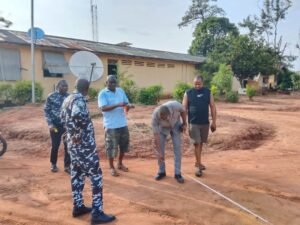
    The Special Adviser to the Cross River State Governor on General Duties, Ekpenyong Akiba Esq., has dismissed claims that the ongoing clearance notices issued to occupants of buildings within the Waterboard Estate in Calabar are politically motivated, describing the exercise as a necessary step toward rehabilitating the state’s water infrastructure.

    The clearance notices have generated widespread debate, with some opposition figures alleging that the exercise is targeted at political opponents ahead of the 2027 elections. However, Akiba said the action is based solely on engineering and legal considerations aimed at restoring the Cross River State Waterboard Limited.

    According to him, the state government is working to secure funding for the rehabilitation of the Waterboard, a project that has reportedly faced delays due to the need for unrestricted access to key infrastructure. He explained that the rehabilitation requires excavation along major underground water mains that serve the state’s water distribution network.

    Akiba disclosed that technical assessments identified 39 structures, including private residences, former staff quarters, and buildings occupied by retirees, as having been constructed directly above critical underground water pipelines. He said these structures now constitute major obstacles to the planned rehabilitation works.

    “Where water mains are located beneath buildings, government has both the legal responsibility and the obligation to clear the right-of-way to enable the restoration of potable water supply,” he said.

    The clearance exercise drew increased public attention after a notice was reportedly served on Barr. Alphonsus Ogar Eba, a former Chairman of the All Progressives Congress (APC) in Cross River State and the reported deputy governorship candidate of the Peoples Democratic Party (PDP) for the 2027 election.

    Responding to allegations of selective enforcement, Akiba said the affected properties belong to individuals across different political affiliations and public service backgrounds.

    According to him, the list includes serving commissioners, special advisers in the current administration, former permanent secretaries, and retired civil servants, indicating that the exercise is not directed at any particular political group.

    He maintained that the clearance is being implemented strictly on the basis of the location of underground water infrastructure rather than the political status of property owners.

    Akiba further stated that all affected occupants have been served the required legal notices in line with due process and that government is engaging stakeholders while considering appropriate relocation arrangements where necessary.

    He reaffirmed that the objective of the exercise is to facilitate the rehabilitation of the Waterboard and improve access to potable water for residents of Calabar and surrounding communities.

  • UNICAL VC Declares Open 2nd Annual CSN Cross River Chapter Conference, Calls for Chemistry-Driven Green Economy

    UNICAL VC Declares Open 2nd Annual CSN Cross River Chapter Conference, Calls for Chemistry-Driven Green Economy

    By Elijah Ugani

    The Vice Chancellor of the University of Calabar (UNICAL), Prof. Offiong Efanga Offiong, has officially declared open the 2nd Annual Conference of the Chemical Society of Nigeria (CSN), Cross River State Chapter, with a call for greater investment in chemistry as a catalyst for sustainable development and Nigeria’s transition to a green economy.

    The three-day conference, which runs from July 5 to 7, 2026, was formally inaugurated on Monday, July 6, at the Senate Chamber of the University of Calabar. It brought together scholars, researchers, industry professionals, policymakers, students, and stakeholders from across the state to deliberate on the theme: “Catalyzing the Green Economy: Chemistry as a Driver for Sustainable Development in Nigeria.”

    Declaring the conference open, Prof. Offiong described the theme as timely and highly relevant, noting that chemistry remains central to providing innovative solutions in renewable energy, agriculture, healthcare, environmental protection, waste management, and industrial development.

    He stressed that Nigeria’s quest for economic diversification and sustainable growth would depend largely on scientific innovation and technological advancement, adding that chemists have a critical role to play in developing environmentally friendly technologies capable of driving economic prosperity while protecting the environment.

    The Vice Chancellor reaffirmed the University of Calabar’s commitment to excellence in teaching, research, innovation, and strategic partnerships that support national development and address contemporary global challenges.

    Prof. Offiong commended the Chemical Society of Nigeria, Cross River State Chapter, and the Local Organising Committee for successfully hosting the conference. He urged participants to actively engage in scientific discussions, share knowledge, and build collaborations that would advance chemical sciences and contribute to Nigeria’s sustainable development agenda.

    He also welcomed the Chairman of the occasion, Senator Prof. Stephen Adi Odey, Commissioner for Education, Cross River State; the President of the Chemical Society of Nigeria and keynote speaker, Prof. Rufus Sha’Ato; the plenary speaker, Prof. Buba Shanu; the Deputy Vice President (South-South Zone) of the Chemical Society of Nigeria, Dr. Frank Oteiva; and the Vice Chancellor of the University of Cross River State, Prof. Francisca Bassey, alongside other distinguished guests and delegates.

    On his part, Prof Ayi, A. Ayi, The Alternate Chairman of the Local Organizing Committee welcomed participants to the 2026 Conference of the Cross River Chapter of the Chemical Society of Nigeria (CSN), hosted at the University of Calabar.

    He described the conference as a vital platform for scientists, educators, researchers, students, policymakers, and industry stakeholders to exchange ideas and promote chemistry-driven solutions to national and global challenges.
    Speaking on the theme, “Catalysing the Green Economy: Chemistry as a Driver for Sustainable Development in Nigeria,” he highlighted the importance of chemistry in advancing sustainable development through innovations in the circular economy, environmental remediation, computational chemistry, and chemical education.

    He urged participants to actively engage in the scientific sessions, keynote and plenary lectures, and networking opportunities to foster collaborations that would extend beyond the conference.

    The LOC Alternate Chairman specially welcomed the Chairman of the Opening Ceremony, Senator Professor Stephen Adi Odey, the President of the Chemical Society of Nigeria and Keynote Speaker, Professor Rufus Sha’Ato, and the Plenary Speaker, Professor Ardo Buba Shanu, while appreciating both physical and virtual participants for their commitment to advancing scientific research.

    He expressed profound gratitude to the Vice-Chancellor of the University of Calabar and Chairman of the Local Organizing Committee, Professor Offiong E. Offiong, for his exceptional leadership and support in hosting the conference. He also acknowledged the Vice-Chancellor of the University of Cross River State, Professor Francisca Bassey, the Chairman of CSN Cross River Chapter, Dr. Stephen Adalikwu, members of the Local Organizing Committee, sponsors, and partners for their invaluable contributions to the successful organization of the conference.

    He concluded by wishing participants fruitful deliberations, productive networking, and a memorable stay in Calabar.

    Earlier in his welcome address, the Chairman of the Chemical Society of Nigeria, Cross River Chapter, ChM Stephen Adie Adalikwu PhD, described the conference as a historic milestone, marking the revival of the chapter’s annual scientific conference after nearly four decades.

    According to him, the maiden local conference was held in 1987, making the current edition a significant rebirth of scientific engagement within the chapter.

    Dr. Adalikwu expressed gratitude to God and appreciated the support of the Vice Chancellor of the University of Calabar, Prof. Offiong Efanga Offiong, who also served as Chairman of the Local Organising Committee, as well as Prof. Ayi A. Ayi, the Alternate Chairman of the committee, for their dedication to the successful hosting of the conference.

    He also acknowledged the contributions of Senator Prof. Stephen Adi Odey, the President of the Chemical Society of Nigeria, Prof. Rufus Sha’Ato, Prof. Buba Shanu, Dr. Frank Oteiva, Prof. Francisca Bassey, government officials, industry leaders, sponsors, and participants for their support and presence.

    Reflecting on the chapter’s achievements, Dr. Adalikwu disclosed that since the current leadership assumed office, the Cross River Chapter had experienced a remarkable transformation, including a membership growth of over 100 percent.

    He noted that the conference theme underscores the vital role of chemistry in renewable energy, environmental remediation, climate change mitigation, agriculture, healthcare, waste management, industrial development, and the production of environmentally friendly materials.

    He, however, identified inadequate research funding, weak collaboration between academia and industry, poor infrastructure, and the migration of skilled professionals as major obstacles to scientific and technological advancement in Nigeria.

    The chapter chairman called on governments, industries, and development partners to increase investment in scientific research, strengthen partnerships among universities, research institutions and industries, and promote innovation capable of driving sustainable national development.

    He further encouraged chemists to uphold professionalism, mentor younger scientists, and embrace innovation and entrepreneurship while reaffirming the chapter’s commitment to making its annual conference a permanent platform for scientific discourse, collaboration, and professional development.

    Dr. Adalikwu expressed optimism that the conference would produce practical solutions, innovative ideas, and lasting partnerships that would strengthen the chemical sciences and support Nigeria’s transition to a sustainable green economy.

  • C’River Governor Otu Flags Off 10km Ugboro-Ukpah-Afrike Road Project in Bekwarra LGA

    C’River Governor Otu Flags Off 10km Ugboro-Ukpah-Afrike Road Project in Bekwarra LGA


    The Governor of Cross River State, Senator Prince Bassey Otu, has reaffirmed his administration’s commitment to delivering critical infrastructure that promotes economic growth and improves the quality of life of citizens across the state.

    Governor Otu, represented by his deputy, Rt. Hon. Peter Odey, made this known on Saturday during the official flag-off of the construction of the 10km Ugboro-Ukpah-Afrike Road in Bekwarra Local Government Area.

    Addressing residents and stakeholders at the ceremony, the Deputy Governor described the project as another milestone in the implementation of the Governor’s People First agenda, noting that it reflects the administration’s resolve to fulfil its promises to the people. He said the road would improve access to rural communities, facilitate the transportation of agricultural produce, stimulate commerce, enhance access to healthcare and education, and create new economic opportunities for residents.

    Rt. Hon. Odey commended the Executive Chairman of Bekwarra Local Government Area, Hon. Egbung Odama, the Commissioner for Finance, Dr. Michael Odere, and the Member representing Bekwarra State Constituency, Hon. Omang Charles Omang, for their commitment and collaborative efforts in facilitating the commencement of the project.

    He called on community leaders, youths, and other stakeholders to cooperate fully with the contractor to ensure the smooth and timely execution of the project. He also charged the contractor to prioritise the use of local content by engaging qualified local labour and sourcing materials locally where practicable.

    In his welcome address, the Executive Chairman of Bekwarra Local Government Area, Hon. Egbung Odama, described Governor Otu as a promise keeper whose administration continues to translate campaign promises into tangible development. He noted that the road project reflects the Governor’s commitment to addressing the long-standing infrastructural needs of the Bekwarra people.

    Hon. Odama expressed appreciation to the Governor for including Bekwarra in his development agenda, describing the project as a clear demonstration of the administration’s People First philosophy. He expressed confidence in the successful completion of the road and appealed to the state government to also consider the construction of the Abuochiche–Akwurinyi Road.

    Also speaking, the Commissioner for Works and Infrastructure, Hon. Dr. Pius Ankpo Edet, assured residents that the project would be executed in line with approved engineering standards and completed within the lifespan of the present administration. He called on the benefiting communities to continue supporting the contractor throughout the construction period.

    On his part, the Commissioner for Finance, Dr. Michael Odere, affirmed that the Governor Otu administration had put in place adequate funding arrangements to guarantee the uninterrupted execution of the project until completion.

    In their goodwill messages, the Member representing Bekwarra State Constituency, Hon. Charles Omang; former Head of Service, Mr. Timothy Akwaji; the Paramount Ruler of Bekwarra Local Government Area; and the Chairman of the National Youth Council of Nigeria (NYCN), Cross River State Chapter, Comrade Emmanuel Olayi, commended Governor Otu for the strategic intervention. They pledged the full cooperation of the people and assured the government of a peaceful environment that would enable the contractor to complete the project on schedule.

    The high point of the ceremony was the ribbon-cutting performed by the Deputy Governor, formally marking the commencement of the project.

  • The Ghostwriters of Compromise: A Philosophical and Theological Response to Amawu Cletus and Akpala Beatrice BY CLEMENT AGAMA

    The Ghostwriters of Compromise: A Philosophical and Theological Response to Amawu Cletus and Akpala Beatrice BY CLEMENT AGAMA


    It is a well-established maxim in classical logic that when the substance of an argument cannot be defeated, the defender will invariably seek a proxy to dilute the conflict. Madam Beatrice Akpala’s inability to personally withstand the theological and intellectual weight of my previous rejoinder has compelled her to outsource her conscience to a surrogate, Amawu Cletus Albert Amawu.
    To Mr. Amawu, who has kindly volunteered as an intellectual shield on EpiSTLENEWS, and to Madam Beatrice, who stands silently behind him: let us engage in a rigorous, dispassionate analysis of your joint defense.

    Part I: The Proxy Strategy — A Study in Moral Cowardice
    In political philosophy, the use of a proxy or a “ghostwriter” to fight intellectual battles points to a fundamental vulnerability. When a public figure cannot directly defend her own public declarations, she abdicates her moral agency. Madam Beatrice boasted of being “too polished for primitive politics” and speaking with her “full chest,” yet at the first sign of rigorous, intellectual friction, she retreats into the shadows and deploys a mercenary pen.
    If your convictions, Madam, were anchored on immutable truths, you would not need Mr. Amawu to translate your intentions. By outsourcing your defense, you have validated my initial thesis: your political posture is one of convenience, lacking the internal fortitude to face direct public accountability.

    Part II: Deconstructing the Limitations of Amawu’s Rejoinder
    Mr. Amawu’s publication is a masterclass in sophistry—the use of clever but false arguments. Let us systematically expose the structural, philosophical, and theological limitations of his text.

    1. The Fallacy of “Institutional Diffused Responsibility”
    Mr. Amawu writes that personalizing unfulfilled promises is “simplistic and unfair” because governance is a “collective responsibility involving numerous institutions.”

    ■ The Philosophical Flaw: This is a classic fallacy of division and a cheap attempt at bureaucratic evasion. In political philosophy, specifically within the framework of Social Contract Theory (Hobbes, Locke, Rousseau), accountability cannot be evaporated into thin air by blaming “institutions.” When politicians stand on campaign podiums in Ukelle, they do not ask our people to vote for abstract “circumstances”—they ask us to trust their faces, their words, and their alignments.

    ■ To argue that no individual is responsible for unfulfilled promises is to reduce governance to a crime without a culprit. If you took the credit for being in government, you must also carry the cross of that government’s failures. You cannot privatize the prestige of public office while socializing its structural neglect.

    2. The Misunderstanding of “Objectivity” vs. “Prophetic Passion”
    The rejoinder accuses my intervention of being “laden with emotion, assumptions, and selective interpretation rather than balanced analysis.”

    ■ The Theological Flaw: Mr. Amawu confuses the holy indignation of a shepherd with mere secular sentimentality. In Christian theology, justice is not a cold, detached academic exercise. When the prophet Amos declared, “Let justice roll down like waters, and righteousness like an ever-flowing stream” (Amos 5:24), he was not offering a “neutral, balanced analysis.” He was delivering a searing, emotional, and direct indictment of systemic failure.

    ■ To look at the broken promises, the lack of infrastructure, and the historical marginalization of the Ukelle Nation and demand that a priest speak with clinical indifference is an insult to the prophetic vocation. My “emotion” is not a lack of logic; it is the spiritual resonance of the suffering of my people.

    3. The Attempted Secularization of Scripture
    The rejoinder claims that “quoting Scripture to support political arguments does not automatically validate personal opinions” and calls for public commentary to “illuminate issues rather than inflame passions.”

    ■ The Theological Rebuttal: I do not use Scripture to validate my personal opinion; I use Scripture to judge your public conduct. The Word of God is a divine yardstick for justice. When the rejoinder states that biblical principles of accountability apply equally to critics, I wholeheartedly agree. That is precisely why I am speaking!

    ■ The clergy does not exist to provide spiritual anesthesia to political actors so they can sleep comfortably while their constituencies mourn. To “illuminate” an issue means to shine a light into dark places. If that light exposes unfulfilled vows and inflames the passions of a people demanding better, then the light has done its job.

    4. The Perversion of “Loyalty” and “Consistency”
    Mr. Amawu writes: “Loyalty is not a weakness; it is a virtue. Consistency is not a liability; it is a reflection of character.”

    ■ The Ethical Flaw: In virtue ethics (Aristotle), a value only becomes a virtue when it is directed toward the Good. Loyalty to a individual or a political faction that systematically fails to deliver development to your own community is not loyalty—it is sycophancy. Consistency in defending structural neglect is not strength of character; it is obstinacy in error.

    True loyalty for a public servant belongs first to the citizens and the community, not to political godfathers. When political relationships founded on “mutual respect” result in the underdevelopment of the Ukelle Nation, those relationships cease to be sacred; they become conspiratorial.

    Part III: The Verdict of History
    Mr. Amawu concludes by stating that history will judge every public servant by the substance of their service. On this point, we find common ground.
    History will indeed remember. It will remember those who stood on the soil of Ukelle, made solemn declarations to a trusting populace, and later hid behind public relations proxies when called to account for those words. It will remember those who found the red carpets of political alignment more comfortable than the dust of unpaved rural roads.

    Let it be known to Madam Beatrice and her newly recruited scribe, Mr. Amawu: I will not be deterred. You may attach my pictures to your articles, you may deploy your most sophisticated sophistry, and you may seek to redefine submission as “issue-based politics.” But as long as I remain a priest of the Most High God and a bonafide son of Cross River North, my voice will remain a trumpet for the common good.
    Democracy is indeed strengthened when facts prevail. And the fact remains: the Ukelle Nation is still waiting for the fulfillment of the promises you guaranteed. No proxy writer can change that reality.

    Rev. Fr. Clement Agama
    Prophetic Voice for the Common Good

    Disclaimer: The opinion expressed in this article is strictly that of the author, Clement Agama and does not represent Theluminenews, its agent or the organisation the author works for/with

  • Bring All Your Burdens to Christ Being a Sermon by Rev Fr Sylverus Ulem

    Bring All Your Burdens to Christ Being a Sermon by Rev Fr Sylverus Ulem


    My dear brothers and sisters in Christ,
    Today’s liturgy invites us to discover where true peace and lasting rest are found.

    We live in a world marked by economic uncertainty, violence, and fear. Yet God’s Word assures us of His presence and His peace. Nations are in conflict with one another. Families are divided. In a country like Nigeria, where economic hardship often makes it difficult for us even to care for one another, God’s Word still offers us hope and reminds us that He has not abandoned His people.

    One of the most comforting statements in today’s Gospel comes directly from Jesus Himself: “Come to me, all you who labour and are burdened, and I will give you rest. Learn from me, for I am gentle and humble of heart.”

    This is one of the rare occasions where Jesus speaks about His own heart. He invites us to learn from Him because He is gentle and humble. Even while hanging on the Cross, after suffering rejection, humiliation, and torture, He prayed, “Father, forgive them, for they do not know what they are doing.” What an extraordinary example of meekness and humility.

    My dear people of God, Jesus teaches us to remain humble even in the face of exploitation, abuse, rejection, and injustice.

    Today, many people say, “If you provoke me, my anger will destroy you.” Such reactions often come from hearts weighed down by pain, frustration, and disappointment. Because our hearts are troubled, many negative thoughts find their way into them.

    But Jesus invites us to learn from His heart, to remain gentle and humble. A humble heart speaks words that bring peace rather than conflict. A gentle heart heals instead of hurting.

    The invitation of Jesus is universal. He calls every one of us because every one of us carries one burden or another.

    Some people carry burdens in their families. Others struggle in their workplaces, businesses, marriages, or personal lives. Some burdens are simply part of life. Illness, old age, bereavement, and economic hardship are natural burdens that come with our human condition. But other burdens are created by human beings.

    The rising cost of food and basic necessities has become a heavy burden for many families. During the time of Jesus, religious leaders often placed unnecessary burdens on the people through rigid interpretations of the law. Today, we still see people creating burdens for others through injustice, corruption, exploitation, and selfishness.

    Sometimes, the little kindness we ought to show one another becomes another source of pain. Instead of solving problems, we create more. As the saying goes, “The message they sent you never reached its destination, and it never returned to the sender.”

    Against this background, Jesus presents Himself not as another burden, but as our rest. His invitation comes from a heart that is gentle and humble.

    Many of today’s heaviest burdens are humanly created. There are directors and officials who exploit young women seeking employment. Some lecturers demand sexual favours from students before awarding them the grades they deserve.

    Think of the pain of parents whose children are kidnapped because of insecurity and the failure of leadership. Think of the wounds caused by harsh and careless words.

    Before you make someone cry, remember that tears are the most expensive liquid on earth. They may contain only one percent water, but they carry ninety-nine percent emotions. How often do we say hurtful things to our neighbours, only to return later with a simple “I’m sorry”?

    As a wife, have you considered the burdens you may place on your husband through constant quarrels and unreasonable pressure?As a husband, have you considered the burdens you place upon your wife by neglecting her emotional and spiritual needs? As children, have you considered the shame and extra burden you have placed on your parents?

    As an employer or supervisor, have you reflected on the burdens you impose on your employees through exploitation or injustice? As a politician, have you considered the burdens your decisions place upon the people you were elected to serve?

    The first reading from the Book of Zechariah presents God’s promise to restore a broken and burdened people. The prophet announces the coming of a humble King who will bring peace, not through violence or oppression, but through justice, humility, and salvation.

    Sadly, our society continues to carry many heavy burdens. Young graduates bear the burden of unemployment. Families worry daily about what they will eat tomorrow. Many feel abandoned by those entrusted with leadership.

    We may experience disappointment with those who govern us, but our hope does not rest in human leaders alone. Our confidence remains in God, who never forgets His people. At the fullness of His time, He will surely come to our aid.

    My dear brothers and sisters, we learn from Jesus by helping to carry one another’s burdens. We lessen the burden of hunger by feeding the hungry. We lessen the burden of homelessness by welcoming the stranger. We lessen the burden of our students by giving them encouragement instead of demanding money or immoral favours in exchange for success.

    Each of us must ask: Am I making life easier for those around me?
    Do people feel relieved when they encounter me, or do they become afraid? Does my presence increase the burdens of others, or does it lighten them?

    As followers of Christ, we are called not only to bring our own burdens to Him but also to help carry the burdens of others.

    As we celebrate this Holy Eucharist today, let us renew our commitment to lead others to Christ. Let us become signs of hope, peace, compassion, and mercy. Let us show those who have lost their way the path back to Jesus.

    When we do this, our families, our communities, our nation, and indeed our world will become better places for all.

    May Christ, who is gentle and humble of heart, give us rest and teach us to become instruments of His peace.

    Peace be with you.

    Disclaimer: The opinion expressed here strictly that of the Rev Fr Sylverus Ulem, and does not represent Theluminenews, its agent or the organisation he works for/with.