By Elijah Ugani
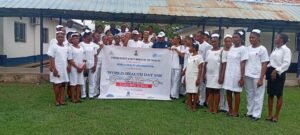
The Cross River Ministry of Health in collaboration with World Health Organisation and the College of Nursing Sciences, Obudu commemorated the 2026 World Health Day.
The event which was held at the College of Nursing Sciences Obudu today, April 8th 2026, began with a walk from the school compound and was followed with health and academic presentations.
Declaring the event opened on behalf of the Commissioner for Health, the Provost of the college, Dr (Mrs) Victoria Undeshi, noted that “Today we join millions across the globe under the coordination of the World Health Organisation to reflect on the importance of health as a fundamental human right and to renew our collective commitment to building healthier communities.
“The theme for the year ‘Together for Health: Stand with Science’ is both timely and powerful. It reminds us that in a world faced with evolving health challenges, ranging from infectious diseases to non-communicable conditions, climate-related health risks, and emerging global threats, our strengths lies in unity and our progress depends on science.
“Standing with science means embracing evidence-based practice, promoting research, and applying innovation in healthcare delivery. It calls on us, as nurses, educators, and future healthcare providers, to uphold the highest standards of professionalism, guided not by myths or assumptions, but by verified knowledge and compassionate care.
“Togetherness, on the other hand, speaks to collaboration. No single profession, institution, or nation can achieve optimal health outcomes alone. It takes a united effort such as government, healthcare workers, communities and individuals, working hand in hand to promote health, prevent health disease and prolong life.
“Here at the Cross River College of Nursing Sciences, Obudu, we are not only training healthcare professionals; we are also shaping leaders who will stand firmly on the pillars of science, ethics and service. Our role in advancing health cannot be overstated. As nurses, we are often the closest to the patients, the voice of advocacy, and the bridge between science and humanity.
“Today’s celebration is not just ceremonial; It is a call to action: To strengthen our trust in scientific evidence, to combat misinformation with knowledge, to promote healthy behaviours in our communities and to work collaboratively towards universal health coverage.
“Let us remember that every life saved, every illness prevented, and every patient comforted is a tastement to what we can achieve when we stand together and stand with science.
“As we proceed with the activities of today, health talks, outreach programs, and academic presentations, may we be inspired to carry forward the message of this theme beyond today, into our daily practice and interactions”.
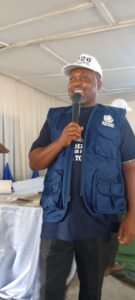
Speaking on behalf of the World Health Organisation Cross River State State Coordinator, the Obudu Local Government Facilitor, Mr Edem Essi, commended the leadership of College of Nursing Sciences Obudu, for the orderliness and the keynote speaker for a job well done.
Essi noted that “I’m particularly impressed with the presentation on surveillance because surveillance is WHO mandate in Obudu. We promote surveillance. Just last week, WHO understook a rapid assessment on poliomyelitis in Calabar Municipality. Once you notice any case of Acute Flacid Paralysis, you don’t need to wait for polio before you go for check.
“As at today, we have 51 suspected cases of Acute Flacid Paralysis in Cross River State. Any weakness in a child’s limb under 15 years should be reported and taken seriously. WHO have two laboratories to test samples in Nigeria, one is in Ibadan, Oyo state while the other is in Borno”.
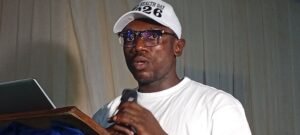
The event featured presentations from health practitioners including Dr David Mbessey, Medical Director, German Hospital, Obudu, who delivered the keynote address on “Stand with Science” noted that World Health Day is celebrated globally on the 7th of April to raise global awareness and to organize digital awareness campaigns, free check and some vital signs checks as well as conducting webinar and workshop to spread the importance of physical health”.
He opined that “Science is knowing while technology is action. The two work together”. He used the opportunity to Call on government, scientists, health workers, partners and public to; Stand with science by engaging with evidence, facts, and science based guidance to protect health, rebuild trust in science and public health, and support science led solutions.
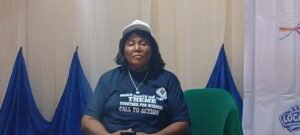
On her part, the Registrar of the College, Mrs Dorothy Afu, delivered a lecture on Science, Power, Health and Health Security: Surveillance and Early Warning, Prevention of Outbreaks posited that “Science provide evidence-based solutions for disease prevention and control. Advances in microbiology, epidemiology, and biotechnology enable better understanding of disease”.
She opined that “Scientific tools such as vaccines, diagnostics and digital health systems enhance response capacity as well as data-driven decision-making improves efficiency in healthcare delivery”.
She mentioned early warning systems to detect unusual health events before the escalate. Use of real-time data, artificial intelligence, predictive modelling, integration of community reporting and laboratory data, as well as rapid response, reducing speed and impact of outbreaks as early warning systems in disease prevention.
Mrs Afu listed prevention of early widespread transmission of diseases, reduction in healthcare costs and burden on health systems. Protection of vulnerable populations, strengthening national and global health preparedness and building public trust through timely communication as some importance of surveillance and early detection.
She outlined weak health infrastructure, inadequate funding, poor data management and systems and limited skilled personnel as some of the challenges and listed investment in digital health technologies, capacity building and training, strengthening laboratory networks and collaboration between governments and international bodies.
The 2026 WHO theme “Together for Health. Stand with Science,” urge global collaboration to prioritize evidence-based policies, strengthen health systems, and adopt a “One Health” approach for people, animals, and the planet. The initiative focuses on combating health threats through innovation and science-led action.
World Health Organization (WHO)
Key Messages and Calls to Action.
Stand with Science: WHO calls on individuals, communities, and governments to trust facts and use science-driven, evidence-based approaches to protect public health.
One Health Approach: The campaign emphasizes that human health is interconnected with animal and environmental health, promoting integrated solutions for better global health security.
Actionable Science: The campaign advocates for translating scientific knowledge into concrete health policies, particularly in disease prevention, vaccination, and managing chronic conditions.
Global Solidarity: The 2026 campaign is marked by major events, including the International One Health Summit (hosted by WHO and France) and the inaugural Global Forum of WHO Collaborating Centres.
Regional Focus (Africa): The WHO Regional Office for Africa calls for increased domestic investment in research and technology, aiming for resilient health systems through African-led science and innovation. World Health Organization (WHO)
This year’s theme aims to reinforce the role of evidence in navigating complex, modern health crises.