Category: Opinion

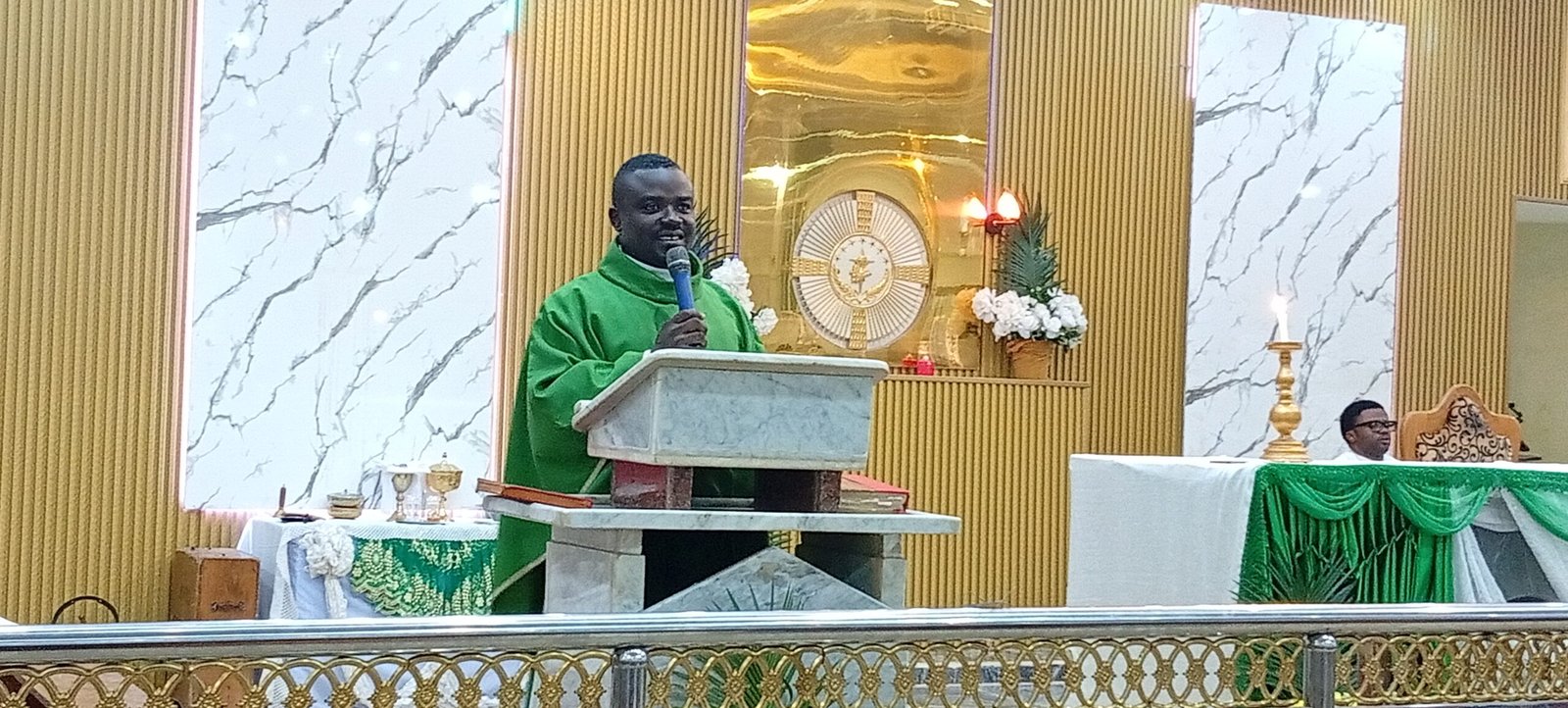
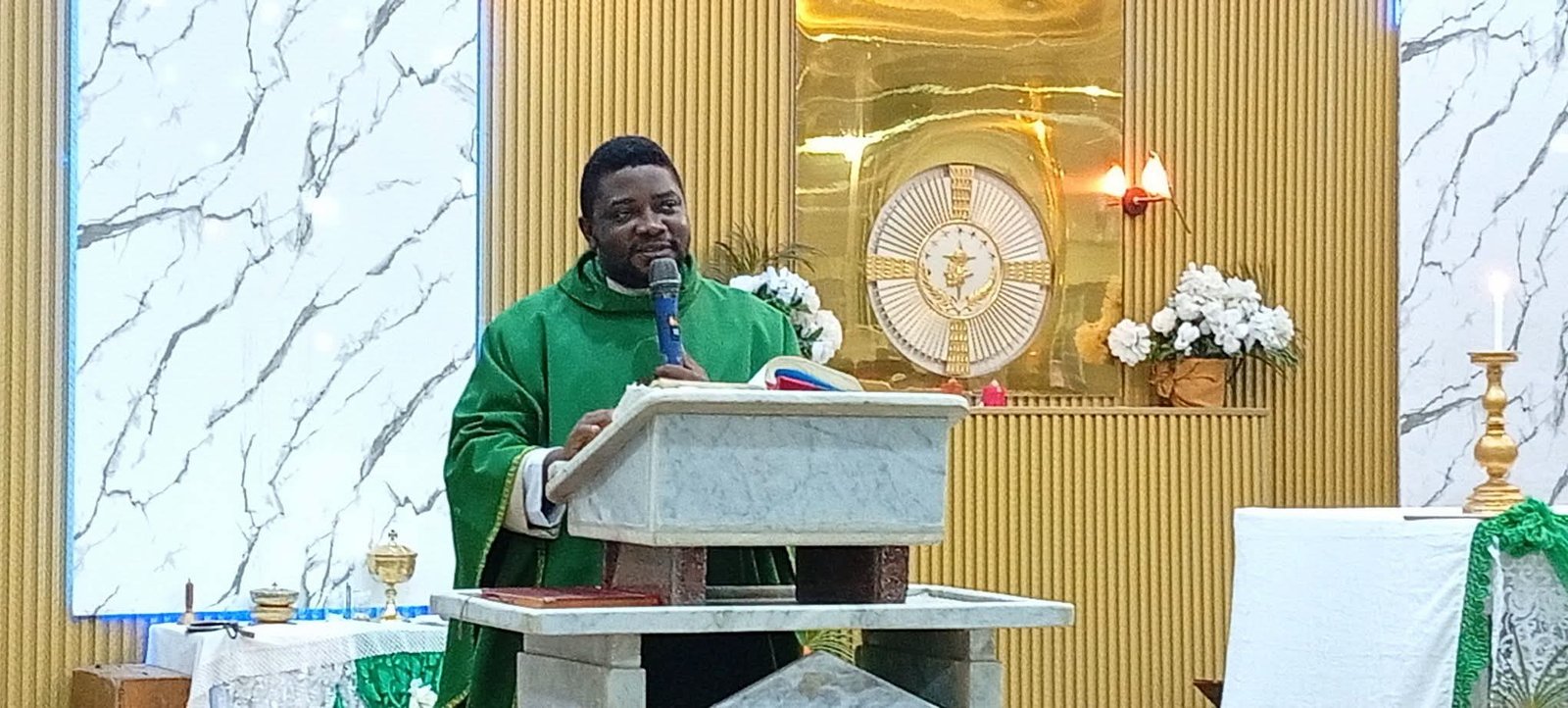
  • Reach Out To The Left Out: Homily by Rev. Fr. Sylverus Ulem

    Reach Out To The Left Out: Homily by Rev. Fr. Sylverus Ulem


    My dear brothers and sisters in Christ,

    The message of today can be summarized in one call: reach out to the left out. There are many people around us who have been abandoned, neglected, or forgotten by society, institutions, and even by those closest to them. As Christians, we are called to reach out to such people with love, compassion, and mercy.

    On this Eleventh Sunday, the Church reminds us of our identity and mission as the people of God. The first call God gives to us is the call to belong to Him. God desires that we be His people. To be called God’s people is a special privilege, but it also comes with responsibility. If we are truly God’s people, we must listen to His voice and remain faithful to Him.

    The second aspect of God’s call is discipleship. Before Jesus chose the Twelve Apostles, many people followed Him. Yet He selected certain individuals and entrusted them with a special mission. In the same way, God calls each of us not only to belong to Him but also to become His disciples and witnesses.

    In the First Reading, we hear how God chose the people of Israel as His own and promised to guide them toward their destiny. However, this covenant relationship came with a condition: they were to remain faithful to Him. God’s promise of guidance and protection was linked to their faithfulness.

    The same is true for us today. It is not enough to say that God has called us. We must respond to that call through faithful living. God is not asking us to impress Him with great achievements or extraordinary sacrifices. Some people think that God can be pleased merely by offering gifts, performing rituals, or making grand displays of devotion. But God, who is the Creator and source of all things, cannot be enriched by anything we give Him.
    What God desires is our faithfulness.

    He calls us to obey His commandments and to become more like Him. Since we are created in His image and likeness, we are called to live, think, and act as He does. How do we do this? Through love. The entire law of God is summarized in the commandment of love.

    God welcomes all people regardless of tribe, culture, language, or background. That is why we gather together as one family in worship. As God’s children, we too must learn to welcome and love others without discrimination.

    Even when His people fail, God does not abandon them. Throughout the history of Israel, God remained faithful despite their unfaithfulness. He continually sought them out and called them back to Himself.

    The same is true for us. Like the people of the Old Testament, we often make promises to God and then fail to keep them. We stumble, fall, and go astray. Yet God remains faithful because His nature never changes.

    God has not changed; it is we who have changed. We may drift away from Him, neglect our spiritual lives, or abandon our commitments, but He remains constant. Whether we are faithful or not, God continues to wait for us with open arms.

    Therefore, I remind you today: God is waiting for you. Return to Him. Change your ways and allow His grace to transform your life.

    In the Second Reading, St. Paul reminds us of God’s unfailing faithfulness. As proof of His love, God sent His Son, Jesus Christ, to save us. God never abandoned humanity because He had chosen us to be His people.

    As disciples of Christ, we are called to continue His mission. We live in a society where many people feel abandoned, helpless, and forgotten. God calls us to minister to these people and become instruments of His love.

    Charity must begin at home. You cannot neglect the people in your own household and then expect your acts of charity elsewhere to please God. If we ignore those closest to us while trying to appear generous in church and public, we miss the true meaning of Christian service.

    We must begin by caring for those around us, our families, neighbors, employees, friends, and all who depend on us.

    Each Christian has a unique calling. Through Baptism, we have received a new identity in Christ. Just as Jesus called each Apostle by name and entrusted each with a particular mission, He calls each of us to serve Him in a unique way.

    Part of this mission is to show mercy to those who have failed. Often, those who have disappointed us are the very people who need our compassion the most. Instead of helping them rise again, we sometimes condemn and reject them.

    As followers of Christ, we must remember that God does not define people by their failures. He sees their dignity and their potential for renewal. We are called to do the same.

    In today’s Gospel, Jesus looked upon the crowds and saw that they were harassed and helpless, like sheep without a shepherd. He was moved with compassion. He did not think about what He could gain from them; instead, He thought about how He could help them.

    Sadly, there are times when people exploit those who are vulnerable. Even some religious leaders may be tempted to seek personal gain rather than genuine service.

    Jesus gives us a different example. He teaches us to serve people selflessly and to care for their needs.

    When influential people enter our churches or communities, our responsibility is not to flatter them for personal benefit but to remind them of their duty to serve others and work for justice.

    Today’s message is simple: whenever we encounter people, let us not focus merely on their problems or weaknesses. Let us see an opportunity to help, heal, and uplift them.

    Jesus also instructed His disciples to begin their mission among their own people. This teaches us an important lesson: before we seek to change the world, we must first allow God to change us.

    We cannot effectively preach conversion if we refuse to confront our own faults. Many people want to change others while neglecting their own families, habits, and attitudes. True evangelization begins with personal conversion.

    Therefore, let us begin in our homes. Let us examine our own lives, seek God’s grace, and strive to become faithful disciples. Then we will be able to bring others closer to Christ.

    May God grant us the courage to answer His call, the grace to remain faithful, and the compassion to reach out to those who have been left out.

    May His word dwell richly in our hearts through Christ our Lord.
    Amen.

  • The Body and Blood of Jesus Christ A Sermon BY STEPHEN APEBENDE

    The Body and Blood of Jesus Christ A Sermon BY STEPHEN APEBENDE


    Today, we celebrate the Solemnity of the Body and Blood of Christ, the spiritual food for our journey of salvation.

    Every living being needs nourishment in order to remain alive. One of the basic characteristics of life is nutrition. Whether we say we eat to live or live to eat, the important truth is that every living thing must eat to survive.

    However, not every living being eats the same food. The food a cow eats is not the same food a dog eats. An elephant and a human being do not eat the same food. In the same way, the food that nourishes the body is not the same food that nourishes the spirit.

    A few weeks ago, we celebrated the outpouring of the Holy Spirit. We are reminded that God created us in His image and likeness. Yet, if we look around, none of us physically resembles God. In fact, it is impossible to draw a true picture of God. This is because we are like God not in a physical sense, but in our spiritual nature. We are created with an immortal soul. A person may appear physically healthy and strong, yet spiritually be weak, empty, and lifeless.

    Many people come to church regularly, yet their relationship with God remains shallow. Just as the body needs proper nourishment, the soul also needs spiritual nourishment. The food required by the soul is different from the food required by the body.

    During His earthly ministry, Jesus cared for people’s physical needs. When the crowds became hungry, He fed them. But in today’s Gospel, He reminds us that there is a food that nourishes us for eternal life. That food is His own Body and Blood.

    Jesus says: “Whoever eats my flesh and drinks my blood has eternal life.”

    And whoever refuses this heavenly food deprives himself of the life that Christ offers.
    Anything without life is dead. In the same way, there are many who may be physically alive yet spiritually dead. Sometimes, many people sit in church, but their spiritual lives show little evidence of God’s presence and power.

    Jesus knew that we would need strength for our journey through life. That strength comes from the Eucharist.

    Sadly, while our churches may be full, the positive impact of Christians on society often appears weak. We may have large congregations, yet lack the spiritual energy needed to transform our communities. The power to bring positive change comes from the Body and Blood of Christ.

    At the Last Supper, Jesus took bread and said, “This is my body.” He took the cup and said, “This is my blood.” He did not say, “This is like my body” or “This represents my body.” He spoke clearly and directly.

    The Eucharist is not an ordinary symbol. It is the true presence of Jesus Christ. He commanded His disciples: “Take and eat. Take and drink. Do this in memory of me until I come again.”

    The Eucharist is the spiritual banquet through which Christ shares His Body and Blood with us and allows us to participate in the mystery of our salvation.

    This mystery is not always easy for human understanding to accept. Throughout the history of the Church, there have been many Eucharistic miracles that strengthen our faith and remind us that the Body and Blood of Christ are not ordinary bread and wine.

    Therefore, it is essential that we receive this great sacrament. However, St. Paul warns us in 1 Corinthians 11 that whoever receives the Body and Blood of Christ unworthily brings judgment upon himself.

    For this reason, we must prepare ourselves properly before approaching Holy Communion. Through repentance, confession, and a sincere desire to live according to God’s will, we make ourselves ready to receive Christ worthily.

    It is not Jesus who condemns us; rather, it is our refusal to prepare ourselves and our unworthy reception of the sacrament that brings spiritual harm.

    We are all called to receive this sacrament, but we must receive it in a manner that leads us to salvation.

    As we celebrate this Solemnity of the Body and Blood of Christ, may Jesus always make Himself available to us. And may we receive His Body and Blood worthily, so that this heavenly food may bring us salvation, strengthen our faith, and lead us to eternal life.

    Amen.

    Compiled By Elijah Ugani

  • South Africa: The Future Is Waiting With A Knife… BY AGBA JALINGO 

    South Africa: The Future Is Waiting With A Knife… BY AGBA JALINGO 


    Data from the South African Institute of International Affairs SAIIA, clearly states that, from 1960 to 1995, Nigeria alone, spent over $61 billion (about 8.5trillion Naira), to support the end of apartheid in their country. That was more than any other country in the world.

    The SAIIA, headquartered at the Jan Smuts House in the University of Witwatersrand, East Campus in Johannesburg, emphatically claims that, Nigeria unequivocally took over leadership of the anti-apartheid movement worldwide, despite the volatile nature of our country’s politics and the passage of numerous military and civil leaders, affirming also that Nigeria never abandoned its unwavering commitment to the freedom of black South Africans from the shackles of aparthied.

    The SAIIA, recalled that, in 1976, Nigeria set up the Southern Africa Relief Fund (SAFR) aimed at bringing relief to the victims of the apartheid regime in South Africa and provide educational opportunities and general welfare to them.

    The military administration of General Obasanjo contributed $3.7 million to the fund. Moreover, General Obasanjo made a personal donation of $3,000, while each member of his cabinet also made personal contributions of $1,500 each. All Nigeria’s civil servants and public officers made a 2 percent donation from their monthly salary to the SARF, which was popularly known in Nigeria as “Mandela Tax.” Students in Nigerian schools skipped their lunch to make donations, and in just 6 months, in June 1977, contributions to the fund reached $10.5 million.

    In fact, on the 4th of April 1961, just six months after Nigeria gained independence from the British crown, our very first Prime Minister, Tafawa Balewa, wrote a letter declaring that, “The battle against Apartheid has just begun.” He played his part as promised and successive administrations after him continued the struggle. After the brutal take down and massacre of 700 black students by the white apartheid police during a protest by black students against the decision by the apartheid regime to change their education language to Afrikaans, many black students and ANC leaders made the wanted list of the Botha regime and needed to leave their country to safety.

    A first group of 86 black South African students arrived in Nigeria in 1976 to study for FREE. Hundreds of other black students and exiled ANC leaders followed subsequently, as part of the activities of the Southern Africa Relief Fund.

    Beyond welcoming students and exiles, Nigeria had also welcomed many renowned South Africans like Thabo Mbeki, former South African President, who spent 7 years in Ikoyi, Lagos Nigeria, from 1977 to 1984, before he left our country to the ANC headquarters in Lusaka, Zambia.

    300 Nigerian passports were issued to black South African leaders, who could not travel abroad because the apartheid regime had withdrawn their passports. This was particularly crucial because they needed to travel the world to seek international support and solidarity to end apartheid in their country.

    Along with fellow African countries, Nigeria led the lobby for the creation of the United Nations Special Committee against Apartheid. Again, when the Commonwealth Prime Ministers and Heads of Government, met in Nassen, Switzerland in October 1985, the idea of a Commonwealth Eminent Persons Group (EPG) was birthed by Nigeria and inaugurated, and mandated to discuss and agree with the South African apartheid regime on measures designed to pilot South Africa to a democratic form of government.

    At a time when the US, UK and Israel, were all very staunch supporters and allies of the apartheid regime in South Africa, when the US State Department and the UK Foreign Office, both listed Mandela and other ANC leaders as terrorists, the dismantling of the Botha regime and eradication of apartheid was a cardinal and consistent principle in Nigeria’s foreign policy. The rapport between Nigeria and the South African freedom fighters, ripened into a firm and cordial relationship. And in turn, the Botha regime was angered and locked up 10 Nigerians for our country’s financial support to ANC leaders.

    Therefore, it is not only ironic but somewhat foolish for the people of South Africa, particularly the black people in that country, to wake up today and think that Nigerians are their problem. If Nigerians are committing crimes in South Africa as alleged, methinks that South Africa has a fairly strong enough legal system, even stronger than Nigeria, that can address such concerns via their country’s legal system. Get the so-called criminals arrested and try them fairly in your courts and if found guilty, jail them accordingly. Migration is a human right. People cannot stop migrating, whether it is to South Africa or anywhere else in the world.

    But to stand up with cudgels and weapons to maim, beat and kill other blacks who have not committed any crime, solely because they are from Nigeria, a people who suffered so much with you in your days of adversity, is not only ingratitude of the meanest order, is a mistake that they will live to severely regret in the years to come. Their future is indeed, waiting with a knife!

    Yours sincerely,
    Citizen Agba Jalingo.

    Disclaimer: The opinion expressed in this article is strictly that of the author, Agba Jalingo and does not represent Theluminenews, its agent or the organisation the author works for/with.

  • Setting the Record Straight on Senator Asuquo Ekpenyong ‘s Empowerment Programme BY OGAR EMMANUEL 

    Setting the Record Straight on Senator Asuquo Ekpenyong ‘s Empowerment Programme BY OGAR EMMANUEL 


    In a society where political rivalry often overshadows truth and genuine development efforts, it has become necessary to separate facts from deliberate misinformation. The recent empowerment programme facilitated by Asuquo Ekpenyong Jr. in Calabar has unfortunately become a victim of such politically motivated distortion.

    Yesterday’s event, which saw the distribution of hundreds of mini buses, tricycles, and other empowerment items to beneficiaries across the Cross River South Senatorial District, was widely applauded by many citizens as a bold intervention aimed at alleviating economic hardship and creating opportunities for self-reliance. However, rather than celebrate an initiative capable of improving livelihoods, some political antagonists chose the familiar route of propaganda, falsely alleging that the programme was originally intended for the entire state and was allegedly hijacked by the senator.

    That narrative is not only misleading; it has been officially debunked by the Niger Delta Development Commission itself.

    In the press statement issued by the NDDC Cross River State Office, the Commission categorically described the circulating claims as “misleading and inaccurate.” The statement clearly explained that the empowerment programme was undertaken “pursuant to budgetary provisions facilitated by the Senator representing Cross River South Senatorial District.” That singular clarification destroys the entire propaganda being peddled by critics and merchants of falsities.

    The implication is simple and straightforward: the programme was facilitated through the legislative influence and budgetary efforts of Senator Asuquo Ekpenyong Jr. for his constituency. It was never presented by the Commission as a statewide allocation exclusively designated for all Cross Riverians. The NDDC further clarified that the figures being circulated by mischief makers were speculative and should be disregarded.

    More importantly, the Commission also noted that the programme was being implemented in collaboration with relevant Ministries, Departments, and Agencies and was not an exclusive initiative of the NDDC alone. This further reinforces the fact that due processes and institutional collaborations were followed.

    It is unfortunate that in today’s political climate, even well-intentioned empowerment initiatives are subjected to unnecessary attacks simply because they are associated with a perceived political opponent. Those pushing the false narrative have deliberately ignored the official position of the Commission because their objective is not truth, fairness, or accountability; their objective is political damage.

    One fundamental question critics have failed to answer is this: if Senator Asuquo Ekpenyong Jr. facilitated a constituency-based empowerment programme through legitimate budgetary channels for Cross River South, how exactly does that amount to hijacking a statewide intervention?

    Every elected lawmaker is expected to attract development projects and empowerment opportunities to their constituency. When they fail, they are criticized for being ineffective. When they succeed, they are accused of favoritism. This contradiction exposes the insincerity behind the outrage.

    The truth remains that empowerment programmes are not achieved by social media noise or emotional blackmail. They are outcomes of legislative engagement, negotiation, influence, and strategic representation. Senator Asuquo Ekpenyong Jr., as Chairman of the Senate Committee on the NDDC, leveraged his position to facilitate opportunities for his constituents, just as representatives from other districts are expected to do for theirs.

    Rather than spread divisive propaganda, political actors should focus on how to attract similar interventions to their own constituencies. Development should inspire healthy competition, not bitterness.

    The official NDDC statement has settled the matter. The allegations are false. The empowerment programme was legitimate. The beneficiaries were appropriately targeted. And the attempt to politicize the initiative has failed in the face of verifiable facts.

    In the end, propaganda may trend for a moment, but truth always endures.

    Comr. Ogar Emmanuel Oko
    Public Affairs Analyst, he writes from Calabar Municipality


    Disclaimer: The opinion expressed in this article is strictly that of the author, Ogar Emmanuel, and does not represent Theluminenews, its agent or the organisation the author works for/with 

  • Sen Jarigbe Agom Possesses The Wisdom To See People From An Equal Perspective, Valuing Them Beyond Material Wealth, And Communicating Effectively With The Current Generational Language Trend BY KOKO DAN

    Sen Jarigbe Agom Possesses The Wisdom To See People From An Equal Perspective, Valuing Them Beyond Material Wealth, And Communicating Effectively With The Current Generational Language Trend BY KOKO DAN

    In today’s world, exceptional talent and proficiency are highly sought after in all areas of human endeavor. An individual with outstanding abilities is highly competitive in all sectors, particularly in politics.

    Given that politics is a primary source of leadership, it requires someone with the expertise to understand the times, relate to the people, and build sustainable benefits for both themselves and their constituents.

    Over time, Sen Jarigbe Agom has consistently demonstrated the skills required for this role.

    It is unimaginable that a former senator and governor would lack the ability to garner organic support from the people he represented and governed, as this would be a misuse of their experience and knowledge.

    Politics, however, is not a career path suited to everyone, although some individuals seem to stumble into it, as seen in the case of Mr. Liyel Imoke. You identified Ayade.

    The state of Kogi illustrates this point well, where the entire state structure threatened to sue former Governor Yahaya Bello unless he ran for senate, simply because he was held in high esteem by the people led. “Even with accusation of theft and embezzlement ”

    Sen Jarigbe Agom possesses the wisdom to see people from an equal perspective, valuing them beyond material wealth, and communicating effectively with the current generational language trend. ” Oboy how far” You deh so? He doesn’t fake it !

    These qualities make him the ideal candidate, offering hope and leadership to the people. While every talent has value, the world currently seeks academics of high repute. If Professor Ayade wishes to benefit the global population with his knowledge, perhaps he should consider teaching at a university rather than pursuing politics, which is no longer solely about luck.

    Haba, Me koko Governor for 8 years? I swear na president go deh beg me!
    My brother go teach chemistry for crutech I beg ,The world is in need of that knowledge transfer.
    Whilst we thank God for giving us a leader in Sen.Jarigbe, May God sustain him to continue to make impact in our lives .
    Amen.

    Disclaimer: The opinion expressed in this article is strictly that of the author, Koko Dan and does not represent Theluminenews, its agent or the organisation the author works for/with.

  • Conflicts: No Conflicts Can Be Resolved When Demands of Underrepresented Groups Are Compromised BY PETER OBELE ABUE

    Conflicts: No Conflicts Can Be Resolved When Demands of Underrepresented Groups Are Compromised BY PETER OBELE ABUE

    Earlier in the Acts of the Apostles, we read that “The community of believers was united in heart and soul; no one claimed private ownership of any possessions, as everything they owned was held in common” (Acts 4:32-35). But much later when the human element stepped in, that ideal became threatened by selfishness and clannish mentality. A section of the group decided to follow the “I know more than you,” “I am better than you,” “I am richer and more influential than you,” mentality. Consequently, the majority Hebrew Jews who prided themselves as those who knew better, decided to take the lion share in the daily distribution of the common goods, thereby neglecting the Hellenist Jews who were the minority.

    This is one problem with humans; we often put aside the value of care for others, especially the less privileged and project our own egos. We poison the community with our perverted ideas and damn the consequence; when we allow ourselves to be overtaken by greed. We worsen up relationships and create animosities where there should be peace and harmony. In situations like these, conflicts will most certainly arise. Please, let’s realise that no conflict can be resolved when demands of underrepresented groups are compromised. No conflict can be resolved when people selected to resolve conflicts are themselves corrupt. And come to think of it, the reason we display all these emotions is because we feel we are members of the inner caucus; we are scared we may be left out of “our inheritance” or “national cake” as we sometimes call it.

    Let us learn from the early Christians themselves how they provided a solution to these conflicts: They did not take sides. They decided in favor of the common good and weaker members. They let service be their watchword. They paid attention to higher values like prayer and worship and instead set up a committee of 2nd level managers (‘the deacons’) to take care of the conflict.
    In setting up the committee, they choose people of integrity “men of good reputation, filled with the Spirit and with wisdom” (Acts 6:4); not just people they wanted to reward because they belonged to the same “party.” How can we reshape our world if we don’t consider these values in our national or even local settings? Think about the words of Jesus: “in my father’s house there are many mansions” (John 14: 2) and forget this needless struggle over positions, trampling upon people simply because we want the lion share of everything.

    Disclaimer: The opinion expressed in this article is strictly that of the author, Rev Fr Peter Obele Abue PhD, and does not represent Theluminenews, its agent or the organisation the author works for/with.

  • The Lord is My Shepherd, There Is Nothing I Shall Want Being A Sermon by Rev Fr Felix Ovai Ekpe

    The Lord is My Shepherd, There Is Nothing I Shall Want Being A Sermon by Rev Fr Felix Ovai Ekpe


    The Gospel today speaks about the Good Shepherd. Jesus says, “My sheep hear my voice; I know them, and they follow me.” Today, Christ goes before us as our Shepherd. The Psalmist reminds us that God is always ahead of us, guiding our path.

    Even in the darkest moments, even in the grave, God is there. One thing is certain: no matter the situation, the Shepherd never abandons His sheep. Truly, the Lord is our Shepherd; there is nothing we shall want.

    Fear often shapes many of our decisions. We are afraid of life, of the future, even of our vocation. Messages from social media can increase our anxiety. But today’s message is clear: do not be afraid. You are not alone; the Lord is with you.

    God does not promise that we will not pass through fire or the valley of death. But He assures us that in all circumstances, He will be with us. Peter and the other disciples went through many trials. Even Jesus Himself was subjected to suffering.

    We must also learn how to respond to our enemies. Do not pray for them to die. The Scripture says, “God will prepare a table before you in the presence of your enemies.” Sometimes, those we call enemies are closer than we think. If you pray for all your enemies to die, you may wake up and find your own loved ones missing.

    As parents and leaders, we too are shepherds. Life comes with many challenges and difficulties, but no matter what you face, trust that God will turn things around. There are moments when nothing you do seems to please anyone, do not be discouraged. God says, “Turn to me, and I will give you peace.”

    When life becomes confusing, listen to the voice of the Good Shepherd. Too often, we listen more to friends and social media than to God. Not everyone has the authority or wisdom to guide you, turn to God. Listen to the voice of the good shepherd.

    We live in a world where people can spend hours on YouTube, smiling and entertained, but cannot sit in church for even twenty minutes to listen to God. Some come to church only to find faults. Do not blame them completely; many were not raised in an atmosphere of love. They criticize and complain because that is what they have learned.

    Learn to forgive yourself so that others may have peace. If you carry bitterness, you will never experience true peace. Some people are unhappy and do not want others to be happy either, but that is not the way of Christ.

    Today is Vocation Sunday, and God calls us to repentance. When Peter preached, the people asked, “What must we do to be saved?” He told them: repent. Repentance, otherwise referred to as metanoia, is essential for salvation. It means a change of heart, a turning back to God.
    Always have a “reset button.” Learn to forgive yourself and others.

    Many people struggle to forgive themselves, and because of this, they cannot forgive others. This only makes life harder for everyone around them.

    Let go of hatred. Some people hold on to offenses and seek revenge, saying, “God will punish you,” or “I will get back at you.” But revenge is not the way. You may never even have the opportunity to take revenge. Instead, choose love. Let go of offenses and embrace peace.

    As a leader, you do not have to respond to everything. Sometimes, silence is wisdom. Imitate the Good Shepherd in all you do.

    Even in family life, practice peace. For example, when your spouse is upset and shouting, instead of reacting with anger, respond with calmness and love. A gentle response can bring immediate peace and end the conflict.

    In all things, listen to the voice of the Good Shepherd. Turn to Him, repent, forgive, and embrace His peace.

    Disclaimer: The opinion expressed here is strictly that of the author, Rev Fr Felix Ovai Ekpe, and does not represent Theluminenews, its agent or the organisation the author works for/with.

  • When It Is Time To Give Ticket, We Know Those Gov Otu Will Rely On To Give Him Undiluted Feedback To Enable Him Take Informed Decision – Richie Romanus

    When It Is Time To Give Ticket, We Know Those Gov Otu Will Rely On To Give Him Undiluted Feedback To Enable Him Take Informed Decision – Richie Romanus

    Apparently they agreed in their WhatsApp group last night to fly a narrative this morning. Almost all of them posted the same thing though in different words and at the same time. This to them is supposed to be a strategy to dissuade the APC from giving the incumbent Senator, Eteng Williams return ticket for fear that he would be defeated at the polls by the ‘Spirit’ the Wike backed PDP is preparing to field.

    Let’s assume without conceding that Senator Eteng Williams is indeed as unpopular as these people would want us to believe, who is the popular person they want APC to give their ticket? The Ugep returnee who wants to be everything? Funny how BLACKMAIL seems to be his only strategy for every office he has ever coveted since his friend introduced him to Cross River State politics in 2022.

    Shortly after he found his way to join the incumbent Governor’s team, the primaries and the general elections was eventually won, he plotted to be Chief of Staff. He didn’t see anybody worthy enough around the Governor-Elect as he then was to fit into the role of Chief of Staff. As usual he blackmailed every single person that was rumored for the top job including the incumbent. When he loss out in the Chief of Staff position, he had his eyes on Commissioner of finance. Again he loss out and was eventually assigned his current role. Meanwhile, as he was busy struggling for every juicy government role that was available in the State, he was also busy trying to stop Senator Eteng Williams who was still trying to settle in from Chairing any important committee at the Senate. We know how broken he was when he heard the Committee that was assigned to the Senator. Meaning, he had his eyes on the Senate right from day one. Why does one man think that he is better than everyone else simply because they say he has money? Which money? Where is the money?What kind of desperation is this?

    Even now, he is banking all his hopes on a Governor from the South East State to make him a Senator. Nothing has not be said and done to discredit the incumbent Senator yet this Senator has remained unfazed. This Senator as at today has 3 Colleagues who are Governors today. The Governor of Ebonyi,Delta and Edo State but he has played his politics as though he knows nobody that can talk to his Governor on his behalf depending solely on the Governor but this guy would pay a few people to blackmail this Senator while projecting him as popular. Popular where? Among his colleagues in the State Exco, who is with him? Has he not noticed that everybody around him has one aspiration or the other or should I tell him why it is so?

    When it is time to decide who gets which ticket, we know the people the Governor of Cross River State, Senator Prince Bassey Otu, will depend on to give him unbiased and unadulterated feedbacks to help him take informed decision. Who goes to the Senate will certainly not be as a result of the noise from Biko Biko or the loud noise on Facebook.

    RR

  • Witnesses of the Resurrection: A Sermon by Rev Fr Emmanuel Ebong

    Witnesses of the Resurrection: A Sermon by Rev Fr Emmanuel Ebong


    I am grateful to God for making me a witness of the Resurrection. I don’t know about you. Dear friends in Christ, Saint Peter preached about the crucified Christ. Everywhere he went, he did good, and even today, Christ continues to do good through His Church.

    Dear friends, Jesus was killed because of His goodness. Yet, He rose from the dead. When Pontius Pilate asked what crime He had committed, they answered that He called Himself the Christ. He was crucified for doing good and for being a good man. Yet He was crucified, died, and after three days, He rose again.

    From the Gospel, the first witness of the resurrection was Mary Magdalene, who went and told the apostles. The disciples ran to the tomb. But Peter went inside; he saw and believed.

    We also remember Thomas the Apostle, who doubted. When Jesus showed him His wounds, he declared, “My Lord and my God.” And Jesus said, “Blessed are those who have not seen and yet believe.”

    Even before His Passion, when Jesus asked His disciples, “Who do people say that I am?” Peter responded, “You are the Christ, the Son of the living God.” And Jesus blessed him, saying, “Upon this rock I will build my Church, and the gates of hell shall not prevail against it.” That is why Peter is regarded as the first Pope, and all Popes succeed him.

    Dear friends in Christ, as we prepare to celebrate Easter, we are among the most fortunate people, we are witnesses of the resurrection. Though we did not see Him physically, we are even more blessed than Thomas because we believe. We are called to be living witnesses of the risen Christ. The empty tomb is a sign, it confirms that Christ is risen. But our lives must also confirm it.

    Our lifestyle has great influence, in our workplaces, in our homes, and in our daily encounters. Our lives must reflect the risen Christ in all that we do. People should see Christ living in us. The Holy Mother Church challenges us today: Are we ready to keep our Lenten promises? Are we ready to embrace a new life? After forty days of fasting and prayer, do we truly want to change, or remain the same?

    In a world threatened by apathy and evil, can we bear true witness to the Resurrection? The truth is, we can no longer live for ourselves. As Paul the Apostle wrote to the Colossians, we must seek the things that are above. We must live in such a way that those who do not know Christ may come to believe in Him through us, that He is truly risen.

    Let us pray for renewal, that our lives may give powerful and convincing testimony to the resurrection. May the peace, joy, and love of the risen Christ fill your hearts. May His light shine upon you wherever you go.
    Peace be with you. Amen

  • Rise And Shine, Jesus Is Alive: Being Easter Sunday Sermon by Rev Fr Felix Ekpe

    Rise And Shine, Jesus Is Alive: Being Easter Sunday Sermon by Rev Fr Felix Ekpe


    My dear friends, death is a great teacher, yet many of its students are either too afraid or too distracted to pay attention in its classroom.

    I once attended a funeral. Almost everyone looked frightened. People were eager for the burial to end; they could not wait for the grave to be covered. But after the burial, at the reception, everything changed people were eating, laughing, and celebrating as though nothing had happened. Then I asked myself: Is this how I will be forgotten when I die?

    That day, death taught me a powerful lesson, when we die, life goes on. People mourn, yes but often, they mourn not just the loss, but what they themselves have lost. For example, when parents die, some children cry not only because they loved them, but because they have lost their defenders and supporters.

    In today’s Gospel, even Saint Peter, a close companion of Jesus, denied Him three times. Lent is over, no more fasting, no more intense prayers. Many have already moved on. But not Mary Magdalene. She refused to move on like the others. She could not even sleep. Early in the morning, she went to the tomb in furtherance of the love she had for Jesus. What motivated her? What made her love Jesus so deeply? How Do We Love Jesus Like Mary Magdalene?

    First, we must truly believe that Jesus has risen from the dead. Anyone who does not believe in the Resurrection is simply wasting time in church. Many of us claim to believe, yet we still act as though everything is impossible. But with Jesus, what seems impossible becomes possible. No matter your situation, there is always a turning point.

    If we truly believe in the Resurrection, we should be filled with joy, not fear. Why are we still afraid? We stand before the One who conquered death and there is no need for us to be doubtful about the supremacy of Jesus in handling our situations.

    As the Psalmist says: “I shall not die, but live, and recount the goodness of the Lord.” Today is not a day for long speeches, it is a day for joy, dancing, and celebration. What began in sorrow has ended in victory.

    But what does it truly mean to rise with Christ? Some people mistakenly think that Jesus died to give us a license to sin. No! He took on our flesh so that we might understand how to live rightly. We must rise from evil and shine as the salt of the earth. Jesus taught that evil comes from within. Therefore, we must lift our thoughts from the grave of sin.

    As Scripture says in Colossians 3:2 “Set your minds on things above, not on earthly things.” Anyone who refuses to change their thinking has not truly risen with Christ. Living as Witnesses of the Resurrection.

    In today’s first reading, Saint Peter reminds us that we are witnesses to the Resurrection. But if we refuse to change our ways, we are no different from Peter who denied Jesus or Judas who betrayed Him.

    To make our belief real: Prioritize Jesus Christ over wealth. Do not “sell” Jesus for worldly gain, like the thirty pieces of silver. Avoid dishonesty and manipulation. Do not build your faith only on signs and wonders
    Choose righteousness over convenience

    May the God who conquered death on this glorious day dwell in us. May we, as witnesses of the Resurrection, find true peace in Christ our Lord.
    Amen.

    Compiled By Elijah Ugani