Category: Opinion

  • Why Senator Jarigbe Is The Strong Choice For Cross River Northern District BY PETER AGI

    Why Senator Jarigbe Is The Strong Choice For Cross River Northern District BY PETER AGI


    Now that the political landscape of Cross River State is buzzing with anticipation as the next elections approach, Jarigbe appears to me matchless. Amidst the array of candidates, Senator Jarigbe stands out as a formidable contender for the Northern District seat. His track record, leadership qualities, and vision for the district make a compelling case for why he’s the best fit.

    Senator Jarigbe has demonstrated his ability to deliver on campaign promises, with notable efforts in improving infrastructure, healthcare, and education in Cross River North. His legislative achievements are a reflection of his commitment to the region’s development. He’s known for being accessible and responsive to his people’s needs, bridging gaps between government and community. This connection with the grassroots has earned him the trust and admiration of the people.

    Jarigbe’s focus on sustainable development, agricultural growth, and youth empowerment aligns with the district’s needs. He emphasizes unity among diverse communities, fostering peace and cooperation. His leadership style is inclusive, ensuring that every voice is heard and every concern is addressed. Born and raised in the region, Jarigbe understands the local context and challenges, making him uniquely positioned to drive progress.

    The people of Cross River North have taken notice of his efforts. Today, Senator Jarigbe received a significant endorsement from indigenous people of Cross River Northern District residing in Abuja, gathered at Millennium Park. This show of support underscores the impact of his work in the region. The endorsement reflects their trust in Jarigbe’s vision for sustainable development and unity in Cross River North.

    Compared to other candidates, Jarigbe’s legislative experience gives him an edge in navigating governance. While others may promise quick fixes, Jarigbe offers sustainable solutions. His focus on innovation, education, and healthcare positions Cross River North for growth.

    Jarigbe’s policies are centered around boosting local farming and food security, improving schools and scholarships, and enhancing healthcare facilities and services. These initiatives are designed to uplift the community and drive economic progress.

    In conclusion, Senator Jarigbe’s combination of experience, vision, and commitment to Cross River North makes him the standout choice for the district. The people’s endorsement is a testament to his dedication and impact. He’s the leader Cross River North needs to move forward.

    Disclaimer: The opinion expressed in this article is strictly that of the author, Peter Agi, and does not represent Theluminenews, its agent or the organisation the author works for/with.

  • From Thirst To Testimony. Being A Sermon By Rev Fr Felix Ovia Ekpe At Holy Trinity Parish Ogboja-Ogoja

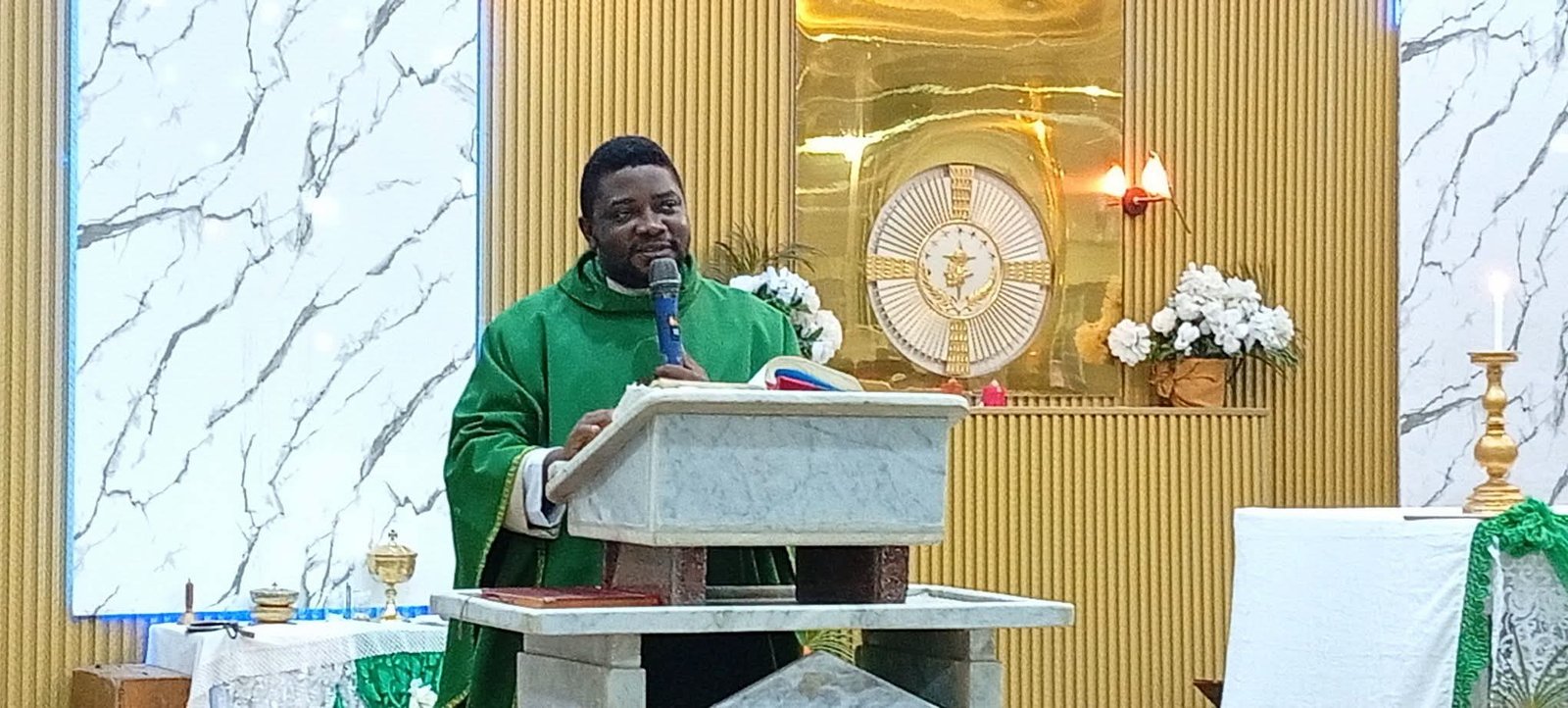
    From Thirst To Testimony. Being A Sermon By Rev Fr Felix Ovia Ekpe At Holy Trinity Parish Ogboja-Ogoja


    My dear brothers and sisters in Christ,

    Today’s readings speak deeply about thirst. But the thirst we are talking about is not only the thirst for water. It is the deep hunger and longing within the human soul. Those who truly desire a testimony must be willing to listen to the Word of God.

    In the first reading, the children of Israel found themselves in the desert without water. Their thirst became unbearable, and they began to complain against Moses. They said. “Why did you bring us out of Egypt to die here in the wilderness?”

    In that moment, they forgot how God had miraculously delivered them from Egypt. They forgot His power and His faithfulness. Moses cried out to God in distress. “What shall I do with these people? They are almost ready to stone me.” Their stubbornness and lack of trust became a problem even for Moses. Their attitude of disbelief ultimately contributed to Moses not entering the Promised Land.

    You can stay without food for a long time, but you cannot stay without water. However, the thirst we speak about today goes beyond physical water. It is the deep craving in the human heart, the longing for something that will make life complete.

    Many people try to satisfy this thirst with different things: Material possessions, relationships, pleasure, alcohol, food. But none of these things can truly satisfy the emptiness in the human heart. You may drink alcohol, but once the effect fades, you return to the same emptiness. Material things cannot guarantee lasting peace.

    In the Gospel, Jesus meets the Samaritan woman at the well. This woman believed that her fulfillment would come through relationships with men. She had five husbands and was living with another man who was not her husband. Yet she still lacked fulfillment. She came to the well at a time when no one else was there perhaps to avoid judgment, shame, or embarrassment. The jar she carried was symbolic of the burden and emptiness she carried in her life. But that day, she encountered Jesus.

    Jesus offered her something greater than ordinary water. He said:
    Whoever drinks the water that I give will never thirst again. This was the living water, the grace, peace, and fulfillment that only God can give.

    Many of us think our identity or validation must come from other people. Some think they can only become what God wants them to be through another person. But God has given each person a unique gift and purpose. There is something inside you that God has placed there, a calling, a mission, a purpose that no one else can fulfill.

    After her encounter with Jesus, the Samaritan woman experienced transformation. She left her water jar behind and ran back to the town to tell others about Jesus. From her test, she received her testimony. The woman who once hid from people became an evangelizer. She became a witness to the Gospel. Perhaps she could not find fulfillment in marriage because God had prepared her for something greater, to become a messenger of the Good News.

    Human beings constantly desire more. When we pray for something and receive it, very soon we begin praying for the next thing. This shows that material things cannot satisfy our deepest desires. Our true satisfaction can only come from our Master, Jesus Christ. No living thing can survive without it. Even industries cannot operate without water. Many conflicts in parts of the world, especially in the Middle East, are connected to access to water. But even more important is the spiritual thirst of the human soul.

    The Psalmist says, “My soul thirsts for God.” Like the Samaritan woman, we too must cry out, “Lord, give me this water, so that I will not thirst again.”

    Sometimes when life does not go the way we expect, we become restless and thirsty inside. In those moments, do not turn to temporary solutions.

    Only God can quench the thirst of the human soul. When Jesus satisfied the Samaritan woman’s thirst, she became a joyful witness to others.

    I pray for you today that God quench every thirst in your life. May He fill the emptiness in your heart. And may your struggles be transformed from thirst into testimonies.
    Amen.

    Compiled By Elijah Ugani

  • Fighting Sin And Temptation: The Fall Of Our First Parents And The Victory Of Jesus Being A Sermon Delivered By Fr Felix Ekpe

    Fighting Sin And Temptation: The Fall Of Our First Parents And The Victory Of Jesus Being A Sermon Delivered By Fr Felix Ekpe


    Today’s Gospel presents the story of Jesus’ victory over sin and temptation in Gospel according to Matthew. The first reading presents the fall of our first parents in the Book of Genesis.

    The victory of Jesus is our victory. In Him, we find strength to overcome. The fall of Adam and Eve teaches us how temptation works, the victory of Jesus teaches us how to conquer it.

    Likewise, Adam and Eve were created in God’s image and enjoyed His presence, yet they were targeted. Spiritual elevation often attracts spiritual opposition.

    Loneliness and Idleness: Temptation often comes in moments of isolation or spiritual carelessness. Adam drifted from God’s instruction. In the Second Book of Samuel, David fell into sin during a time of idleness. When we distance ourselves from God’s presence, we create room for temptation.

    Negative Company. Eve entered into conversation with the serpent, a company God never assigned to her. Wrong company can distort our thinking, normalize sin, lead us away from God.

    Negative Discussion. Temptation often begins with dialogue. The serpent engaged Eve in subtle conversation. The devil does not force sin immediately, he discusses it first.

    Deception Through Half-Truth “You shall not surely die.” The devil rarely presents total lies. He mixes truth with deception. He hides consequences and exaggerates pleasure. Today, sin is often rebranded: Prostitution becomes “hookup”, Immorality becomes “modern lifestyle” Pride becomes “self-expression” and Half-truths make sin look harmless.

    Seduction: Sin appeals to the eyes, the flesh and pride. Eve saw that the fruit was pleasing. Temptation often looks attractive before it becomes destructive. As warned in First Epistle of John, Lust of the flesh, lust of the eyes, pride of life, remains the devil’s tools.

    Consent to Sin: Temptation is not sin until we agree to it. The decisive moment is consent.
    Degeneration: Sin spreads. Eve ate and gave to Adam. Sin is contagious.

    Guilt and Shame: After sin comes shame. Instead of running to God, Adam and Eve hid. But this season calls us not to hide, but to seek mercy.

    Jesus’ Approach: Counter, Attack, Victory. Unlike Adam, Jesus resisted. When tempted to turn stones into bread, Jesus responded with Scripture: “Man shall not live by bread alone.” When tempted with pride, He refused to test God. When tempted with power and glory, He rejected worship of the devil.

    Jesus teaches us: Do not dialogue with temptation. Confront it with the Word. Stand firm. Even when the devil quoted Scripture, Jesus answered correctly. The devil knows the Bible, but he misuses it.

    The lessons from the temptation teaches us that: No One Is Above Temptation. If Jesus was tempted, no one is exempt.
    Temptation Often Comes at Great Heights
    Both Adam (in paradise) and Jesus (after fasting and divine affirmation) were tempted. The Book of Sirach teaches that, when you decide to serve the Lord, prepare for trials. No Place Is Free From Temptation, Garden, Wilderness, High mountain. Location does not remove temptation.

    Temptation Is Gradual: It does not happen suddenly. It follows a sequence: suggestion, delight, consent, sin, shame. Be watchful.

    The Devil Is Persistent. He left Jesus “for a time.” Temptation may return in different forms. The weapons against the Devil – Prayer, Fasting, The Word of God, Confession, Perseverance.

    Victory is possible. If Jesus overcame after forty days of fasting, we too can overcome by grace.

    The fall of Adam brought shame. The victory of Jesus brings restoration.
    Today, Jesus wants us not hide like Adam, but to run to God. I pray for you: When the devil comes looking for you, may he not find weakness, but find you soaked in prayer, strengthened by fasting, armed with the Word, and covered by grace.

    In Jesus, the victory is already won.

    Disclaimer: The opinion expressed in this article is strictly that of the author, Felix Ekpe, and does not represent Theluminenews, its agent or the organisation the author works for/with.

  • There Is Time And Season. Being A Sermon Delivered By Rev Fr John Ike Igiri CMT, At Holy Trinity Parish Ogboja-Ogoja

    There Is Time And Season. Being A Sermon Delivered By Rev Fr John Ike Igiri CMT, At Holy Trinity Parish Ogboja-Ogoja


    There is a time for everything under heaven. Yesterday it rained within the environs of Ogoja. By implication, the dry season is gradually fading away. In the same way, the Church also moves through different liturgical seasons, each with its own purpose and grace.

    The Church celebrates four main seasons: Advent, Christmas, Lent and Ordinary Time.

    During Advent, we prepare for the Second Coming of Christ. Advent ushers us into the joyful celebration of Christmas, where we celebrate the birth of our Savior. After Christmas, we enter a short period of Ordinary Time Six weeks, and now we find ourselves in the holy season of Lent.

    Lent is the season in which we celebrate and prepare for the Paschal Mystery, the suffering, death, and resurrection of our Lord Jesus Christ. The Church presents readings that reflect this sacred season. It is a time to refrain from sin, to give alms, and to fast. In doing these, the Church calls us to be spiritually alive, to turn away from wickedness and embrace love.

    The first reading invites us to open our hearts and recognize that we have offended God and our neighbors. God desires not merely external signs like wearing sackcloth, but true interior conversion. He calls us including the children seated here to turn away from sinful ways and embrace righteousness.

    During this season, the Church invites us to reflect deeply on three important spiritual practices: Prayer, Fasting, and Almsgiving (Charity)

    We are called to intensify our prayer life. It is through prayer that we overcome the challenges of life. Prayer strengthens our relationship with God and keeps us spiritually alert.

    The Church encourages fasting, often through abstinence. But the best form of fasting is abstaining from sin and immorality. When we abstain from food, we discipline the body and strengthen the spirit so that it does not lead us away from God. True fasting also means detaching ourselves from material excess so that we may share with the poor. There is none of us who does not have something to give.

    This period also calls us to offer good and charitable words. When we speak ill of others, we damage their dignity. Let our words build up, not destroy.

    As our Lord teaches us “I was hungry and you gave me food.” Recently, Pope Francis encouraged us to be charitable even in our thoughts and words.

    Charity is said to begins at home. Some of our homes are in chaos because we are not charitable in speech toward our husbands, wives, and children. We may not always have material things to give, but we can always give kind and loving words.

    In the Gospel, Jesus teaches us not to fast like hypocrites. When we give alms, it should not be for public recognition. Those who seek public praise have already received their reward. Our acts of prayer, fasting, and charity must come from sincere hearts.

    My prayer is that God, who has given us the grace to be among the living today, will grant us the strength to express kindness in all we do. May He help us to turn away from sin, embrace love, and live this season faithfully.

    Through Christ our Lord. Amen.

  • Ash Wednesday: A Call to Return to God. Being A Sermon Delivered By Rev Fr Felix Ovia Ekpe 

    Ash Wednesday: A Call to Return to God. Being A Sermon Delivered By Rev Fr Felix Ovia Ekpe 

    Ash Wednesday: A Call to Return to God

    By Rev Fr Felix Ovia Ekpe

    Today, on Ash Wednesday, the Church begins the sacred season of Lent with a powerful call: “Return to the Lord with all your heart.” This day marks a solemn invitation to repentance, renewal, and reconciliation with God.

    The practice of administering ashes has deep biblical roots. In ancient times, penitents covered themselves with ashes as an outward sign of sorrow for sin and true repentance. Ashes symbolized humility, mourning, and a sincere turning back to God. People would sit in sackcloth and ashes to show contrition and acknowledge their unworthiness before the Lord.

    The ashes used on Ash Wednesday are traditionally obtained from the burning of palm branches blessed on the previous year’s Palm Sunday. These ashes are blessed and then placed on the forehead of the faithful in the shape of a cross. As this is done, the minister says:
    “Remember that you are dust, and to dust you shall return.”

    This reminds us of our human frailty and mortality. We come from the soil, and at the end of our earthly sojourn, we shall return to it. The ashes are therefore an external sign of repentance and a visible reminder that life is temporary, calling us to live wisely and faithfully.

    Ash Wednesday marks the beginning of the forty days of Lent, a season of preparation for Easter. The number 40 holds profound significance in Scripture. It represents a period of trial, purification, testing, and preparation.

    The significance of 40 includes: The flood in the time of Noah lasted 40 days and 40 nights. Moses stayed on Mount Sinai for 40 days and 40 nights in the presence of God. The Israelites wandered in the wilderness for 40 years before entering the Promised Land. The prophet Elijah journeyed for 40 days and 40 nights to Mount Horeb. The people of Nineveh fasted in repentance at the preaching of Jonah. Most importantly, Jesus fasted for 40 days and 40 nights in the wilderness before beginning His public ministry.

    Thus, the number 40 signifies a sacred period of preparation, testing, repentance, and transformation. Lent follows this biblical pattern. It is a time of renewal and reconciliation.

    The readings of this season echo a consistent message, Return to me with all your heart.

    God does not merely ask for outward signs, He desires a sincere conversion of heart. During this period of Lent, the Lord counsels us to return fully to Him.

    In the second reading, St. Paul urges us to be reconciled with God and not to receive His grace in vain. He encourages us to observe Lent in a way that truly brings glory to God not merely outwardly, but from the heart.

    Lent is traditionally marked by three spiritual pillars:
    Prayer: Deepening our relationship with God and journeying with Jesus.
    Fasting: Practicing self-denial and discipline.
    Almsgiving: Showing charity and generosity to others.

    Fasting is not for everyone. Those who are aged or ill and taking medication are exempted by the Church. But fasting goes beyond abstaining from food.

    We are called to fast from, Gossip and destructive speech. Anger and bitterness. Pride and selfishness. Alcohol, cigarettes, and unhealthy habits. Stinginess and lack of charity.

    Sometimes we destroy others with careless words, repeating stories as though we were present when they happened. Lent challenges us to abstain from such behavior. Fasting becomes meaningful when it transforms our hearts.

    Lent is also a time to increase our generosity. Acts of charity do not need to be public. A priest once shared the story of a woman who quietly provided candles for the chapel without anyone knowing. Such hidden acts of love please God deeply. Jesus teaches us in the Gospel that when we fast, pray, or give alms, we should not do so to be seen by others. We do not put on gloomy faces to advertise our sacrifice. True Lenten discipline is done in humility, for God alone.

    Lent is a period of self-sacrifice and self-denial, but it is also a journey towards joy. It prepares us for the resurrection. We are not restricted to doing good only during Lent; rather, Lent trains us to live faithfully throughout the year.

    As we begin this sacred season, may our sacrifices lead to genuine renewal. May our prayer, fasting, and charity draw us closer to Christ. And may this Lenten journey fill our Christian lives with lasting joy.

    Through Christ our Lord. Amen.

  • Jarigbe Agom: Champion of Results, Voice of the People BY ELIJAH UGANI 

    Jarigbe Agom: Champion of Results, Voice of the People BY ELIJAH UGANI 


    Jarigbe Agom Jarigbe stands as a proven leader whose record in office reflects performance, accessibility, and unwavering commitment to the people of Cross River North Senatorial District.

    From the floor of the National Assembly to the most remote communities in Cross River State, Senator Jarigbe has built a reputation as a lawmaker who delivers tangible results. His legislative interventions focus on economic empowerment, infrastructure development, youth inclusion, education support, and policies that strengthen local opportunities. He has consistently demonstrated that representation must go beyond speeches, and that it must translate into measurable progress at home.

    Under his leadership, communities across Cross River North have witnessed strategic infrastructural projects, empowerment initiatives for women and youths, scholarship support programs, and sustained constituency engagement. His open door approach and regular consultations with traditional leaders, stakeholders, and grassroots groups have deepened trust and strengthened participatory governance in the district.

    Senator Jarigbe’s commitment to service has earned him widespread recognition, including:
    ICON of Humanitarian Service Award (2019) and Legislator of the Year (2020) by African Custodian.

    ICON of Nation Building Award (2021) and Global Peace and Humanitarian Award (2022) reportedly conferred in association with the United Nations.

    Cross River’s Most Outstanding Senator of the Year (2024) by Yala Achievers Summit & Award
    Excellent Representation Award (2025) by Cross River State Journalists Forum.

    These recognitions underscore what his constituents already know: Senator Jarigbe represents with purpose, passion, and performance.

    As a prominent leader within the All Progressives Congress (APC), he is widely regarded by supporters as a formidable frontrunner heading into the 2027 Senate race for Cross River North. His growing profile, expanding grassroots support base, and proven track record position him as a candidate of continuity, stability, and accelerated development.

    Driven by the belief that public office is a trust, Senator Jarigbe remains committed to expanding opportunities, strengthening infrastructure, and ensuring that every community in Cross River North has a strong and effective voice at the national level.

    Elijah Ugani
    Public Affairs Analyst and Commentator
    Community Mobilzer
    Social Change Agent
    He writes from the Hills of Ukwortung

    Disclaimer: The opinion expressed in this article is strictly that of the author, Elijah Ugani and does not represent Theluminenews, its agent or the organisation the author works for/with 

  • Freedom Of Choice: When God Created Man And Endowed Him With Freedom, He Meant That We Should Use That Freedom Towards Enhancing The Created Order BY PETER OBELE ABUE

    Freedom Of Choice: When God Created Man And Endowed Him With Freedom, He Meant That We Should Use That Freedom Towards Enhancing The Created Order BY PETER OBELE ABUE

    Being A sermon by Rev Fr Peter Obele Abue PhD.

    So good we are talking about freedom of choice, right after Valentine’s day.

    The book of Sirach 15:15-20, especially verses 17-20 clearly spells out the fact that God has given us humans, freedom to choose what we desire. “Before everyone are life and death, whichever they choose will be given them. Immense is the wisdom of the Lord; mighty in power, He sees all things. The eyes of God behold his works, and he understands every human deed. He never commands anyone to sin, nor shows leniency toward deceivers.” This same God commanded us in the scriptures “You shall not kill, you shall not commit adultery (cf. Ex 20).”

    In America today, for example, there is this great divide between those who say they are “Pro-choice” and others who refer to themselves as “Pro-life”. The argument gets hot each year in January as both parties fight over the famous Roe vs Wade controversy. But let’s think about it for a while; what really does it mean to be Pro-choice and Pro-life?

    Those who argue that freedom of choice permits them to choose to do whatever they like (with their bodies), say that no one can impose judgment on what they choose to do.
    The question is: does that freedom make your action(s) reasonable before God?, since you also claim you believe in God. Read your bible and notice how Jesus differentiates the old and new understanding of these injunctions versus your right to choose to do what you like. He clearly says he has not come to wipe out or water down these injunctions, but to re-enforce them (Mt 5: 17).
    Jesus shocked his listeners by saying that even the mere contemplation of these acts is sin (Mt 5: 17-37). Why then would anyone argue that he or she is free to interpret these laws according to their own whims?

    When God created man and endowed him with freedom, he meant that we should use that freedom towards enhancing the created order, not to re-create our own universe through erroneous thinking, causing more confusion.

    Today, we circumvents all these commandments with the excuse of freedom of choice, in order to create caveats that will permit us to do “whatever we like”. Today, we have all kinds of disjointed ‘freedom’ fighters: gay right activists, animal right activists, etc without a thought on what appeals to common sense of to the law of God. The truth remains thus: You cannot choose to do wrong and call it freedom of choice.

    The arguments will continue but the truth will always prevail and truth needs no defense.

    Disclaimer: The opinion expressed in this article is strictly that of the author, Peter Obele Abue PhD, and does not represent Theluminenews, its agent or the organisation the author works for/with.

  • Freedom Of Choice: Being A Sermon Delivered During 6:00am Mass At Holy Trinity Parish Ogboja-Ogoja BY REV FR FELIX EKPE 

    Freedom Of Choice: Being A Sermon Delivered During 6:00am Mass At Holy Trinity Parish Ogboja-Ogoja BY REV FR FELIX EKPE 


    Sixth Sunday in Ordinary Time Year A.
    15th February, 2026.

    Freedom of choice is central to our human existence. Every aspect of our lives has to do with choosing. Even when you refuse to choose, you have already made a choice. There is something beautiful about God: He gives us free will. He respects our freedom. He does not force us. But for every choice we make, there is a corresponding consequence.

    In the First Reading, we are reminded: “If you will, you can keep the commandments, and they will save you.” When you keep the commandments that guide marriage, family life, work, and every aspect of your life, they will serve you and you shall live.

    God has placed before you fire and water. Stretch forth your hand and take what you want.
    Before a person dies physically, he first dies inside. You hear people say, “I cannot make it.” The moment you accept defeat within, the battle is already lost. But I once heard of a woman who refused to die. She had a fighting spirit.

    God says: I place before you good and evil. You can choose to be: A good Christian, a faithful wife or husband, an obedient child, a responsible civil servant, a good neighbour, or you can choose the opposite. Just know this, whatever you choose carries consequences.

    You can choose to serve God in His house. Some say they have no time, not for the choir, not for the charismatic group, not for any service. But choosing not to serve is also a choice. So, choose wisely.

    As a counsellor, I have seen marriages crumble within months. Why Because some people married simply because their friends were getting married. Marriage is not competition. You can choose to make your marriage work.

    Greatness does not happen overnight. To become somebody tomorrow is not the product of waking up one day and becoming great. It is the product of daily choices, small, consistent, disciplined choices.
    You can choose to live recklessly, drinking everything you see, living carelessly. But at 35, when health problems begin, you will face the consequences of yesterday’s choices.
    Marriage should build your faith and make you think responsibly about your family.

    I remember when I was much younger, driving from Abuja to Apiapum in Obubra Local Government Area. I picked up a man on the road. We were driving very fast. When we reached Makurdi, he said, “Father, I want to stop here.” I asked why. He said, “Father, I have a wife and four children.”

    At that moment, I understood the value he placed on his life and his family. For the rest of the journey, we drove like a snail.

    When you place value on yourself, others will value you. Some of you are always present at every friend’s occasion, but when it is your turn, they do not show up. Learn to value yourself. Stop forcing yourself where you are not valued.

    When you come to the house of God, do not hide. Serve. Let people talk about you. When people talk about you, it means you matter.
    The eyes of the Lord are upon those who fear Him. When you choose, He knows. So choose good. Choose to forgive your spouse. Choose peace over quarrels and fights.

    Jesus says, “If you are offering your gift at the altar and remember that your brother has something against you, leave your gift there. Go and reconcile first, then come back and offer your gift.”

    Some of you carry people in your heart like tenants who refuse to pay rent. You keep grudges. You think you are hurting them, but you are only hurting yourself, causing yourself high blood pressure. Some even keep records, long notes of every wrong their spouse has done from January to December. Yet many have not gone for the Sacrament of Reconciliation all year.

    When you choose wisely: The blessings of God will come upon you. The favour of God will rest on you. Peace will dwell in your home.

    Today, God still places before you life and death, good and evil, fire and water.

    Stretch forth your hand and choose life.

    Compiled By Elijah Ugani

  • A Tribute Of Gratitude, And Radiant Impact To Senator Professor Sandy Ojang Onor @ 60 BY DAVE IMBUA

    A Tribute Of Gratitude, And Radiant Impact To Senator Professor Sandy Ojang Onor @ 60 BY DAVE IMBUA


    When I arrived at the Department of History and International Studies, University of Calabar as a young undergraduate, Dr. Sandy Onor – as he was then known – was not physically present. Yet his name filled the air. He had left to serve as Executive Chairman of Etung Local Government Area, but in the classrooms and corridors, he remained a standard. Lecturers invoked him as a model of brilliance, discipline, integrity, and academic distinction. Even in absence, he reigned supreme.

    Years later (in 2012 to be precise), destiny granted me the rare privilege of meeting him in person. He was then Commissioner for Environment in Cross River State; I was Lecturer II in the University of Calabar. Through his late bosom friend, Dr. James Ewah, he invited me to see him. That meeting changed my life.

    He told me he had heard of my discipline, dedication, and scholarly commitment – and that he wanted us to collaborate in research. These were the very virtues for which he himself was known. I accepted the offer without hesitation. When I informed my revered mentor, Ambassador Prof. Okon Edet Uya, he welcomed the idea but expressed a fatherly concern: that Sandy Onor might eventually draw me into politics. His fear was that those meant to preserve academic excellence often depart, while those who should leave remain.

    What followed was not a loss to scholarship, but an expansion of purpose. Our collaboration enriched my intellectual life and strengthened my professional journey in ways too numerous to recount. It made resources available for me to conduct research and publish in ways that would have been difficult otherwise.

    Then came 2019. Against formidable odds, Sandy Onor was elected Senator. In a move that reflected rare courage and clarity, he appointed me his Senior Legislative Aide – the highest position among his aides – despite our being from different senatorial districts. In a political climate where geography and ethnicity often dictate opportunity, he chose conviction over convenience. That decision alone speaks volumes about his character. By God’s grace, we left meaningful footprints in the Senate.

    To me, my encounter with Senator Professor Sandy Onor is divine benevolence. God brought him into my life as a pillar – one man doing for me what many may not receive from a multitude in a lifetime. His generosity is instinctive, not calculated. He sees nothing as too great to do where friendship, loyalty and merit are concerned. He has opened to me the vastness of his heart and resources, ensuring that I never lack the means to pursue any noble cause. He embraces my family as his own, relating with my wife and children with warmth and dignity.

    Yet beyond personal benevolence stands something even more compelling: his seamless fusion of scholarship and statesmanship. He is proof that intellect need not be abandoned in public office, and that politics, when guided by ideas, can be noble. He bridges the academy and politics, thought and action, reflection and reform.

    At 60, Senator Professor Sandy Ojang Onor is not merely older – he is deeper, stronger, and more luminous. Sixty years of learning. Sixty years of service. Sixty years of lifting others. Sixty years of courage.

    Today in Abuja, we do not merely mark time; we celebrate impact. We raise our glasses in sixty resounding cheers – to a scholar of distinction, a statesman of conviction, a mentor of rare generosity, and a friend of steadfast loyalty.

    May the God who ordered our paths to cross grant him many more fruitful decades. May his wisdom expand, his strength be renewed, and his influence multiply. May the years ahead surpass the years behind in grace and accomplishment.

    Happy 60th Birthday, Distinguished Senator Professor Sandy Ojang Onor.

    The name that once reigned supreme in absence now shines even brighter in presence – and in the grateful hearts of those whose lives he has transformed.


  • Practical Religion: God Is Interested In Practical  Works Of Mercy And Love And That Was The Light He Wanted To See Shining On His People BY PETER OBELE ABUE

    Practical Religion: God Is Interested In Practical  Works Of Mercy And Love And That Was The Light He Wanted To See Shining On His People BY PETER OBELE ABUE

    Christianity or the whole idea of RELIGION is being challenged today by a demand for practical results bordering on satisfaction of basic human needs. Those who emphasize this practical religion insist that Christ did not just come to teach us how to pray and worship, he also came to teach us how to take care of the poor and needy. Although this mentality smacks of secularism and denial of the sacred, at the same token, it is not something we should ignore outrightly especially in our clime, where majority of the people are in need of basic necessities.

    Jesus himself reminded us that we are “salt of the earth and light of the works” ( Matt 5:12-16). That It is to the extent we are able to show practical religion, that determines how we become salt and light. The people of Israel thought they were a Light in the world, because of their grand solemn ceremonies in the temple; they were wrong. God is interested in practical  works of mercy and love and that was the light he wanted to see shining on his people.

    The Prophet Isaiah commands the people thus: share your bread with the hungry, bring the homeless poor into your house, cloth the naked, be your own brother or sisters keeper, stop pointing the accusing finger, speaking wickedness and increasing the yoke of pain and suffering for others (Isaiah 58: 7-10). These are the things that fail to make our light shine and our prayers heard (verse 9). Christianity is not just about going to church or attending grand religious ceremonies, but also about coming to the aid of those who truly need us. Unfortunately, many deceive themselves that they are religious, when all they do is fuel trouble in their families, congregations or communities; knocking heads together, causing anxiety among peoples, and heightening the problems of poor people by their half-educated principles.

    If your worship of God or church attendance is not followed up with concrete acts of charity, or worse still, by wicked acts, you are a church goer who also doubles as a trouble shooter. As someone once said, No religion in the world is greater than kindness. No scripture is deeper than compassion. No ritual is holier than love.  Your beliefs may guide you, your traditions may shape you, but what truly defines you is how you treat others. Don’t just preach your religion – live its essence.  Don’t just quote verses – embody their meaning. Don’t just identify with a label – let your humanity speak louder than words. St Paul warns us that our faith should not rest on “human wisdom, but on the power of God” (1 Cor 2: 1-5). Human wisdom is when we are always rationalising, condemning and judging others at the slightest provocation; when we confuse people with our education, oratory and privileged positions. It is better to use the power of God in life because human wisdom can disappoint us.

    Disclaimer: The opinion expressed in this article is strictly that of the author, Peter Obele Abue, and does not represent Theluminenews, its agent or the organisation the author works for/With