The University of Calabar (UNICAL) has begun implementing measures to correct admission irregularities in its Faculty of Law, directing affected students to return to the academic programmes through which they were originally admitted by the Joint Admissions and Matriculation Board (JAMB).
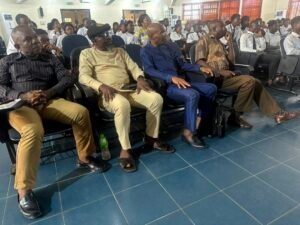
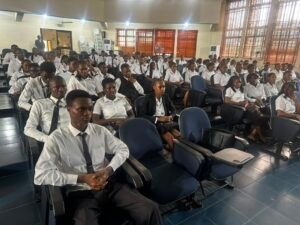
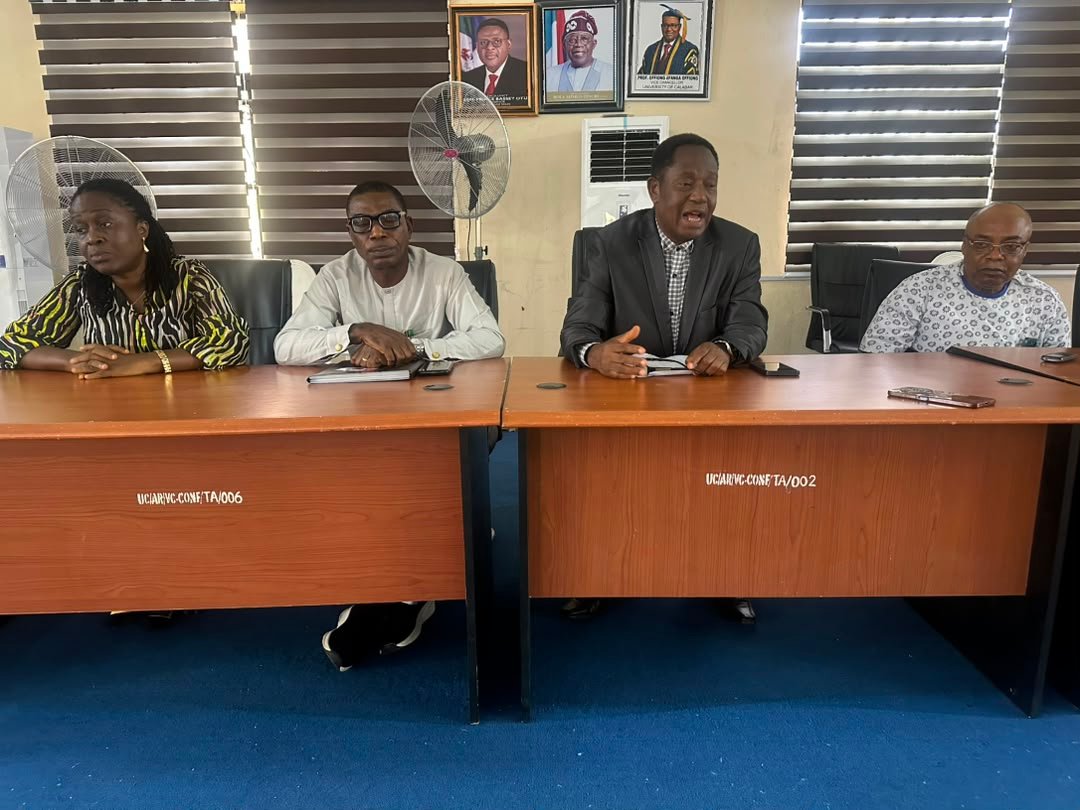
The Vice-Chancellor, Prof. Offiong Efanga Offiong, made the appeal during a meeting with affected Law students from the 2024/2025 and 2025/2026 academic sessions. He was represented by the Deputy Vice-Chancellor (Administration), Prof. Anthony Afam Okiwelu.
According to the Vice-Chancellor, the exercise is part of the university’s efforts to sanitise its admission process, restore public confidence, and ensure compliance with the regulations of JAMB and the Council of Legal Education.
Prof. Offiong said the institution had recently faced public scrutiny over admission irregularities and that the current administration was committed to addressing the anomalies to prevent future sanctions.
He explained that students who were not originally offered admission into the Faculty of Law through JAMB could not be allowed to remain in the programme, warning that such a situation could invalidate their Law degrees and make them ineligible for admission into the Nigerian Law School if discovered by the Council of Legal Education.
“We advise every student who transferred from the programme to which JAMB originally admitted them into Law to return to their original departments in line with the admission records,” he said.
The Vice-Chancellor added that failure to correct the irregularities could also lead to sanctions against the university, including the suspension of admissions into the Faculty of Law, thereby affecting future applicants and damaging the institution’s reputation.
Providing details of the situation, Prof. Offiong disclosed that of the 435 students currently in the second year of the Faculty of Law, only 221 were originally admitted into the programme through JAMB, a development he described as a clear violation of existing admission regulations.
To ease the impact of the decision, the university has approved the transfer of school fees already paid for the 2025/2026 academic session to the 2026/2027 academic session for students returning to their original departments.
He also stated that students who choose to discontinue their studies at the university would be eligible for refunds of their school fees upon submitting the required applications, assuring them that due process would be followed in handling all refund requests.
Prof. Offiong urged the affected students to cooperate with the university, stressing that the corrective measures are intended to protect their academic future while preserving the integrity and accreditation of the Faculty of Law.
He reaffirmed the university’s commitment to transparency, accountability, and strict adherence to statutory admission guidelines as part of ongoing efforts to restore the credibility and reputation of the University of Calabar.