Category: Opinion

  • Effective Representation: The Role Of UKALU Sons And Daughters In High Places BY ANIASHIE AKPANKE PhD.. Being A Paper Presented At The Ukpe, Alege, Ubang (UKALU) Summit

    EFFECTIVE REPRESENTATION: THE ROLE OF UKALU SONS AND DAUGHTERS IN HIGH PLACES
    A keynote speech presented at the 2024, Ukpe, Alege and Ubang (UKALU)
    Day Celebration On Saturday December 28, 2024

    By.
    COMRADE ANIASHIE AKPANKE PhD
    Language Unit, Department of General Studies Education,
    Federal College of Education, Obudu

    INTRODUCTION 
    It is with immense gratitude and a deep sense of honour that I stand before you today as guest speaker for the cherished 2024 Ukalu Day celebration. The invitation to be part of this important event came at a time when I was already committed to several engagements scheduled for the same period. However, my profound respect and admiration for Ukalu inspired me to shelve some of my earlier plans in order to honour this invitation. This decision is not only a reflection of my regard for this esteemed community but also an acknowledgment of the critical importance of today’s theme.
    Ukalu undoubtedly holds a special place in my heart, not just as a neighbouring community to my own, but as a hub of rich cultural heritage, unity, and resilience. Though I hail from Bendi in Obanliku, a neighboring Local Government Area to Obudu, I feel a deep connection to your community. Our histories, challenges, and aspirations intertwine as we share cultural and geographical bonds. It is in this spirit of solidarity and mutual progress that I hereby humbly offer my thoughts bald as they may appear, on this important topic. Over the years, I have been privileged to develop cherished friendships with people from Ukpe, Alege, and Ubang—the vibrant communities that together form the soul of Ukalu. These connections have deepened my understanding and appreciation of the values that make Ukalu truly exceptional.
    The topic of my speech, “Effective Representation: The Role of Ukalu Sons and Daughters in High Places,” resonates deeply with me. It speaks to a subject that is both timely and timeless—the responsibility of leadership and the critical impact of representation in shaping the future of a community. As we delve into this discourse, I hope to not only share my thoughts but also inspire meaningful dialogue on how we can collectively chart a path toward a more prosperous and united Ukalu. Let us use this auspicious occasion to write a new chapter of history for Ukalu, one defined by purpose, vision, and action. I am convinced that in an auspicious occasion such as this, we owe ourselves nothing but the truth, in strict conformity with the scriptural injunction in St. John’s Gospel 8:32, which admonishes that “And ye shall know the truth and the truth shall make you free”.

    MY PERCEPTION OF UKALU 
    With a deep sense of modesty, may I declare that I am here like one of the legendary six blind men who went to see the elephant. Each of them presented a different account of the nature of the animal, which was correct to a reasonable degree. So, I may be wrong, I may be right. Howbeit, kindly hold me excused if my view of Ukalu is contrary to your own.
    My perception of Ukalu is therefore that it is a community of Promise and Potential. The only option opened to us as a people is to harness our potential in order to appropriate our promise. Indeed, Ukalu is a unique community synonymous with resilience, unity, and ambition. From your lush landscapes to the dynamic energy of your people, Ukalu represents a beacon of hope and potential. Historically, you have been known for your industriousness, rich cultural heritage, and communal solidarity. Ukalu has been the food basket of our time. As we navigate the complexities of the modern era, we must boldly ask ourselves whether we are maximizing the opportunities available to us.
    To the glory of God, your sons and daughters have risen to prominent positions in government, business, academia, and other fields. This is a testament to the talents and values nurtured within this community. However, with great privilege comes great responsibility. The assertion is a profound truth that resonates across cultures, histories, and generations. It encapsulates the idea that positions of privilege, influence, and authority are not merely opportunities for personal gain or comfort; they are calls to service, duty, and accountability. For Ukalu sons and daughters in high places, this statement should be seen as both a challenge and a guidepost. To drive home the point succinctly, there is need to make a few comments on privilege and responsibility.

    UNDERSTANDING PRIVILEGES 
    Privilege refers to the access to opportunities, resources, and platforms that many do not have. For those in high places—whether in government, business, academia, or any other field—privilege often comes in the form of power, influence, and the ability to make decisions that affect the lives of others. To be privileged is to be entrusted with a unique position that allows you to shape the present and future.
    For Ukalu sons and daughters, this privilege is a reflection of the community’s collective hopes and dreams. Your achievements bring pride to your people, but they also place upon you the weight of expectation. It is a privilege that should inspire gratitude, humility, and an unwavering commitment to the greater good.

    RESPONSIBILITY: THE HEART OF PRIVILEGE 
    Responsibility is the counterpart of privilege—it is the moral and ethical obligation to use your position to make a difference. With privilege comes the expectation that you will:

    i. Serve Selflessly: Use your influence to uplift your community, create opportunities, and address challenges. Your success should not isolate you from your roots; instead, it should empower you to serve them.
    ii. Act with Integrity: Responsibility demands honesty, fairness, and the courage to make decisions that align with justice, even when they are difficult.
    iii. Inspire Others: As a beacon of hope and achievement, you have a responsibility to mentor and motivate the next generation, showing them that success is possible with hard work and dedication.
    iv. Be Accountable: Recognize that your actions—or inactions—affect more than just yourself. Your choices reflect on the entire community and its values.

    THE MEANING OF EFFECTIVE REPRESENTATION
    Effective representation is not simply about occupying a position of power or influence. It requires a deeper commitment to:
    i. Visionary Leadership: Developing and executing a clear vision for the betterment of the community.
    ii. Advocacy for Collective Interests: Standing boldly to champion the needs of Ukalu with integrity and urgency.
    iii. Accountability: Ensuring that decisions and actions taken in high places positively impact the grassroots.
    iv. Mentorship and Empowerment: Actively nurturing the next generation to prepare them for leadership roles.
    v. Collaboration: Recognizing that no individual achieves greatness in isolation. Building networks and alliances is essential for sustained progress.

    CHALLENGES FACING EFFECTIVE REPRESENTATION 
    Despite the commendable achievements of many Ukalu sons and daughters, there are challenges that hinder the full realization of effective representation:
    i. Disconnect from the Grassroots: A significant challenge is the tendency for those in high places to lose touch with the community’s everyday struggles and aspirations. Even communal norms and values have been discarded while morals have either paled into insignificance or jettisoned.
    ii. Internal Divisions: Unity within the community is paramount. Divisions weaken your collective voice and reduce the effectiveness of advocacy efforts.
    Short-term Focus: Representation often becomes an avenue for personal gain rather than a platform for long-term community development.
    iii. Lack of Preparedness: Leadership is not accidental; it requires deliberate preparation and skill-building.
    iv. Immorality: Some people use their privileged positions to promote immorality and crime.

    THE ROLE OF UKALU SONS AND DAUGHTERS IN HIGH PLACES 
    I beseech all Ukalu sons and daughters in high places to understand that your positions of influence are not yours alone—they belong to the collective aspirations of your people. Whether you are a leader in politics, a professional in the corporate world, or an academic at the pinnacle of your field, your success carries the weight of responsibility to represent your community with excellence and to give back meaningfully.
    In practical terms, this could mean advocating for development projects in Ukalu, providing scholarships for promising students, mentoring young talents, or simply being a voice that champions the interests and welfare of the community. It also means fostering unity among Ukalu people, ensuring that divisions and discord do not hinder collective progress. To overcome the challenges highlighted above, I propose a framework for effective representation centered on commitment, competence, and community engagement.
    i. Be Advocates for Development: Those in high places must lobby for infrastructure, education, and health projects that directly benefit Ukalu. They must use their influence to attract investments and initiate impactful programs.
    ii. Prioritize Education and Capacity Building: Education is the foundation of societal progress. Your representatives should champion initiatives such as scholarships, mentorship programs, and the establishment of modern educational facilities.
    Promote Economic Empowerment: Job creation, skill acquisition programs, and access to financial resources should be key priorities. Economic empowerment is essential to reducing poverty and ensuring community prosperity.
    iii. Foster Community Engagement: Effective representation requires regular interaction with the community. Platforms like town hall meetings and community forums provide opportunities to hear from the people and address their concerns.
    iv. Model of Integrity and Service: Leadership is about setting an example. Representatives must demonstrate integrity, transparency, and a commitment to selfless service.

    A CALL TO ACTION FOR ALL UKALU SONS AND DAUGHTERS

    Effective representation is not the responsibility of a few but a shared obligation of all. While those in high places have unique opportunities, every son and daughter of Ukalu has a role to play in building a prosperous and united community.

    To the Elders: Your wisdom is a treasure. Guide and counsel the younger generation to ensure they remain anchored in the values that have defined Ukalu for generations.
    To the Youth: You are the torchbearers and trustees of tomorrow. Equip yourselves with the knowledge, skills, and character required to lead effectively.
    To the Women: Your contributions to the family and community are invaluable. Let your voices and perspectives enrich the leadership process. Women form the greatest percentage of voters in every community.
    To politicians: It is regrettable that in recent times, politics has become an unbearably volatile venture, to the extent that some people have even adopted the inglorious indulgence of hiring dastardly fellows to kill political opponents in broad day light. Some people even parade themselves as toughies along streets hanging guns like neckless. This is shameful and ridiculous. It may be intended to pave the way for some people to continue to impose themselves on the polity, even when rejection stares them in the face, because they may have squandered the glory of their past opportunity. I sincerely appeal that such a dangerous trend should never be allowed to gain a foothold in Ukalu land. Let us sustain the glorious culture that has been the hallmark of our existence, in which the people we offer the golden privilege to represent us in all high places, emanate from a process that is endorsed by the majority of our people, without intimidation and manipulation. This, is to me, the gateway to ensuring that those with leadership position shall be conscious of their accountability to the generality of the people.

    CONCLUSION
    Effective representation is a means to an end. In our circumstance, our end is to achieve an Ukalu that thrives in unity, development, and progress. Let us, therefore, support our representatives while holding them accountable. Let us foster a culture of excellence and shared responsibility.
    To the Ukalu sons and daughters in high places, I challenge you to rise to the occasion. Your community’s hopes and aspirations rest on your shoulders. Use your positions to leave a legacy of impact and progress. Ultimately, the true measure of privilege is not how much you personally acquire but how much you give back to the community, for which you are an ambassador. When your time in high places comes to an end, your legacy will not be judged by the titles you held or the wealth you amassed but by the impact you made, the lives you touched, and the progress you inspired.
    To all Ukalu sons and daughters in high places, note that; you carry the torch of this great community. May you bear it with dignity, honour, and a deep commitment to the responsibility that comes with your privilege. Together, let us ensure that your influence becomes a force for transformation, progress, and unity in Ukalu and beyond.
    Before I go, permit me at this juncture to refer us to the poet Joe Ushie, who aptly captures it thus in his evergreen poem titled “Popular Stand”:
    If we harness our faint voices into a shout
    If we join those faint fists into a punch
    If we collect these tear trickles into a pool

    Our cry the gods will echo
    Our echoes will shake that hill
    Our might will crush that clown
    Our bid will daze the leopard
    Our flood will cleanse the land

    Our fate lies, here, in our faith
    Here at this oven-hot popular stand, not
    THERE..

    He further notes, and we should also note that:
    We came here as to a market place
    And arrived at different times
    And, as from the market place,
    We leave at different times;
    But at the end of the day
    We all must leave
    Whether we sold at a profit or loss

    It is my fervent prayer that this generation of Ukalu sons and daughters, should be remembered for selling at a profit and not loss.
    Let me end this brief speech by wishing you a very successful and remarkable celebration. My fervent prayer is also that our good God should continue to protect, shield and direct all Ukalu sons and daughters in high places as they serve Him, community, state, nation and humanity with passion and commitment. May He, the source of all wisdom, authority and power, through His unfailing mercy and compassion, grant us the grace to love and stand for one another as Jesus Christ commands us to do. I wish us a happy and prosperous new year.

    Disclaimer: The opinion expressed in this paper is strictly that of the author, Mr Aniashie Akpanke, and does not represent TheLumineNews, its agent or the organization the author works for.

  • APC Stakeholder Berates Gov Otu, APC For Poor Reward System

    APC must be delibrate in improving it’s rewards system

    Giving 100k to Local Government aspirants as a Christmas package and covering transportation to and fro Calabar by Governor Bishop Senator Prince Bassey Otu is, frankly, insulting. It was less than 100k because some money was deducted for clearance. This is supposed to be for a people with not only families but also having supporters they ought to reach out to on Yuletide. This gesture reflects how the APC treats its members – with disregard and a lack of genuine appreciation. Governance should be about inclusion, not tossing crumbs at people and expecting unwavering loyalty.

    To even imagine that the less than 100k was given to aggrieved APC aspirants who were called for peace to mitigate the unfair selection of others makes it worse

    Barr Alphonsus Ogar Eba , APC state Chairman, it’s crucial we do better. The excuse of “no money” rings hollow when those in power live lavishly, prioritizing personal interests, family, and loyalists over dedicated members. Let’s remind those in power that elections will come again, and they’ll need the support of those they’re currently neglecting and insulting with paltry gestures.

    Joseph Odok PhD Esq

    Disclaimer: The opinion expressed in this article is strictly that of the author, Joseph Odok, and does not represent TheLumineNews, its agent or the organization the author works for.

  • An Open Invitation to Join the People’s Democratic Party (PDP) BY AUSTIN IBOK


    Dear APC Aspirants in the Recently Concluded CRS LGA Elections,

    I commend your unwavering dedication to leadership and your active participation in the democratic process within our state. Your commitment to the progress and development of our communities is truly admirable. However, the recent treatment many of you have received from the Governor and the APC leadership highlights a troubling disregard for your contributions and aspirations.

    The selection processes within the APC were marked by arrogance, impunity, and a lack of respect or consultation with key leaders representing various LGAs. Many of you were denied the opportunity to demonstrate your capacity and competence in the field, with rewards seemingly reserved for those with close personal ties to the Governor or members of the old APC. If figures like Ayade and Dr. Frank, who played instrumental roles in the Governor’s emergence, could be marginalized, what hope is there for others?

    This presents a unique opportunity for true supporters of Ayade to reconsider their position and align with the PDP, while leaving Ayade himself in the APC. This allows his administration to continue enjoying the protection it seeks, while core supporters can chart a new path within a platform that truly values their efforts.

    At both the state and national levels, the APC administration has brought untold hardship to Nigerians through poor policies, mismanagement, and broken promises. Aspirants like you, who have sacrificed so much, have been sidelined and denied the recognition and support you rightfully deserve.

    The People’s Democratic Party (PDP) offers a fresh start—a platform that prioritizes inclusiveness, progress, and genuine leadership. In the PDP, your contributions will not only be valued but celebrated. Together, we can rebuild our state and restore hope to our people. We have learned from our past mistakes.

    We warmly invite you to join us in shaping a brighter, more prosperous future for our state. Let us unite to deliver real results and lasting progress for all.

    Compliment of the season.

    Yours sincerely,
    Austine Ibok
    PDP Stakeholder, CRS

  • You And The “Matthew Effect….” BY AGBA JALINGO


    The first time I heard the phrase, “Matthew effect”, was from the lips of Professor Sofie Oluwoye of blessed memory. She used the phrase in one of her conversations on the uneven power relations between Africa and the West. Yesterday, Kelechi Deca, reminded me of that phrase again, when he dropped it as a comment under one of my facebook posts about our judiciary.

    But it is actually sociologists, Robert Merton and Harriet Zuckerman, who coined the phrase in their 1971 book, “Patterns of Evaluation In Science: Institutionalization, Structure and Functions of the Referee System.”

    The sociologists who authored the phrase, also lifted their coinage from Jesus’s Parable of the Talents, recorded in Matthew 25:29 and Luke 19:26 “For to everyone who has, more will be given, and he will have abundance; but from him who does not have, even what he has will be taken away.”

    The phrase is now generally used to describe the situation where those who have, continue to get more, while those who do not have, continue to grow poorer. The rich get richer and the poor get poorer. A phenomenon where those who start with an advantage tend to accumulate more of that advantage over those who do not have the same advantage.

    It is an existential truism that, privileged people seldom give up their privileges or even want to share them. They wish the rest well, only to the extent that their reserved privileges are not threatened. It seems to be the intrinsic nature of us wherever we have an advantage over others.

    The good news however is that, while some people came with their own advantage from birth and never have to bother about life’s vicissitudes, others too have the space to strive and create their own advantage and perhaps extend it to their own future generations.

    Remember that, to achieve that goal in this rat race, you must avoid being like the servant who did not use his talents that the master gave them before traveling. The one who buried his latents and returned it to the master. That is the one that got poorer, after his unused talents were taken from him and added to those who used their own.

    Be like the servants who used their own talents in the manner that impressed their master. Remember they were rewarded with more, including taking from the poorer to give to them. Don’t suffer from the Matthew effect. Learn from the Matthew effect.

    Yours sincerely,
    Citizen Agba Jalingo.


    Disclaimer:  The opinion expressed in this article is strictly that of the author, Agba Jalingo, and does not represent TheLumineNews, its agent or the organization the author works for.
  • How Not To Govern A People? BY AGBA JALINGO


    The government is essentially saddled with the responsibility of fixing things. The task of bringing closure to teething issues. The onus of finding permanent solutions to problems. The burden of developing our communities and the duty of securing the citizens.

    It is charities and not-for-profit organizations, as well as philanthropy, that support the government with palliatives to augment societal challenges. Even when there are emergencies, government’s immediate intervention with palliatives is usually a stop gap expediency to ameliorate conditions before bringing a permanent solution.

    But when people in government take up the duty of charities, NGOs and philanthropists, and abandon the core duties of governance, there is no way society will grow. Such dereliction only ensures that society continues to deteriorate as time goes by. Let me elucidate further.

    Boreholes for instance, are emergency sources of water for non permanent residential camps, like Internally Displaced Persons IDP or refugee camps, etc. They are not permanent solutions or replacements for pipe borne water supply. The goal and duty of government is to connect remote communities and sub-urban areas with reticulated pipes and supply clean treated water to homes.

    And this is not a tall order. We have always had water-works from where clean water was reticulated to our homes. The last two decades of democracy, instead of modernizing and expanding the water supply facilities, has wrecked almost all of them and leaders have resorted to siting borehole in hamlets and clapping for the inanity. The truth is that what water is needed for, both in our homes, industries and agriculture, boreholes are a far cry and government has to become intentional about rebuilding permanent solutions to the supply of water.

    The same thing applies to solar street lights. Those are just rechargeable lamps strapped to aluminum poles and straddled along our streets. They only last a couple of months. They can’t bring development. They can’t power a clipper or a hair dryer or a vulcanizing or welding machine. Our communities need electricity and there are different sources and models of generating power nowadays and communities with municipal governments around the globe have taken self help initiatives to solve their power supply issues. The law in Nigeria also now supports both individuals, companies and governments at all levels to generate power.

    What of health outreaches? Our leaders are now making it look as though the health of the people can be taken care of in few days of community health outreaches. That’s tokenism. Those were activities that were hitherto organized by NGOs and supported by international donor agencies. It is more sustainable to revamp and equip our primary health centers and ensure supply of essential drugs to the health centers. Fix our decrepit general hospitals and have our population on year round health insurance packages. But hell no, our politicians have chosen the short path of out racing themselves in who gathered the highest number of old men and women in one football field in the village for three days, in the name of health outreach.

    I can go on and on and on. Instead of leveraging on technology and community cooperation to open up motorable roads, they prefer to supply bikes and keke, to cut-off and abandoned communities. But what is even more disheartening is that our people are clapping and calling them capacity leaders. But how do you blame the people? If you haven’t experienced good governance before in your life time, how do you know what is bad governance?

    Yours sincerely,
    Citizen Agba Jalingo.

    Disclaimer: The opinion expressed in this article is strictly that of the author, Agba Jalingo, and does not represent TheLumineNews, its agent or the organization the author works for.

  • Investigation Before Prosecution: Echoing the AGF’s Advocacy for Adopting the FBI Model BY CONFIDENCE MBANG

    Investigation Before Prosecution: Echoing the AGF’s Advocacy for Adopting the FBI Model

    The media space has been abuzz with discussions surrounding the activities of law enforcement agencies, including anti-corruption bodies. Among these activities are the arrest and prosecution of suspects in corruption-related cases. The process of investigation and prosecution has long been a significant area of concern. While anti-corruption agencies such as the Economic and Financial Crimes Commission (EFCC) and the Independent Corrupt Practices and Other Related Offences Commission (ICPC) have carried out impactful investigations and prosecutions, they have also faced accusations of bias—often tied to the manner in which investigations are conducted—or of being politically influenced and used for witch-hunts. Such perceptions undermine public confidence in these corruption-sensitive agencies, highlighting the urgent need for reforms.

    Recently, the Honourable Attorney General of the Federation (AGF) and Minister of Justice, Prince (Dr.) Lateef Fagbemi, SAN, advocated for the adoption of the Federal Bureau of Investigation (FBI) model for corruption investigations. Speaking at the Food and Energy Security in Africa Conference in Lagos on the theme, The Rule of Law and Attracting International Investment Towards Food and Energy Security in Africa, the AGF expressed admiration for the FBI’s investigative approach. He recommended that the EFCC and ICPC should prioritize completing investigations before making arrests.

    The learned Silk strongly advocated for the adoption of an “FBI Model Institution” and cautioned against the practice of prematurely celebrating arrests without thorough investigations. While this position does not imply that ongoing investigations and prosecutions are entirely flawed, it emphasizes the need for a more robust and systematic approach to tackling corruption.

    In the United States, the FBI’s undercover operations stand out as an effective investigative model. Guidelines issued by the U.S. Attorney General’s Office govern these operations, underscoring their importance. As noted in the Undercover Guidelines:

    “The use of undercover techniques, including proprietary business entities, is essential to the detection, prevention, and prosecution of white-collar crime, public corruption, terrorism, organized crime, offenses involving controlled substances, and other priority areas of investigation.”

    One of the hallmark features of high-profile corruption cases is the collusion among parties, which often makes it difficult to secure witnesses. This challenge makes undercover operations—where law enforcement agents infiltrate criminal networks under disguise—particularly suitable for uncovering deeply entrenched corruption.

    The FBI has successfully used this model to expose significant corruption scandals. Examples include:

    i. Operation Abscam (1970s): Led to the conviction of several congressmen and public officials for corruption.
    ii. Operation Greylord (1980s): Resulted in the conviction of numerous judges and court officials in Chicago for corruption.
    iii. Operation Bid Rig (2000s): Led to the conviction of several public officials in New Jersey.

    Although the undercover model is not entirely new to Nigeria’s security framework, the AGF’s advocacy calls for its strict and religious adoption by anti-corruption agencies for tackling corruption-related cases.

    The AGF has the powers and authority to issue guidelines for investigating and prosecuting corruption cases. While adopting the FBI model is not devoid of challenges and controversies, its implementation has the potential to address gaps that contribute to the negative perceptions of anti-corruption agencies. Stakeholders, agencies, and key players in Nigeria’s anti-corruption ecosystem should seriously consider this advocacy as a step toward fostering transparency, accountability, and credibility in the fight against corruption.

    By: Confidence Mbang
    (Abuja-based Lawyer)
    mbangconfidence714@gmail.com

    Disclaimer: The opinion expressed in this article is strictly that of the author, Confidence MBANG, and does not represent TheLumineNews, its agent or the organization the author works for.

  • Cross River Northerners, Open Your Eyes… BY AGBA JALINGO


    If you are from Cross River North, kindly come with me. There is something important which you may already know but may not have given thought to, that I want to put in context for you.

    Do you know that by land mass, all the five local governments that make up Cross River North, put together, are smaller than Akamkpa LGA? That means the Chairman of Akamkpa LGA is ruling over a land space bigger than the one ruled by the five LGA Chairmen of Northern Cross River, combined.

    Ogoja is 972 km². Yala LGA has an area of 1,739 km². Obudu is 591.7km². Obanlikwu is 1,057km². And Bekwarra LGA is 306km². All the five combined, sum up to 4,665.7km². Akamkpa LGA alone has a land area of 5,049km². That means Akamkpa is bigger than the whole Cross River North by 383.3km². The remainder is still bigger than Bekwarra LGA. That also means Akamkpa alone is bigger than the entire Lagos State, which has a meagre land area of just 3,475 km².

    Cross River North, however has a combined population of 1,116,700 people out of a total population of 4.406million for the whole State. That’s 25.3 percent of the State population. Between July to September (third quarter, 2024), from official FG documents, the five LGAs of Cross River North, also received net allocation totalling N5,349,067,043 from FAAC, excluding internally generated revenues.

    So, 1,116,700 people, living within 4,664.7km square of land, were allocated N5.34billion in three months from FAAC. If you multiply this by four quarters of the year, that’s over N20billion. This is excluding internally generated revenues. Let’s also look at the constituency development funds allocated to Cross River North, through our federal lawmakers which also run into hundreds of millions of Naira. We have one Senator and two House of Reps members.

    Looking ahead, let us project positively that this financial routine will repeat itself or even perform better and Cross River North will within the next 12 months, get say 30billion in remittances from both FAAC, IGR and Federal Constituency Development Funds, let us also assume that the encumbrances that used to swallow up LG allocations have been torpedoed by the Supreme Court judgment, is it not time to begin to ask questions about where these monies will be spent?

    With this volume of resources, entering a space smaller than Akamkpa LGA, there is no tenable reason why our leaders cannot rebuild our water works instead of drilling boreholes, why they can’t give us electricity instead of rechargeable lamps they call street lights, why they can’t give us health insurance and equip our Primary Health centers, instead of three days health outreaches, why they can’t give us motorable roads, instead of bikes and kekes, why they can’t ensure food security instead of sharing rice and noddles and handouts? why they can’t give children free basic education instead of driving kids away from schools over illegal levies.

    Comparatively, there is no reason why Cross River North should not be ahead of other parts of Cross River State and that should perturb our leaders who seem more concerned now about their personal egos and retention of power than the gruelling conditions of our people.

    We just lost the golden opportunity of changing the fortunes of the North as the last eight years were blown away by our brother. The people who told us they were stepping in to rescue us should know that we will also hold them to account. They didn’t promise the people that they will step in and fight themselves. They didn’t tell us there were stepping in to divide and rule and hoodwink us. The people of the North know how to ask questions at the right time, and we will ask if the work is not done.

    Yours sincerely,
    Citizen Agba Jalingo.

    Disclaimer: The opinion expressed in this article is strictly that of the author, Agba Jalingo, and does not represent TheLumineNews, its agent or the organization the author works for 


  • Wayas: In Praise Of Gov Otu, Cross River North Leaders BY INYALI PETER


    The repatriation of former Senate President, Sen. Joseph Wayas remains to Nigeria on July 10th, after almost three years, was a momentous occasion. Wayas had passed away thirty-three months prior in a London hospital, following a protracted illness. The prolonged stay of his body in the United Kingdom had become an embarrassment to the state, sparking discussions both within and outside the state.

    In Nigeria, it’s a deeply ingrained tradition to ensure that deceased are buried in their homeland. Except for military personnel who die in active service, burying someone outside their home is considered shameful and even abominable in many cultures. For a national icon like Wayas, who remains the only Senate President in the history of Nigeria to have acted as President for 16 days, allowing his body to be interred in the UK would have been a big shame to the people of Cross River State, Northern Cross Riverians, and the institution of the senate.

    But it is worrhy if note that the delay in bringing his body home was not due to a lack of commitment from the people of Cross River or the government. Rather, it was caused by internal issues beyond the leadership’s control. Even the successful effort was not without its challenges, requiring more than just diplomacy to achieve.

    As it is said, after the storm, comes the rains. Indeed, following the long and arduous journey, our beloved leader, Sen. Wayas, was not only brought home to be buried with dignity but also accorded one of the most colourful state burials imaginable. This emotional but heroic celebration the late leader has received
    was made possible by the collective efforts of distinguished personalities who deeply respect and value our culture and tradition.

    Top on the list is the state Governor, Sen. Bassey Otu. His leadership and commitment to not only ensure the successful repatriation of the remains of our late icon but honouring his memory with state burial is humbling. His support, which included significant funding, has been critical in ensuring that the late leader receives a fitting tribute. The people of Cross River North are grateful for his efforts, which will be remembered for years to come.

    Also, I commend the persistence enthusiasm of the ‘Who is Who’ in Northern Cross River sociopolitical group, led by Sir Dorcklaimz Enamhe, Ph.D, and the entire leadership structure of the senatorial district. Their efforts and resources committed to bringing our leader home for a befitting farewell are truly appreciated.

    Special thanks also go to Sen. Ben Ayade who sets the first state burial committee as Governor, Sen. Kano Agabi, SAN, Goddy Jedy-Agba, OFR, Sen. Jarigbe Agom, Hon. Peter Akpanke, Hon. Godwin Offiono and many others for their contributions to the success of the event. On this, the people of the North should be proud of the dexterity and unity of purpose demonstrated by these leaders to ensure our leader is brought home like a king that he was.

    Thanks also to the leadership of the national assembly particularly, the Senate President, Sen. Godswill Akpabio for the respect and honour accorded the deceased even in death. To other members of the National Assembly from the state, thank you.

    May his soul continue to rest in peace.

    Inyali Peter, Ph.D.

    Disclaimer: The opinion expressed in this article is strictly that of the author, Inyali Peter, and does not represent TheLumineNews, or the organization the author works for.

  • Sen Jarigbe Agom : A Man of Strategy BY OGAR EMMANUEL

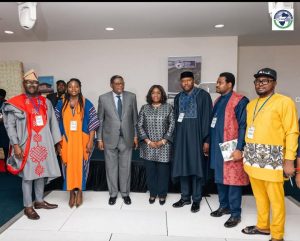
    Since this picture surfaced online, there has been palpable tension and utter disappointment in the camp of those in the political valley. Their social media spaces wear the mien of a graveyard, marked with deafening silence. They’d wished the veiled grudge between the duo should have metamorphosed into a conflagration of escalating political hubbub and vendetta.

    If wishes were horses, beggars would ride, says the Scottish proverb. Their wishes were tailored to action aimed at disintegrating the Peoples Democratic Party (PDP) after the waves of defection subsided, the subsequent sacking of Barr. Vena Ikem as chairman, and the accompanying disclosures of private messages by already done away chairman. Leading the All Progressives Congress (APC) in fanning the flames of discord was the Deputy Governor, His Excellency, Dr. Peter Peter Odey via his Facebook handle who posted the snippet: “The rock is solid.”

    The public tête-à-tête between Sen. Jarigbe Agom Jarigbe and Hon. Peter Akpanke yesterday seems to have sent a chill pill down their supporters’ spines. Perhaps they should calm down—nothing is amiss. The exchange was timely and beneficial for the party, as well as its acolytes and apologists. They demonstrated maturity as honorable men, leaving no room for airing any dirty laundry in public—if such exists at all. The camera is limited; it can only capture the outer layer of the skin and not the depths of the heart. While humans judge by outward appearance, they cannot discern the intentions of the heart.

    Friends and foes, like times and seasons, exist. They may last long but not forever. What will be, will be. In the state, the smartest politician is Jarigbe Agom. His political wizardry is unparalleled, with a unique ability to appeal to the conscience of the populace. He achieves this effectively through project commissioning. Just yesterday, he commissioned newly refurbished classrooms in Obanliku LGA.

    Just when it appears he’s losing the game, he pulls out a joker to the chagrin of naysayers. Let this peace spread far and wide.

    @highlight

  • Protection Of Private School Teachers Under The Labour Act BY EGBE MATTHEW


    Private school teachers play a critical role in shaping the future of generations, contributing significantly to education and nation-building. However, despite their importance, many private school teachers face challenges relating to poor working conditions, job insecurity, and unfair treatment from school owners and are left with no choice than to endure the pain and I’ll treatment because there is no legal structure to run to for redress. The absence of sufficient legal protection exacerbates these issues, particularly in jurisdictions where labor laws either do not explicitly cover private school employees or where enforcement mechanisms are weak in our dear nation Nigeria. The need for the protection of private school teachers under the Labour Act cannot be overemphasized, as it would help improve the quality of education, promote fairness, and uplift teachers’ living standards especially given the current economic state of the nation.

    Inadequate Protection of Private School Teachers
    Private school teachers, unlike their counterparts in public institutions, often face a lack of job security arising from the hire and fire practices, lower salaries, irregular payment schedules, draining of the potentials, time and poor benefits even with the level of commitment and dedication.
    While public school teachers are generally governed by specific government guidelines, private school teachers rely largely on the discretion of school owners and boards. In some cases, teachers are hired without formal contracts, making it difficult for them to assert their rights or seek legal redress when they are unfairly treated, overused or dismissed.

    Challenges Faced by Private School Teachers
    The challenges faced by private school teachers that call for better protection under labor laws include:

    – Low and Inconsistent Pay: Many private school teachers are paid significantly lower wages than public school teachers. Even when agreements are made, delays in salary payments are common, creating financial instability for educators who depend on their low income to support their families. Very few private schools can raise their shoulders that their salary scale or scheme is above #17,000-20,000 (seventeen thousand-twenty thousand) naira. The most surprising aspect is the fact that there are still private schools that pays #15,000, while some are owing arrears of 2 to 3 months with no apology. I remembered a situation where I was paid #5000 for over 3 years as a classroom teacher, PTA secretary and Head of Department when I eventually started managing the newly birthed secondary in one of the schools I worked in Ugep. I also remembered that in one of the schools, I was owed for 4 months while I was receiving #3,500 as salary without progress or any plan for increment. The situation has even worsen I’m some of the schools even though they pay some pay #15,000 or #20,000. The ones that pay upto #100,000 of any will ensure your entire system work for the money, and then when you look at the kind of work you do compared to the said salary, you will realize that even the #100,000 if any private school pays that at all is not worth it. The question is, how does the increase in the proposed minimum wage affect the private school teachers? Can that also be implemented or taken into consideration by private school owners? The only way to see that these set of individuals are accommodated is by enacting a law to accommodate private school teachers under the labour Act.

    – Lack of Benefits: Unlike their counterparts in the public-sector , private school teachers are often not entitled to benefits such as health insurance, pension plans, and paid leave. In the absence of these protections, teachers are left vulnerable, with little to no financial safety not even in times of need. This benefits at least would have been a motivation for effect and dedicated services but nothing like this is in place.

    – Job Insecurity: Private school teachers often face the constant threat of losing their jobs due to reasons like declining student enrollment, changes in management, or budget cuts, lack of employment agreement, initiations of policies that are heinous where teachers tend to disagree because it does not suit or not part of the supposed employment agreement. This job insecurity is compounded by the absence of clear guidelines for hiring and termination, which makes it easy for school owners or management to dismiss teachers without proper cause or compensation, and ofcourse the lack of redress mechanism.

    – Workplace Exploitation: In many cases, private school teachers are required to work long hours without additional pay, taking on responsibilities that extend beyond their contracted teaching duties. The lack of overtime pay or compensatory time off adds to the strain on teachers who already have demanding workloads. One day, my wife came home from work crying seriously, I began to wonder who had the guts to touch my wife, I asked her what happened, and all she managed to say was “human beings are very wicked”. I was more attentive and inquisitive, so I asked again, what happened, only to tell me how her former boss in the private school she was working decides to make a full of them by exploiting them. What they worked for and due to be paid the incentives was gladly refused them. What pained me was the fact that my dear wife was pregnant, yet she wakes up very early and goes to work almost before every other staff, she taught over 3 courses in 3 classes, she had to struggle everyday to prepare note of lessons with commitment, passion and dedication, yet what was due to her as well as every other individual staff in the school was denied them without apology. Unfortunately, some staffs had no choice thanks to endure instead of staying unemployed knowing too well that there are no jobs out there.

    Why Private School Teachers Need Protection Under the Labour Act*l
    Private school teachers need formal recognition under labor laws to ensure that they are entitled to the same basic rights and protections as other workers in Nigeria or under the Act. Some specific reasons for why these protections are necessary include:

    – Guaranteeing Fair Wages: The Labour Act provides for the establishment of minimum wage standards. Applying these standards to private school teachers would ensure that they are paid a fair wage that reflects their skills, contributions to education and also their academic qualifications.

    – Job Security and Fair Contracts: By extending labor protections to private school teachers, employers would be required to provide clear contracts that outline terms and conditions of the employment, including provisions for termination, severance pay, and notice periods. This would help reduce arbitrary dismissals, u fair treatment and ensure that teachers can work with a sense of security.

    – Access to Benefits: The Labour Act can provide for incentives and entitlements such as health insurance, pension schemes, and paid leave. Private school teachers, like other workers, deserve access to benefits that ensure their wellbeing and support during illness or retirement.

    – Safe Working Conditions: Labor laws typically set standards for safe and healthy work environments. Applying these standards to private schools would help reduce instances of overwork, burnout, and other occupational hazards that teachers may face.

    The Role of Government and Regulatory Bodies:
    To improve the situation of private school teachers in Nigeria, government intervention is crucial. There are several ways in which the government and relevant agencies can support the inclusion of private school teachers under labor laws:

    -Legislation: The Labour Act or equivalent laws must explicitly include private school teachers in its provisions. Clear legislative language is necessary to avoid ambiguity and ensure that private school teachers are aware of their rights. There is need to therefore pass a law by relevant government authorities for the overall protection of private workers especially the private school teachers and staffs.

    – Monitoring and Enforcement: It is not enough to simply pass laws. Regulatory bodies need to actively be set up to monitor private schools to ensure compliance with not just the operation and management of the educational system but with the labor laws as it affects or relates to the welfare of staffs. Inspections and audits should be conducted regularly to assess whether schools are adhering to minimum wage laws, providing appropriate benefits, and maintaining fair working conditions for their staffs.

    – Training and Sensitization: Teachers should be educated and trained not just about classroom Management, teacher-student/pupil relationship, teacher-parent relationship but also about their rights under the Labour Act. Many private school teachers may not be aware of the protections they are entitled to, leading to exploitation. Workshops, awareness campaigns, and training sessions can empower teachers to demand fair treatment.

    Conclusion
    The role of private school teachers in our society is indispensable, yet many continue to work under conditions that deny them the basic protections enjoyed by other workers. Extending the provisions of the Labour Act to include private school teachers is not only necessary for their well-being but also for the improvement of the educational system as a whole. Private school teachers also on their path need to understand their role in the educational sector and play their role effectively and with dedication, irrespective of class. I remember far back in the 70s, from secondary school or class 5 or 6, our parents were employed as teachers so it is not even out of place to finish secondary school and get or gain employment as a teacher. Because most people eventually become very renowned teachers from there. When teachers are protected and fairly compensated, they are more motivated and capable of delivering high-quality education, which ultimately benefits students and society at large.

    Ensuring that private school teachers are adequately protected under the Labour Act is not just a matter of fairness, but essential for fostering a more equitable and sustainable educational environment.