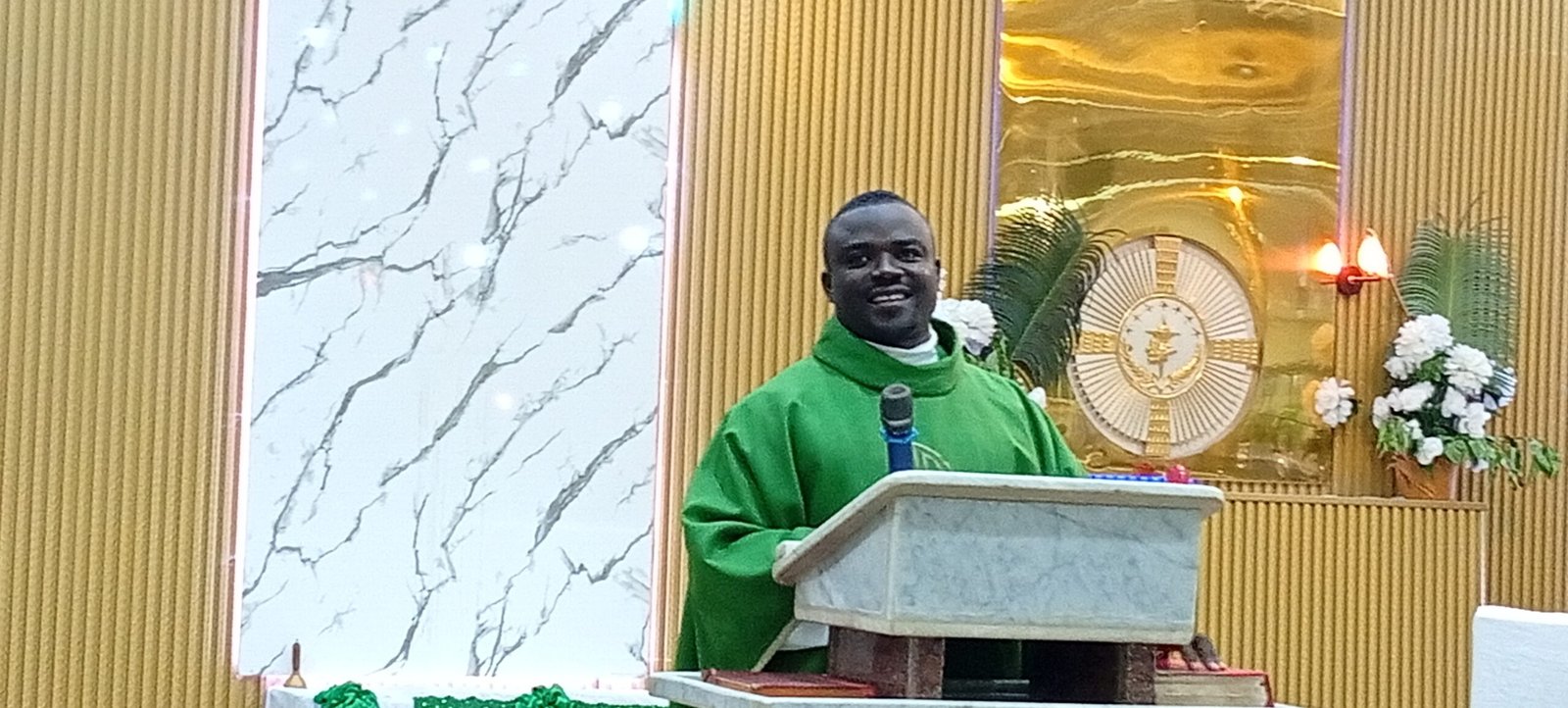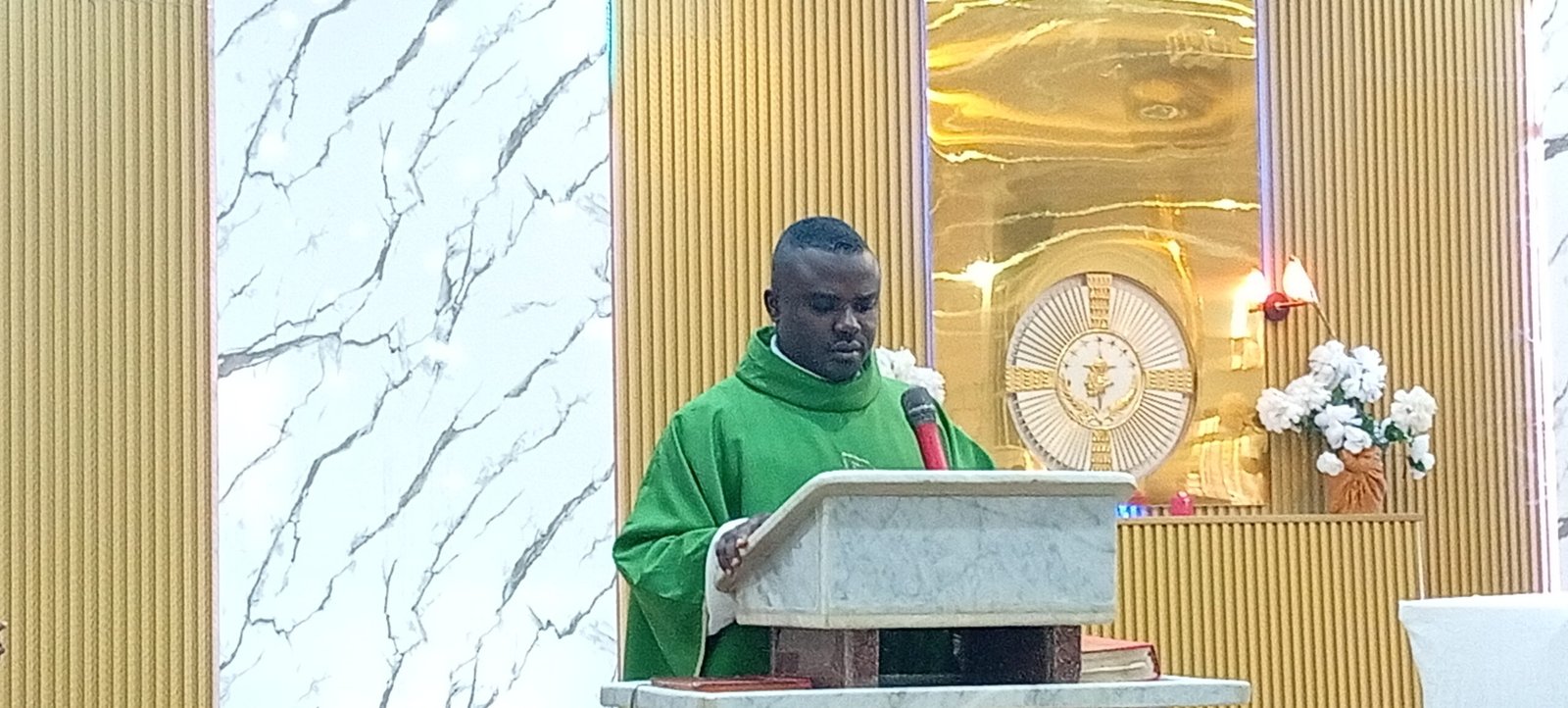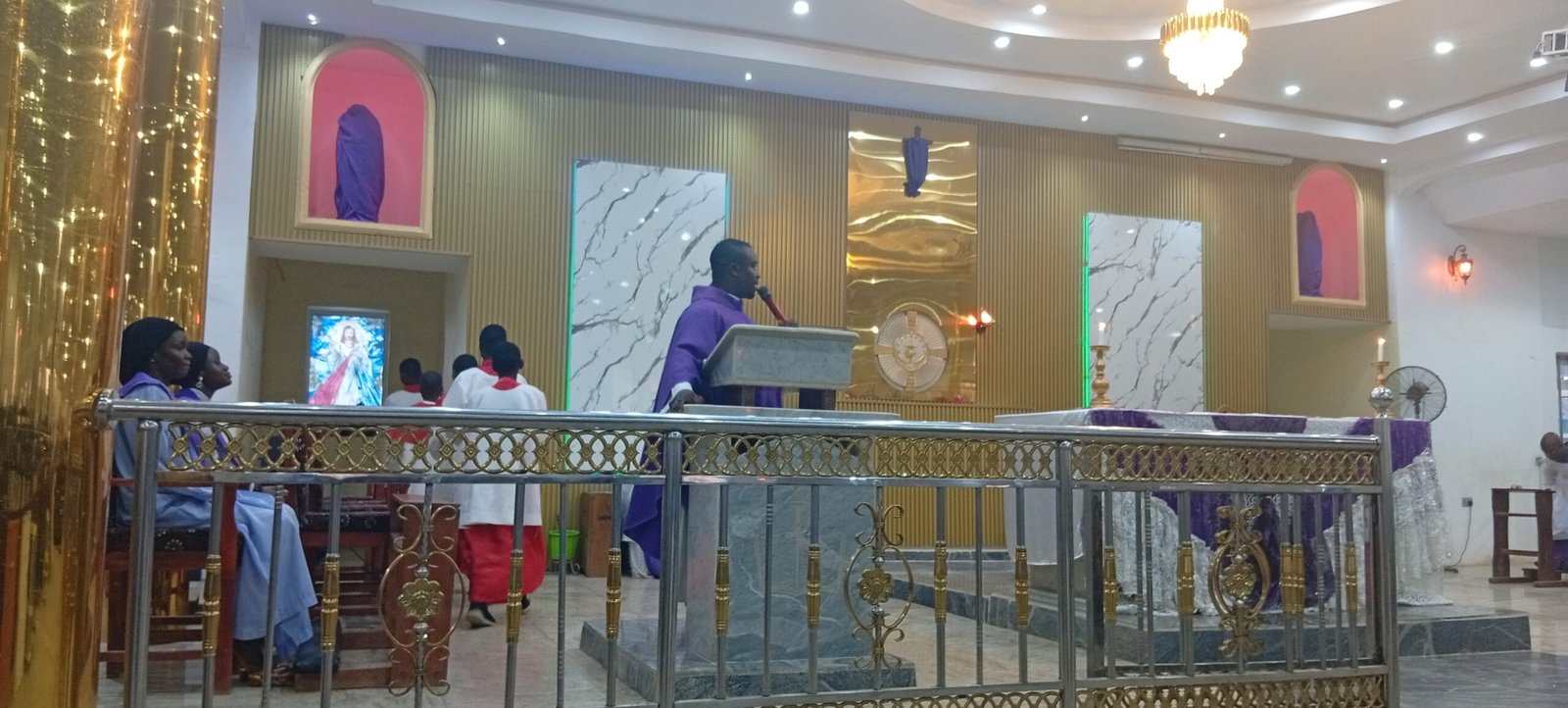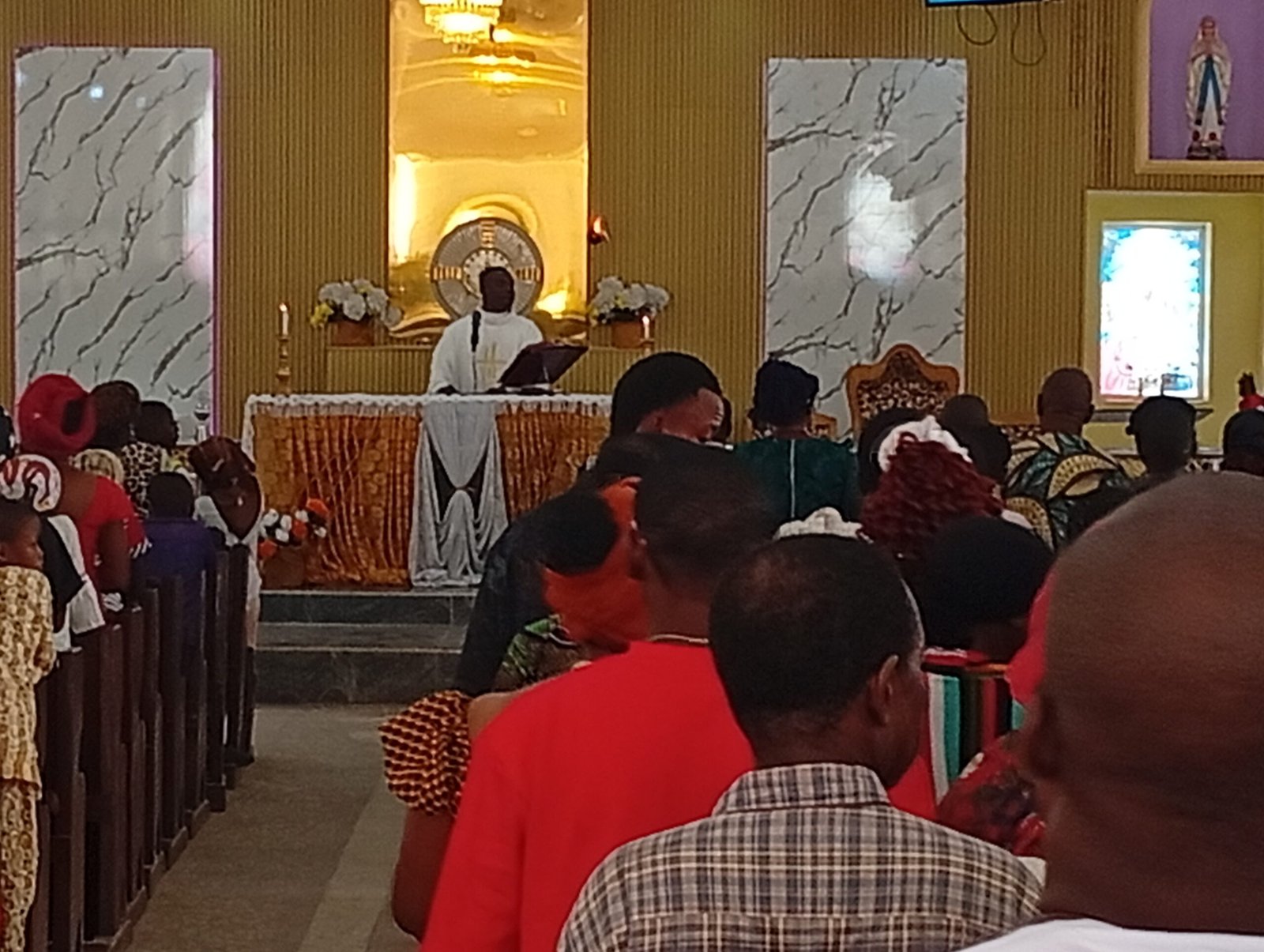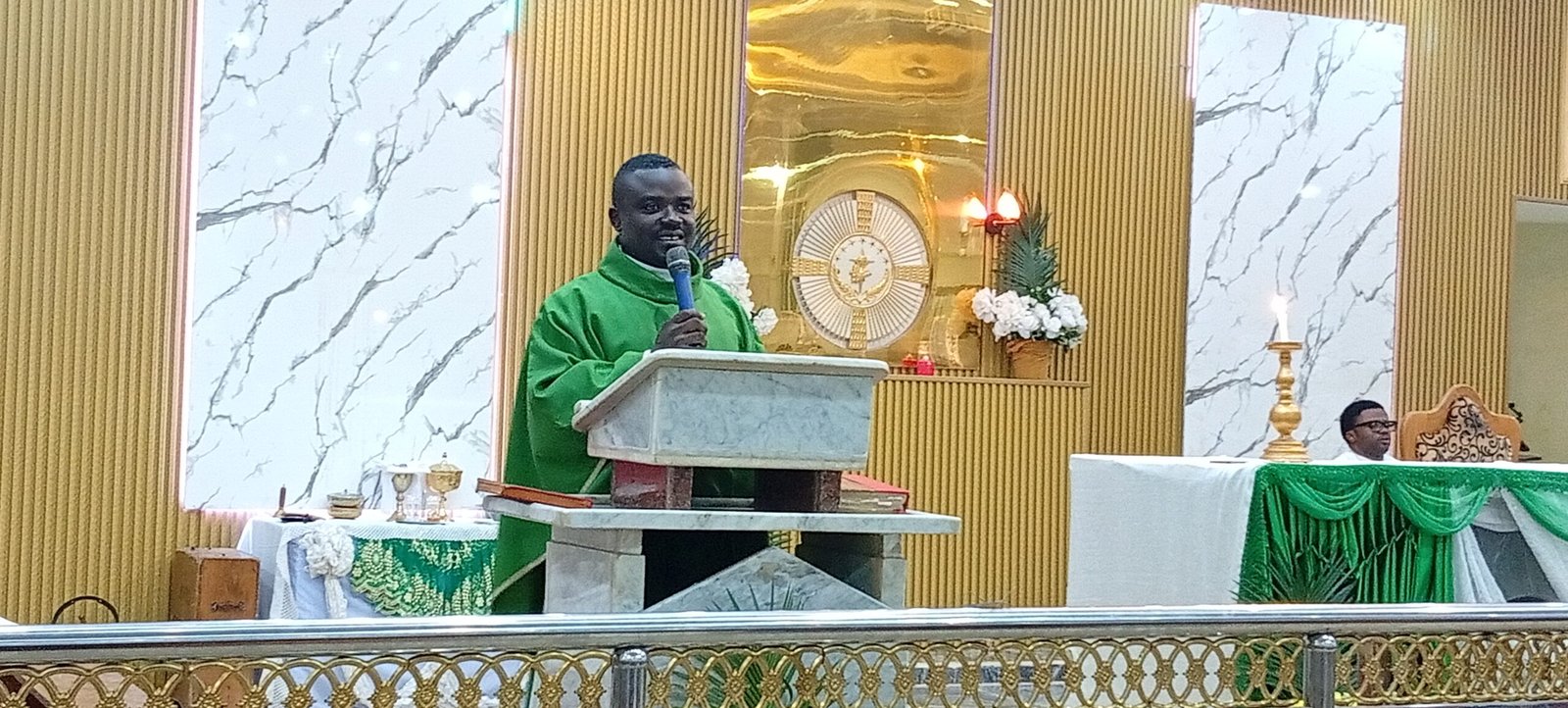
Tag: #Sylverus Ulem

  • Reach Out To The Left Out: Homily by Rev. Fr. Sylverus Ulem

    Reach Out To The Left Out: Homily by Rev. Fr. Sylverus Ulem


    My dear brothers and sisters in Christ,

    The message of today can be summarized in one call: reach out to the left out. There are many people around us who have been abandoned, neglected, or forgotten by society, institutions, and even by those closest to them. As Christians, we are called to reach out to such people with love, compassion, and mercy.

    On this Eleventh Sunday, the Church reminds us of our identity and mission as the people of God. The first call God gives to us is the call to belong to Him. God desires that we be His people. To be called God’s people is a special privilege, but it also comes with responsibility. If we are truly God’s people, we must listen to His voice and remain faithful to Him.

    The second aspect of God’s call is discipleship. Before Jesus chose the Twelve Apostles, many people followed Him. Yet He selected certain individuals and entrusted them with a special mission. In the same way, God calls each of us not only to belong to Him but also to become His disciples and witnesses.

    In the First Reading, we hear how God chose the people of Israel as His own and promised to guide them toward their destiny. However, this covenant relationship came with a condition: they were to remain faithful to Him. God’s promise of guidance and protection was linked to their faithfulness.

    The same is true for us today. It is not enough to say that God has called us. We must respond to that call through faithful living. God is not asking us to impress Him with great achievements or extraordinary sacrifices. Some people think that God can be pleased merely by offering gifts, performing rituals, or making grand displays of devotion. But God, who is the Creator and source of all things, cannot be enriched by anything we give Him.
    What God desires is our faithfulness.

    He calls us to obey His commandments and to become more like Him. Since we are created in His image and likeness, we are called to live, think, and act as He does. How do we do this? Through love. The entire law of God is summarized in the commandment of love.

    God welcomes all people regardless of tribe, culture, language, or background. That is why we gather together as one family in worship. As God’s children, we too must learn to welcome and love others without discrimination.

    Even when His people fail, God does not abandon them. Throughout the history of Israel, God remained faithful despite their unfaithfulness. He continually sought them out and called them back to Himself.

    The same is true for us. Like the people of the Old Testament, we often make promises to God and then fail to keep them. We stumble, fall, and go astray. Yet God remains faithful because His nature never changes.

    God has not changed; it is we who have changed. We may drift away from Him, neglect our spiritual lives, or abandon our commitments, but He remains constant. Whether we are faithful or not, God continues to wait for us with open arms.

    Therefore, I remind you today: God is waiting for you. Return to Him. Change your ways and allow His grace to transform your life.

    In the Second Reading, St. Paul reminds us of God’s unfailing faithfulness. As proof of His love, God sent His Son, Jesus Christ, to save us. God never abandoned humanity because He had chosen us to be His people.

    As disciples of Christ, we are called to continue His mission. We live in a society where many people feel abandoned, helpless, and forgotten. God calls us to minister to these people and become instruments of His love.

    Charity must begin at home. You cannot neglect the people in your own household and then expect your acts of charity elsewhere to please God. If we ignore those closest to us while trying to appear generous in church and public, we miss the true meaning of Christian service.

    We must begin by caring for those around us, our families, neighbors, employees, friends, and all who depend on us.

    Each Christian has a unique calling. Through Baptism, we have received a new identity in Christ. Just as Jesus called each Apostle by name and entrusted each with a particular mission, He calls each of us to serve Him in a unique way.

    Part of this mission is to show mercy to those who have failed. Often, those who have disappointed us are the very people who need our compassion the most. Instead of helping them rise again, we sometimes condemn and reject them.

    As followers of Christ, we must remember that God does not define people by their failures. He sees their dignity and their potential for renewal. We are called to do the same.

    In today’s Gospel, Jesus looked upon the crowds and saw that they were harassed and helpless, like sheep without a shepherd. He was moved with compassion. He did not think about what He could gain from them; instead, He thought about how He could help them.

    Sadly, there are times when people exploit those who are vulnerable. Even some religious leaders may be tempted to seek personal gain rather than genuine service.

    Jesus gives us a different example. He teaches us to serve people selflessly and to care for their needs.

    When influential people enter our churches or communities, our responsibility is not to flatter them for personal benefit but to remind them of their duty to serve others and work for justice.

    Today’s message is simple: whenever we encounter people, let us not focus merely on their problems or weaknesses. Let us see an opportunity to help, heal, and uplift them.

    Jesus also instructed His disciples to begin their mission among their own people. This teaches us an important lesson: before we seek to change the world, we must first allow God to change us.

    We cannot effectively preach conversion if we refuse to confront our own faults. Many people want to change others while neglecting their own families, habits, and attitudes. True evangelization begins with personal conversion.

    Therefore, let us begin in our homes. Let us examine our own lives, seek God’s grace, and strive to become faithful disciples. Then we will be able to bring others closer to Christ.

    May God grant us the courage to answer His call, the grace to remain faithful, and the compassion to reach out to those who have been left out.

    May His word dwell richly in our hearts through Christ our Lord.
    Amen.

  • COME OUT Being A Sermon By Rev Fr Sylverus Ulem

    COME OUT Being A Sermon By Rev Fr Sylverus Ulem


    I titled this reflection Come Out. It would have been fitting to call it Lazarus, but the time of Lazarus has passed. I leave the title open, so that you can come out yourself.

    When Jesus called Lazarus, His mission was specific: “Lazarus, come out.” But today, from this pulpit, that same call is extended to everyone. Whenever you hear the words come out, it is both an invitation and a command. It may mean: come out and effect change. It may also mean: come out from where you are not supposed to be. There are places we find ourselves that are not meant for us, places of sin, compromise, and moral confusion. When God says “come out,” He is calling us away from those places. The phrase come out involves two people, the one who calls, and the one who responds. It is a command you cannot command yourself. God is the one calling, and we are the ones invited to respond. My dear people of God, the Word of God speaks directly to our situations. It carries the power to bring life where there is decay.

    In today’s Gospel, Lazarus had been in the grave for four days. According to Jewish belief, there was still hope within the first few days of death, but after four days, all hope was gone. Yet Jesus came at that moment to show that even when human hope ends, divine possibility begins. That is why Martha said, “I know he will rise again in the resurrection.” And Mary and Martha wept bitterly. When Jesus saw them, He wept.
    Jesus did not weep because death existed, but because of the depth of human pain and struggling faith. His tears show that He shares in our suffering. Death, in itself, is not the ultimate problem, it is a necessary passage of life. But God’s power goes beyond even death.

    In the first reading from the Prophet Ezekiel, the dry bones represent a people who had lost identity and hope. God asked: “Can these bones live?” He brought the prophet to a valley, a place of depression, a low point, to show that even from the lowest place, restoration is possible. No matter your situation, you too will rise again.

    In the Gospel, we see another form of “dry bones” a family that had lost their only hope. Lazarus was everything to Mary and Martha. When he died, it felt like everything was lost. They said, “Lord, if you had been here, our brother would not have died.”

    We can say the same today, Lord, if you had been here, our nation would not be like this. Lord, if you had been here, insecurity would not be rising. Lord, if you had been here, things would be different. But even in that pain, we remember the shortest verse in Scripture: “Jesus wept.” This shows that God is not distant, He suffers with us.

    Today, however, we see confusion even in the Gospel being preached. Some preach for gain, turning the altar into a marketplace. Truth is fading, and hope seems buried. But the message remains simple, the God who raised Lazarus can restore us. However, there is a condition, we must surrender to Him. Before Lazarus came out, people had to roll away the stone. Jesus performed the miracle, but human beings removed the obstacle.

    So we must ask ourselves: what are the stones blocking us today? In our nation, injustice, bribery, and corruption. In our personal lives, hatred, jealousy, gossip, addiction. After Lazarus came out, Jesus said, “Unbind him.” Again, it required community effort.

    Transformation is both divine and human. God raises but we must cooperate. Come out of sin. Come out of hatred. Come out of addiction. Come out of hopelessness.

    Even when it feels like God is late as it seemed with Lazarus remember this. He is never late. He works beyond human timing.
    He loved Lazarus, yet He delayed so that a greater glory could be revealed. Your life is not too late. Your purpose is not lost.

    Your situation is not beyond restoration.
    When God calls, respond.

    Come out and live again.

    Disclaimer: The opinion expressed in this article is strictly that of the author, Sylverus Ulem and does not represent Theluminenews, or its agent or the organisation the author works for/with

  • Let Christ Reign Over You BY SYLVERUS ULEM

    Let Christ Reign Over You BY SYLVERUS ULEM

    LET CHRIST REIGN OVER YOU By Rev Fr Sylverus Ulem

    …. Being a sermon delivered during second Mass (9:00am) at Holy Trinity Parish, Ogboja – Ogoja.

    34th Sunday in Ordinary Time – Year C
    Solemnity of Christ the Universal King

    My dear people of God,
    When we allow Jesus to reign over us, our society becomes a better place. Many times, the stagnation we experience, individually and collectively is because we have not truly allowed Christ to take His rightful place in our hearts.

    From the beginning, God created us with one primary rule, that good be done. The Ten Commandments came later as guidance, but the heart of God for us has always been goodness, love, and obedience.

    Christ the Universal King
    On this 34th Sunday in Ordinary Time, the Church celebrates Christ the Universal King, a feast instituted by Pope Pius XI. This celebration is a public proclamation that Jesus is the King of the universe and, by implication, the King of our lives.

    God created everything out of nothing. Jesus is the center of our being, the foundation on which everything stands. Without Him, everything collapses back into nothingness.

    In David, the people saw a worthy servant. He did not campaign or write manifestos; instead, the people recognized the qualities of leadership in him. When we humble ourselves, God reveals Himself in us. Every true leader carries the “flesh and bone” of the people, he arises from among them and must protect and guide them.

    A king who cannot protect his people has failed in his duty. Today, we see many leaders more concerned with power than service. Political defections, power struggles, and the hunger for influence remind us that many seek authority without embracing responsibility. But Scripture tells us, all power comes from God, and any power not rooted in God will eventually collapse.

    Today we see apostles, evangelists, bishops, prophets, all kinds of titles, yet confusion persists. Some pursue titles more than service; some even fight or kill to protect these positions. But any title without corresponding responsibility is useless.
    Whether priest, bishop, parent, or leader if we carry the name without carrying the corresponding responsibility, we have failed.

    Pilate and the Jews conspired out of ignorance, yet their actions fulfilled God’s plan of salvation. Our celebration today is not a mockery of Christ, but a recognition of His kingship expressed through the cross.

    There are three crosses in life:
    The cross we accept, it serves us.
    The cross we reject, it condemns us.
    The cross we willingly carry, it redeems us.

    Christ’s Kingship vs. Earthly Leadership
    Christ is the model of all kings and leaders. He thinks of His people, loves them, and serves them like a good Shepherd. He treats us as brothers and sisters. Many leaders today make promises they do not keep, feeding on the people rather than feeding the people. But Jesus is the King who feeds His subjects, who gives His life for them.
    He left the riches of heaven to share in our poverty so that we might become rich. Yet today we often see leaders who rise from poverty only to feed on the riches of their people.

    He had no social media account, yet He has the largest followers in history. Many today expose themselves online simply to gain followers and earn small payments, forgetting their dignity.

    There is no protocol to access Jesus. He was like a parish priest whose parishioners could freely approach Him. Sadly, even we priests sometimes fail in this area. When a rich man arrives at the parish house we often rush to welcome him, but when a poor man comes, we sometimes turn him away.
    May God help us to change.

    As we celebrate Christ the Universal King, may He truly reign over our hearts, our families, our communities, and our nation.

    May His peace fill our lives, now and always.
    Through Christ our Lord. Amen.


    Disclaimer: The opinion expressed in this article is strictly that of the author, Rev Fr Sylverus Ulem, and does not represent Theluminenews, its agent or the organisation the author works for/with.