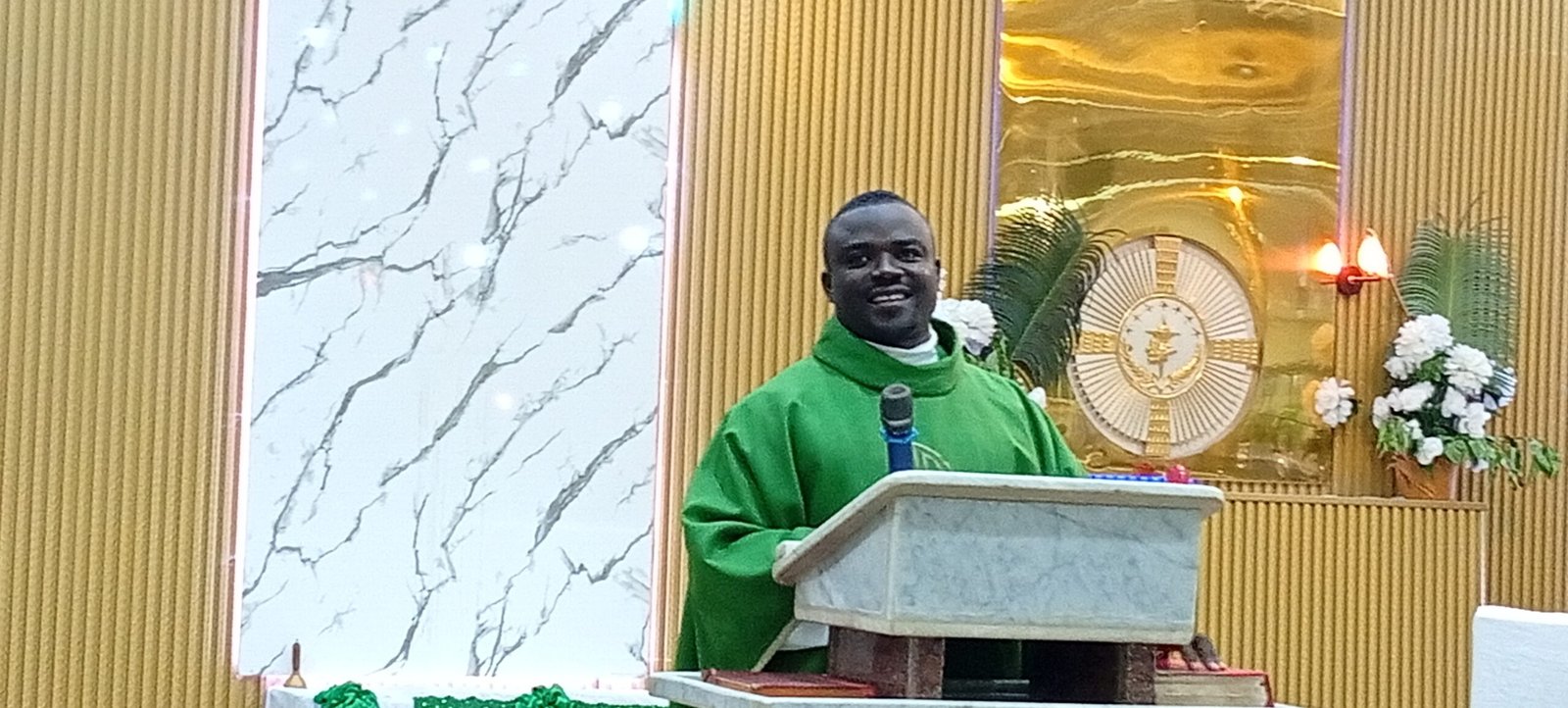
My dear brothers and sisters in Christ,
Today’s liturgy invites us to discover where true peace and lasting rest are found.
We live in a world marked by economic uncertainty, violence, and fear. Yet God’s Word assures us of His presence and His peace. Nations are in conflict with one another. Families are divided. In a country like Nigeria, where economic hardship often makes it difficult for us even to care for one another, God’s Word still offers us hope and reminds us that He has not abandoned His people.
One of the most comforting statements in today’s Gospel comes directly from Jesus Himself: “Come to me, all you who labour and are burdened, and I will give you rest. Learn from me, for I am gentle and humble of heart.”
This is one of the rare occasions where Jesus speaks about His own heart. He invites us to learn from Him because He is gentle and humble. Even while hanging on the Cross, after suffering rejection, humiliation, and torture, He prayed, “Father, forgive them, for they do not know what they are doing.” What an extraordinary example of meekness and humility.
My dear people of God, Jesus teaches us to remain humble even in the face of exploitation, abuse, rejection, and injustice.
Today, many people say, “If you provoke me, my anger will destroy you.” Such reactions often come from hearts weighed down by pain, frustration, and disappointment. Because our hearts are troubled, many negative thoughts find their way into them.
But Jesus invites us to learn from His heart, to remain gentle and humble. A humble heart speaks words that bring peace rather than conflict. A gentle heart heals instead of hurting.
The invitation of Jesus is universal. He calls every one of us because every one of us carries one burden or another.
Some people carry burdens in their families. Others struggle in their workplaces, businesses, marriages, or personal lives. Some burdens are simply part of life. Illness, old age, bereavement, and economic hardship are natural burdens that come with our human condition. But other burdens are created by human beings.
The rising cost of food and basic necessities has become a heavy burden for many families. During the time of Jesus, religious leaders often placed unnecessary burdens on the people through rigid interpretations of the law. Today, we still see people creating burdens for others through injustice, corruption, exploitation, and selfishness.
Sometimes, the little kindness we ought to show one another becomes another source of pain. Instead of solving problems, we create more. As the saying goes, “The message they sent you never reached its destination, and it never returned to the sender.”
Against this background, Jesus presents Himself not as another burden, but as our rest. His invitation comes from a heart that is gentle and humble.
Many of today’s heaviest burdens are humanly created. There are directors and officials who exploit young women seeking employment. Some lecturers demand sexual favours from students before awarding them the grades they deserve.
Think of the pain of parents whose children are kidnapped because of insecurity and the failure of leadership. Think of the wounds caused by harsh and careless words.
Before you make someone cry, remember that tears are the most expensive liquid on earth. They may contain only one percent water, but they carry ninety-nine percent emotions. How often do we say hurtful things to our neighbours, only to return later with a simple “I’m sorry”?
As a wife, have you considered the burdens you may place on your husband through constant quarrels and unreasonable pressure?As a husband, have you considered the burdens you place upon your wife by neglecting her emotional and spiritual needs? As children, have you considered the shame and extra burden you have placed on your parents?
As an employer or supervisor, have you reflected on the burdens you impose on your employees through exploitation or injustice? As a politician, have you considered the burdens your decisions place upon the people you were elected to serve?
The first reading from the Book of Zechariah presents God’s promise to restore a broken and burdened people. The prophet announces the coming of a humble King who will bring peace, not through violence or oppression, but through justice, humility, and salvation.
Sadly, our society continues to carry many heavy burdens. Young graduates bear the burden of unemployment. Families worry daily about what they will eat tomorrow. Many feel abandoned by those entrusted with leadership.
We may experience disappointment with those who govern us, but our hope does not rest in human leaders alone. Our confidence remains in God, who never forgets His people. At the fullness of His time, He will surely come to our aid.
My dear brothers and sisters, we learn from Jesus by helping to carry one another’s burdens. We lessen the burden of hunger by feeding the hungry. We lessen the burden of homelessness by welcoming the stranger. We lessen the burden of our students by giving them encouragement instead of demanding money or immoral favours in exchange for success.
Each of us must ask: Am I making life easier for those around me?
Do people feel relieved when they encounter me, or do they become afraid? Does my presence increase the burdens of others, or does it lighten them?
As followers of Christ, we are called not only to bring our own burdens to Him but also to help carry the burdens of others.
As we celebrate this Holy Eucharist today, let us renew our commitment to lead others to Christ. Let us become signs of hope, peace, compassion, and mercy. Let us show those who have lost their way the path back to Jesus.
When we do this, our families, our communities, our nation, and indeed our world will become better places for all.
May Christ, who is gentle and humble of heart, give us rest and teach us to become instruments of His peace.
Peace be with you.
Disclaimer: The opinion expressed here strictly that of the Rev Fr Sylverus Ulem, and does not represent Theluminenews, its agent or the organisation he works for/with.