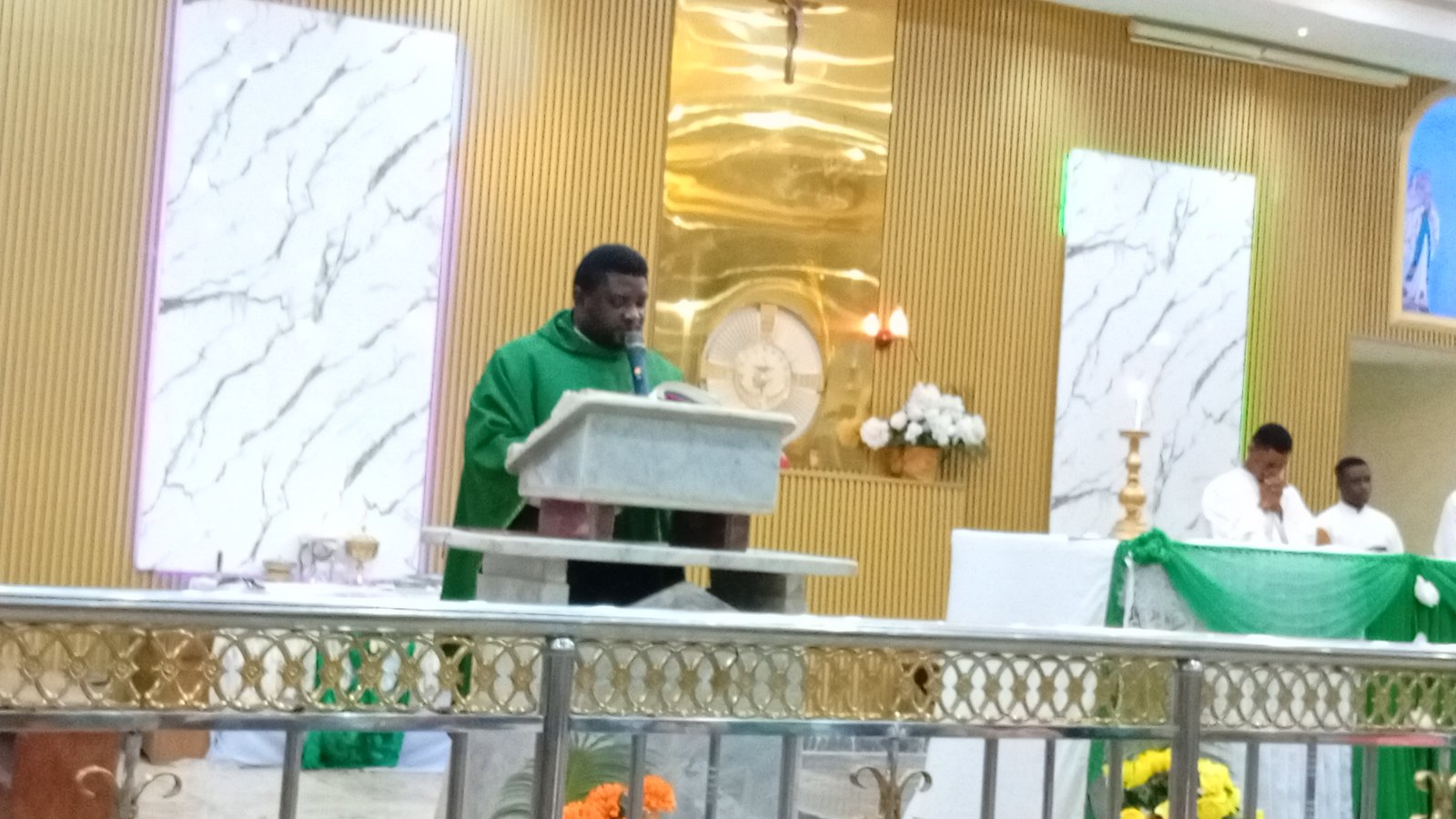
There are many questions and answers in today’s Gospel, but two questions stand out. The first is: “Who do people say that I am?” The disciples responded, “Some say John the Baptist; others say Elijah; still others say Jeremiah or one of the prophets.”
Jesus did not stop there. He asked them a more personal and important question: “But who do you say that I am?” Simon Peter answered, “You are the Christ, the Son of the living God.” Peter was not a man without faults. He was the same Peter who would later deny Jesus three times. Yet, despite his weaknesses, Peter had a personal encounter with Jesus. He had reflected on who Jesus was, and his answer came from that personal conviction.
This encounter between Jesus and His disciples took place at Caesarea Philippi. It was a moment of retreat, reflection, and self-discovery.
Self-discovery is very important because it gives us mastery and awareness of who we are. When you know yourself, you are less likely to be defined by what other people say about you. When someone has undergone an operation in the hospital, that person may desperately crave water. Yet, if the person drinks water at that particular moment when the doctor has instructed otherwise, it could be dangerous or even fatal. The water itself is not bad. What matters is understanding the situation and knowing what is appropriate at that moment.
That is why self-awareness is important. When you truly know who you are, someone cannot simply come and tell you something completely different about yourself and make you accept it. You know yourself. Self-discovery helps you understand where you are coming from and where you are going.
“Who Do People Say That I Am?” Jesus first asked, “Who do people say that I am?” It is sometimes helpful to know how people perceive us. What do people say about us?What do people think about us? Occasionally, we should take time to find out how others experience us.
Have you ever stopped to ask yourself: What do people say and think about me? There is a saying: “An entity without an identity is a nonentity.” You must have an identity.
No one is a complete mirror of himself. Sometimes, we need the opinions of others to help us see things about ourselves that we may not see. However, we must also understand that people’s opinions are not always our reality.
Sometimes you have goodwill, but people misunderstand you. Sometimes you are doing your very best, yet people still criticize you. Sometimes, no matter what you do, people will sit down and condemn you.
But remember: their opinion is not necessarily your reality.
How Do You See Other People? Jesus’ question also challenges us to examine how we see others. What do you say about other people? Some people only see others as opportunities to satisfy their own needs. They greet you only when they need something from you. You hear, “Calvary greetings!” But once you help them, all you receive is, “Thanks, seen.” We must ask ourselves: Is this how we treat people? What do you say about others? Are your words positive? Do you recognize the good in people, or is everything you say about them negative?
Sometimes, a parish may receive one priest and complain. Another priest is sent, and they complain again. Another one comes, and the complaints continue. So, which priest do you actually want? The problem may not always be the person. Sometimes, the problem is the way we choose to see people. Always look for the good in others. Always try to see the good in people.
And parents, speak well about your children. Stop constantly condemning your children.. The child you have condemned today may be the very child God has chosen to use to bless your family tomorrow. Instead of constantly condemning your children, pray for them. Encourage them. Speak life into them. And do the same for others.
“But Who Do You Say That I Am?” The question Jesus asked His disciples is also addressed to us today: “Who do you say that I am?” This is not simply a question for the disciples. It is a question for every Christian. It is a question of faith, identity, and personal relationship. Each of us must be willing to give our own answer.
The encounter between Jesus and His disciples was like a personal retreat. Jesus wanted His disciples to move beyond what they had heard from others and come to their own personal understanding of His identity and authority.
We see something similar in the story of the two disciples on the road to Emmaus. Jesus walked with them, spoke with them, and explained the Scriptures to them, yet they did not recognize Him immediately. Sometimes, we too can be close to Jesus and still fail to recognize Him. That is why our personal encounter with Christ is so important.
Your Answer Can Change Your Story. People said different things about Jesus. But Peter gave his own answer: “You are the Christ.” Immediately, Jesus responded by changing Peter’s identity: “You are Peter, and on this rock I will build my Church.”
Peter recognized Jesus, and Jesus revealed something about Peter’s own identity. This teaches us something profound: the way you recognize Jesus can transform the way you understand yourself. When you recognize Jesus Christ as the Son of God, you begin to see yourself differently. When you acknowledge Him as Lord, He can rewrite your story. When you surrender your life to Him, He can give you a new identity. The person people have called a failure may become a testimony. The person people have rejected may become an instrument of blessing. The person people have condemned may become the one God uses to lift others.
Today, Jesus is asking each one of us the same question He asked Peter: “Who do you say that I am?” Do not answer based only on what your parents told you. Do not answer merely because you grew up in the Church. Do not answer simply because everyone around you calls Him Lord. Have you encountered Him personally?
The way you see Jesus will influence the way you live, the way you pray, the way you treat others, and the way you understand your own life. May we come to know Christ personally. May we recognize Him not only with our lips but also with our hearts and our lives. And as we recognize Him, may He rewrite our stories, transform our identities, and lead us into the purpose He has prepared for us.
I pray for you today that the name by which Jesus calls you will be a name that brings magnification, blessing, and glory to you and to your family. May Jesus transform every negative story concerning your life into a testimony. May He give you a new identity, a new beginning, and a renewed sense of purpose.
May you encounter Christ personally, know Him deeply, and follow Him faithfully. And may your life become a testimony of His goodness and grace.
Through Christ our Lord. Amen.
Disclaimer: The opinion expressed in this homily is strictly that of the homilist, Rev Fr Felix Ovai Ekpe and does not represent Theluminenews its agent or the organisation the author works for/with.