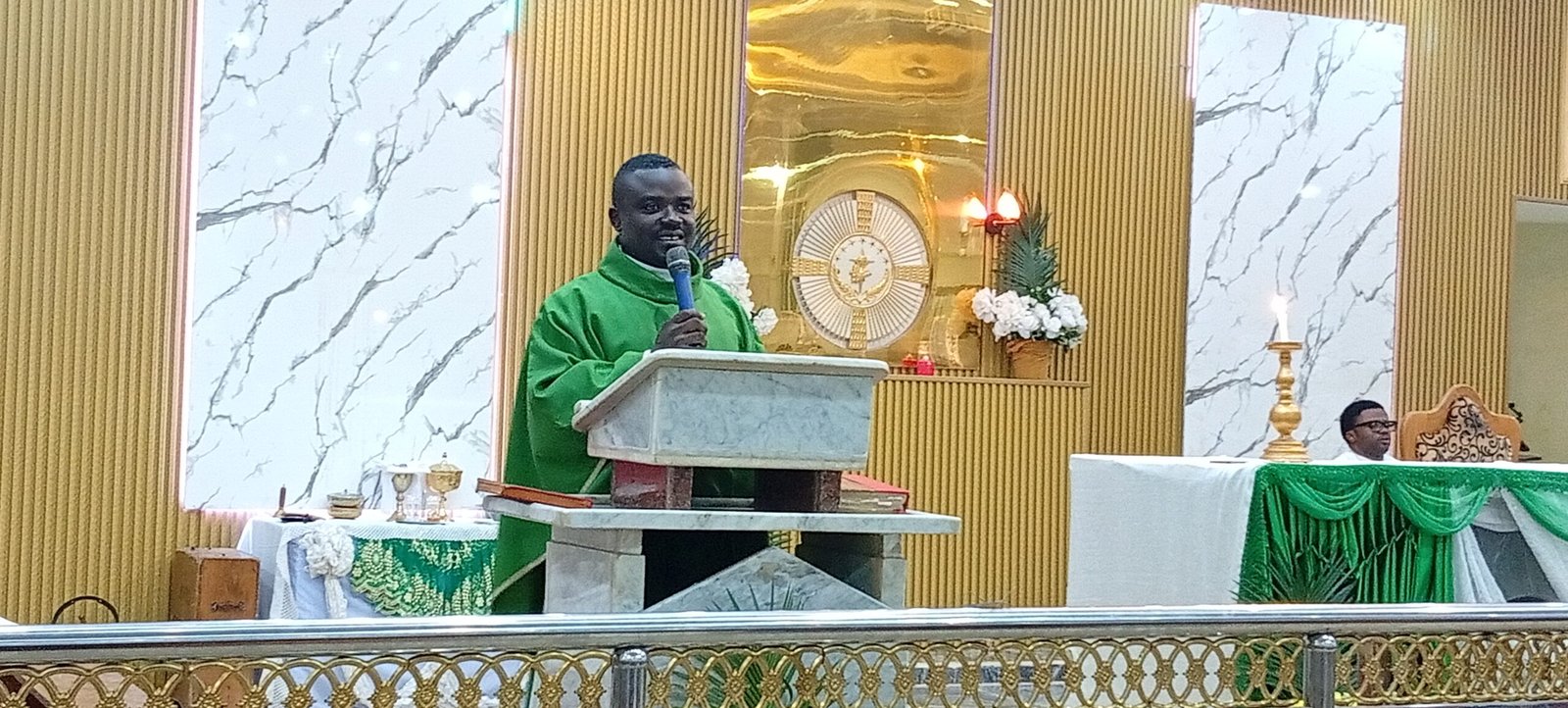
There is a funny but painful contradiction in human life: everybody wants a better society, but not everybody is willing to become a better citizen. We want honest politicians, but we sometimes offer bribes to get what belongs to us. We want responsible parents, but some children refuse to listen to any advice. We want obedient children, but some parents have forgotten that children learn more from what they see than from what they hear. We want holy priests and pastors, but we sometimes encourage them to tell us only what we want to hear. We condemn corruption in government while celebrating it when it works in our favour.
In Nigeria, we are particularly gifted at identifying the sins of others. We know exactly what is wrong with the President, the governor, the local government chairman, the priest, the pastor, the neighbour and even the person selling tomatoes in the market. If criticism were a university degree, many of us would have graduated with first-class honours. Unfortunately, when the same examination is brought to our doorstep, we suddenly become lecturers in the theology of excuses!
This Sunday, the Word of God invites us to stop playing the innocent victim and begin examining our own lives. In the first reading, the prophet Ezekiel confronts the Israelites over their complaint that God’s ways are unjust. They seem to suggest that their suffering is God’s fault rather than the consequence of their own conduct. But the Lord makes it clear that He does not desire the death of the wicked. Rather, He wants the wicked person to turn away from evil and live. The Lord declares that when a wicked person turns away from wrongdoing and begins to practise justice and righteousness, that person will preserve his life (cf. Ezekiel 18, 27–28).
This passage reveals something fundamental about the nature of God: God’s justice is not opposed to His mercy, and His mercy does not eliminate the need for repentance. God does not condemn a person to remain forever a prisoner of yesterday’s mistakes. He opens the door to conversion, but we must be willing to walk through it. This is good news for anyone who has made terrible mistakes in life. Your past may explain some of your struggles, but it does not have to determine your future. The person who cheated yesterday can become honest today. The person who abandoned the family can begin to take responsibility. The Christian who has lived a double life can begin again through genuine repentance.
In the second reading, St Paul appeals to the Philippians to reject selfish ambition, vanity and the desire to place themselves above others. Instead, they are to act with humility, considering the interests of others and following the example of Christ. Paul then presents Jesus Christ as the supreme model of humility. Though He was in the form of God, He did not cling to His equality with God. He emptied Himself, took the form of a servant and became obedient even to death on a cross (Philippians 2, 6–8).
Unfortunately, our world often defines greatness differently. We measure success by the number of people who stand up when we enter a room, the number of people who call us oga, madam, chief or honourable, and the number of people who must wait for hours before they can see us. In some offices, the person who has the least work to do is the one who insists on being treated like the most important person in the building. Even when a public official is elected to serve the people, the people may soon discover that they must first serve the official’s ego!
However, Christ turns this understanding of greatness upside down. In His kingdom, authority is a responsibility, not a licence for oppression. Leadership is service, not an opportunity to enrich oneself. Humility is not weakness; it is the strength to put love above pride. A father cannot demand respect from his children while treating their mother with contempt. A mother cannot teach honesty while encouraging a child to lie for convenience. A religious leader cannot preach sacrifice while using the suffering of the congregation to satisfy personal ambition
In the Gospel, Jesus tells the story of a father who asks his two sons to go and work in his vineyard. The first son refuses, saying, “I will not,” but later changes his mind and goes. The second son responds, “Certainly, sir,” but fails to go. Jesus then asks which of the two did the father’s will. The answer is obvious: the first son. One disappointed his father with his words but pleased him with his eventual obedience. The other pleased his father with his words but disappointed him with his disobedience.
Jesus uses this story to challenge the religious leaders who appeared righteous but refused to respond to God’s call, while tax collectors and prostitutes were turning towards the kingdom through repentance. The lesson is not that sin is good or that public sinners should be celebrated for their past wrongdoing. Rather, Jesus teaches that genuine conversion matters more than a reputation for righteousness.
One of the greatest dangers in the Christian life is the temptation to substitute religious language for religious obedience. We can sing, “Take my life and let it be,” and still refuse to surrender our anger, dishonesty or pride to God. We can pray for peace while nursing hatred against our neighbours. We can shout “Holy Ghost fire!” against our enemies while refusing to reconcile with members of our own family. The problem is not that we pray too much. It is that we sometimes pray without allowing God’s Word to challenge our behaviour.
Perhaps you are reading this reflection and remembering decisions you regret. Perhaps you have disappointed your family, betrayed someone’s trust or lived for years in contradiction to your Christian profession. Do not allow shame to convince you that conversion is impossible. The first reading assures us that the wicked person who turns away from wrongdoing can live. The Gospel shows us that the son who initially refused his father’s command could still change his mind and do what was required of him. God’s mercy is not a reward reserved for people who have never failed. It is a gift that invites sinners to return to Him.
May our words and deeds become one, so that the Christianity we profess on Sunday will be visible in our homes, offices, markets, schools, churches and public institutions throughout the week. Amen
Fr. Ulem
Disclaimer: The opinion expressed in this article is strictly that of the author, Rev Fr Sylverus Ulem, and does not represent Theluminenews, its agent or the organisation the author works for/with.