Author: News

  • C’River APC Chairman Fires Back, Alleges ₦60m Fraud By Chapter Leaders

    C’River APC Chairman Fires Back, Alleges ₦60m Fraud By Chapter Leaders

    By Asuquo Cletus 

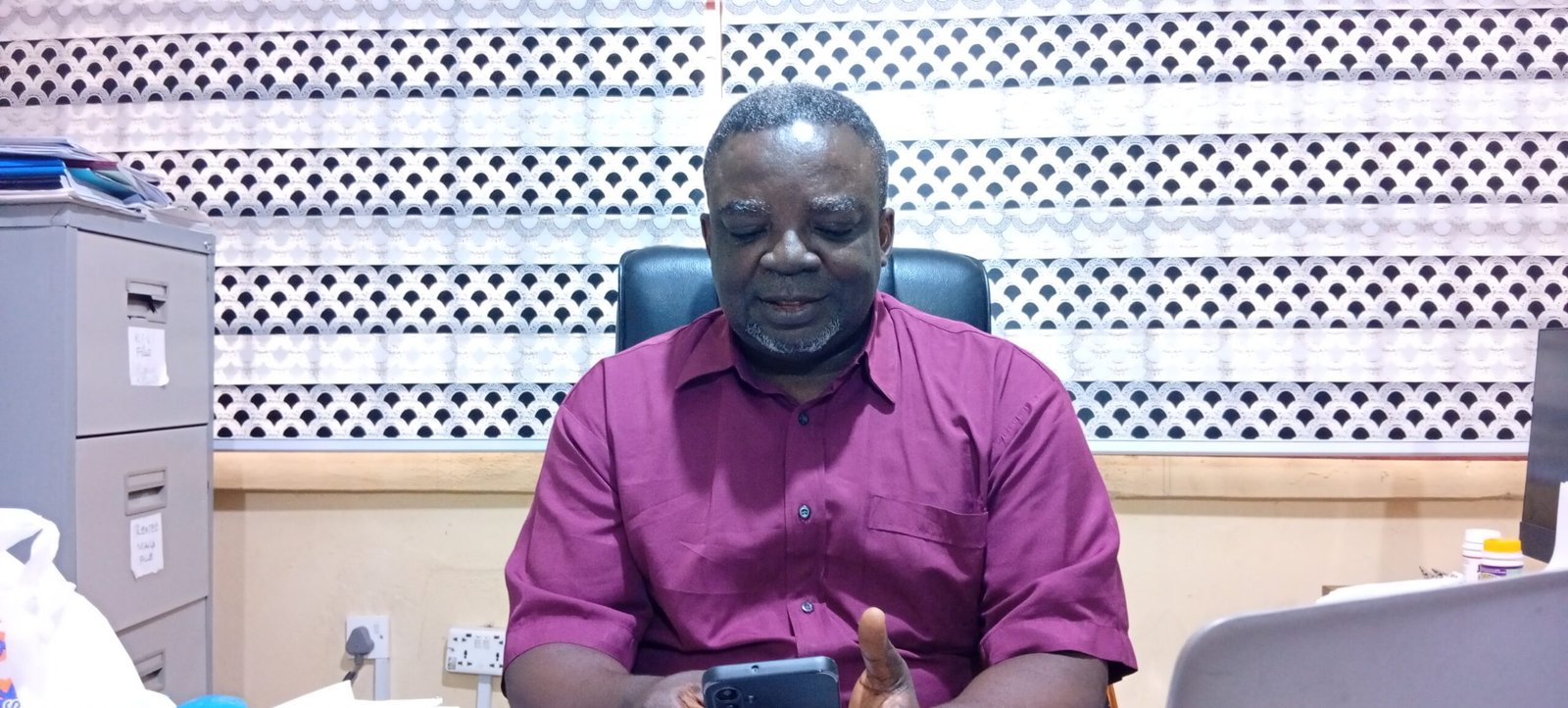
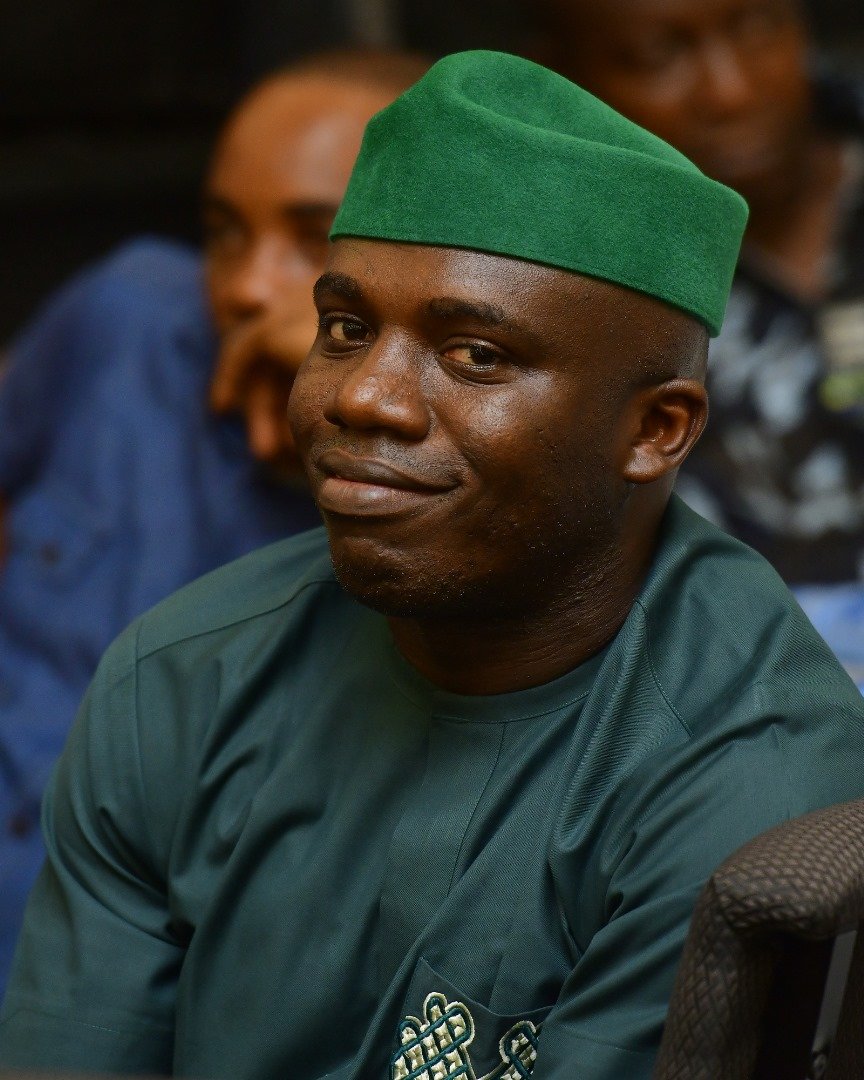
    The chairman of the All Progressives Congress (APC) in Cross River State, Barr. Alphonsus Ogar Eba, has dismissed calls for his resignation by a group of chapter chairmen and secretaries, describing them as individuals “running away from their shadows.”

    Eba, who spoke in reaction to a communiqué issued by the Forum of APC Chapter Chairmen and Secretaries calling for his removal over alleged high-handedness and diversion of party funds, accused the aggrieved officials of embezzling over ₦60 million belonging to the party.

    The forum, led by Kelvin Njong, Chairman of the APC in Boki Local Government Area, had on November 7 issued a communiqué in Calabar alleging that the state chairman withheld stipends meant for party officials at the chapter and ward levels for three months, diverted party funds, and ran the party “as a private estate.”

    But reacting to the claims, Eba described the allegations as “baseless and mischievous,” saying the affected chapter chairmen were being investigated for financial misconduct.

    “They embezzled monies meant for ward executives and some chapter executives running over ₦60 million. They must come and give account for that,” he said.

    The state chairman explained that the party has since adopted a direct payment system, where stipends are paid straight into the bank accounts of all 5,778 party executives across the state to ensure transparency and eliminate mismanagement.

    “We now pay all party executives directly into their accounts, and we have paid all of them up to date. But the 17 chapter chairmen’s salaries are being held until they clear themselves of the fraud alleged against them,” Eba stated.

    He further alleged that some chapter chairmen collect over ₦4 million monthly as dues from local government appointees and another ₦3.6 million from other sources but fail to remit or share the funds equitably among other officials at the ward and chapter levels.

    “They squander these funds, creating a disproportionate salary structure far higher than what members of the state executive committee earn. This is against the spirit of our administration and our commitment to transparency and accountability,” he added.

    Eba maintained that no chapter chairman or group of party officials has the constitutional power to demand the resignation of a state chairman or member of the state executive committee, stressing that the reverse is the case.

    “No chapter chairman has the power to call for the resignation of the state chairman or any member of the state executive. On the contrary, the state executive committee has full powers to discipline and sanction them, and this will be done immediately,” he declared.

    The crisis comes amid growing tension within the party over internal financial management and control of the state structure ahead of the 2027 general elections.

    Eba reaffirmed his loyalty to the party leader and governor of the state, Bassey Otu, pledging to continue strengthening the APC at all levels for victory in the next election.


  • Just In: 35 APC Chairmen, Secretaries Demands Resignation of State Chairman, Eba, Over Alleged Financial Misappropriation

    Just In: 35 APC Chairmen, Secretaries Demands Resignation of State Chairman, Eba, Over Alleged Financial Misappropriation

    Culled From TheBeaglenewsonline.com

     Judex Okoro – Calabar 

    Smouldering crisis is brewing in Cross River All Progressives Congress (APC) as 35 chapter chairmen and secretaries have called for the immediate resignation of the state party chairman, Bar. Alphonsus Eba, over alleged financial impropriety.

    The notice for the demand is contained in a statement signed by 35 of the Chairmen and Secretaries at the end of their meeting in Calabar on Tuesday.

    The meeting, convened under the banner of “Forum of APC Chapter Chairmen and Secretaries,” alleged that Eba’s anti-progressive actions in piloting the party’s affairs in Cross River is destabilizing and destructive

    The forum chairman, Chief Kelvin Njong, who read the communique, based their demand for Eba resignation on “high handedness, insolent, underrating, and transactional approach in party administration, accusing the chairman of instigating chapter and ward party officials against the chapter leadership.

    “This action generated hatred, contempt, ridicule and disrepute on the Party leadership at the respective Local Government Chapters of our Party, contrary to section 21:2(i1 & v) of the APC Constitution as amended 26″ March, 2022,” it stated.

    Similarly, they further accused him of refusal to remit the percentage meant for the local local government areas and wards from the sales of forms during the 2023 general elections.

    According to the communique, “While the local government areas and wards comprising of 5,778 Party officials were given N9.2 million, the state executive with just 36 members took N40 million.

    “This is gross injustice and typical of the chairman. We also have other sundry remittances from the National Secretariat that are unaccounted for.”

    Sequel to the issues raised and the allegations, the forum demanded for the immediate payment resignation of the state chairman.

    It also demanded for the immediate payment of all the outstanding stipends of the local government and ward to the chapter chairmen to alleviate their sufferings.

    “Going forward, we wish to recommend that the stipends earmarked for the local government and ward party officials should be deducted at source and paid to the chapter chairmen who are leaders of the party and chairmen of caucuses at the local government level.

    “We strongly advocate for a review of the sharing formula of the funds accruing to the party.

    “Ideally, this should be shared in the ratio of 70 percent to the local government and wards comprising of 5,778 officials and 30 percent to the state officials that are 36 in number.

    “He (Eba) should also be mandated to pay our outstanding percentage arising from the sales of delegates and nomination forms in the 2023 general elections.

    “In the overall interest of the unity and progress of our great party, Eba should be mandated to resign honourably due to his anti-progressive actions and tendencies which has affected the party negatively,” it stated.

    The forum concluded that they remain committed to the reelection of President Bola Tinubu and Governor Bassey Otu in 2027.

    The communique was signed the 18 chapter chairmen and 17 chapter secretaries of the Cross River APC. The forum is comprised of 18 chapter Chairmen and 18 chapter Secretaries of the APC in the state.

    Also speaking, Comrade Odama Thomas Odama, chapter chairman Bekwarra and head of Operations of the Forum, said: ” What we have captured here is.a true reflection of the State of our party.”

    Equally speaking, William Book, Secretary of Chairmen Forum, said: “This is not a whitchurch. It is a matter of strengthening the party. So, it is out of place for chairman of the party to withhold dues meant for the party officials.

    “Alphonsus Eba should know other structures to play their role. We have met with him several times to resolve this lingering issues, but he gave deaf ears to it. Thus, this call for his resignation.”

    Reacting in a telephone interview, the State Chairman, Bar Alphonsus Eba said:” They are very stupid people, which I don’t mind. You know, when you are trying to make sure that things work very well, people resort to calling you names..

    “I have grown beyond that level. And all we try to do is to strengthen the party. Three months ago, the governor’s wife had a meeting with women, and in that meeting, I was shocked to hear that the monies I normally pay them directly they don’t remit to their ward chapters accurately.

    “I gave them a template of monies they should be paying as salaries. And they defaulted in following that template and only for me to discover that each of those people have been embezzling small, small stipends that should go to their own colleagues at the chapter level.”

    According to the Chairman, the chapter chairmen cannot distract us because we are focused and determined to instill discipline in the party.

  • Champions Of The North Unveils Maiden Edition of JARI Unity Cup

    Champions Of The North Unveils Maiden Edition of JARI Unity Cup

    By Patricia Onigah

    As parts of efforts to foster peace, unity, growth and development among young people, the “Jari Unity Cup 2025” is set to commence its maiden edition across the five Local Government Areas of Cross River North Senatorial District this December.

    The grassroot football tournament, is the brainchild of visionary leaders and stakeholders of “Champions of the North” committed to use sports as a unifying force for the region. The competition aims  to promote harmony among the youths as well as identify football talent who can represent Cross River State and Nigeria at various levels.

    With a star prize of ₦1,000,000 for the winning team and ₦500,000 for the runners-up, alongside several consolation awards for outstanding players, the Jari Unity Cup is set to ignite excitement and healthy rivalry across State Constituencies.

    The organisers intend to use the tournament to build friendships among young people, nurture discipline and revive the spirit of unity that binds the people of Cross River North.

    Matches will be held in Various LGA’s, drawing large crowds of enthusiastic supporters in solidarity for their teams.

  • Eteng Facilitates Over 40 Federal and Political Jobs for Constituents Constituents

    Eteng Facilitates Over 40 Federal and Political Jobs for Constituents Constituents


    In less than two years at the National Assembly, Senator Eteng Jonah Williams, representing Cross River Central Senatorial District, has facilitated employment opportunities for over 40 constituents across various federal ministries, agencies, and parastatals.

    According to verified records, about 40 indigenes of the district have been successfully employed into notable federal establishments, while others have secured political appointments and support roles under the senator’s structure.

    As Chairman of the Senate Committee on Petroleum Upstream, Senator Williams leveraged his position to secure placements for constituents in grade “A” agencies such as the Nigerian Upstream Petroleum Regulatory Commission (NUPRC), Nigerian National Petroleum Company Limited (NNPCL), National Assembly Service Commission (NASC), Federal Airports Authority of Nigeria (FAAN), and the Nigerian Civil Aviation Authority (NCAA), among others.

    Beyond these, several constituents have also been enlisted into the Nigeria Police Force, Nigerian Army, Nigerian Air Force, and Federal Fire Service, reinforcing the senator’s commitment to youth empowerment and employment creation.

    In addition, Senator Williams has facilitated the appointment of three constituents as Senior Legislative Aides (SLAs) to the offices of the Senate President and Deputy Senate President, respectively.

    Complementing these achievements are the constituency officers and political appointees across the six local government areas of Cross River Central who are on the senator’s monthly payroll, serving as liaisons between his office and the grassroots.

    A spotlight on some of the beneficiaries includes:
    Rasine Bolaji Anani, Jesam Offor, Asari Inyang, Ubangha Eteng, Bassey Ojeje Williams, Aji Martina Unung, Bisong Robert Bita, Akong Samuel Erunke, Ojong Ojong Ojong, Ndifon Ruth Odu, Onyekwere Chimmuanya, Goodness Okey Arowosong Iwowo, Eju Judith Enare, Ibor Divine-Oyoke Omori, Otu Ayei Otu, Abam Michael Ubi, Oka Michael Omini, Obeten Elijah Ibiang, Ofem Simon Udumo, Ntem Ubi Thankgod, Hon. Bernard Inah, Hon. Usang Eteng Mbang, Gabriel Ojie Otu, Hon. Jacob Ojie, Hon. Hossana Isong, Gifted Nelson, Ajugbor Williams, Hon. Joseph Nton, Ikoi Eteng, Theophilus Abri, Ogar Nkarense Obia, Kyrien Agbor, Ndoma Akunubor, Patra Asie, Henry Ofem, Rose Okojie, Lucy Etta, Godwin Christopher Egbe, Elemi Isong Nkanu, Ikpi Ibiang Eteng, and Awusa Dibang.

    Senator Williams, a former Speaker of the Cross River State House of Assembly, has continued to receive commendations for his people-centered representation and efforts toward reducing unemployment in the senatorial district.

  • Jarigbe Attends Baze University’s 12th Convocation, Congratulates Wife on Milestone Achievement

    Jarigbe Attends Baze University’s 12th Convocation, Congratulates Wife on Milestone Achievement

    The Senator representing Cross River North Senatorial District, Senator Jarigbe Agom Jarigbe, today attended the 12th convocation ceremony at Baze University Abuja.

    The ceremony, which was held at the University campus in Abuja, witnessed the presence of the President of Sierra Leone, His Excellency Julius Maada Bio, and his Senegalese counterpart, who was ably represented by the Ambassador to Nigeria, Babacar Matar Ndiaye, the Executive Governor of Katsina State, His Excellency Dikko Umar Radda, and many others.

    Senator Jarigbe congratulated his wife, Dr. (Mrs.) Offiong Jarigbe, on her conferment with an Honorary Doctorate Degree in Business Administration by the Institution, expressing that the degree is a reflection of her dedication and leadership.

    “Your success in deepening your intellectual curiosity should serve as an inspiration to all wonderful women out there, who are juggling the demanding tasks of running a home, raising children, running a business, yet keeping an eye on intellectual growth and advancement.

    “As you relish this moment of great accomplishment, I wish you luck and more blessings that this academic laurel will bring.

    “Once again, Congratulations, Doc,” Senator Jarigbe added.

    TEAM JARI MEDIA

  • Just In: UNICAL Council Approves The Appointment Of Prof Offiong E. Offiong As The Vice Chancellor

    Just In: UNICAL Council Approves The Appointment Of Prof Offiong E. Offiong As The Vice Chancellor

    By Elijah Ugani 

    The Governing Council of the University of Calabar, has approved the appointment of Prof Offiong Effanga Offiong as the Vice Chancellor designate.

    Prof Offiong E. Offiong, a former Cross River State Commissioner for Education, has been confirmed as the 12th Vice Chancellor of University of Calabar.

    Offiong was confirmed by the 14th Governing Council led by DIG Udom Ekpoudom.

  • I Drive a Made-in-Nigeria Car – Senator John Owan Enoh

    I Drive a Made-in-Nigeria Car – Senator John Owan Enoh


    The Honourable Minister of State for Industry, Senator John Owan Enoh, has reaffirmed his commitment to promoting local content and industrial development in Nigeria by disclosing that his official vehicle as a Minister of the Federal Republic is assembled in Nigeria by Mikano Motors.

    Speaking during an appearance on the Arise News Breakfast Show, Senator Enoh emphasised that Nigeria’s challenge is not the absence of robust policies but the consistent lack of implementation. According to him, genuine leadership requires leading by example, a principle he demonstrates by personally choosing to drive a Made-in-Nigeria car. “I believe the real challenge for Nigeria is not the absence of sound policies, but the will to implement them. That is why I’ve chosen to lead by example. My official car is made in Nigeria, and I’m confident that very soon, the President and other public office holders will also drive a Made-in-Nigeria car,” Senator Enoh stated.

    The Minister also revealed that the Nigeria Industrial Policy, a strategic framework designed to drive inclusive and sustainable industrialisation, has been finalised and awaiting consideration and approval by the Federal Executive Council (FEC). He assured Nigerians that once approved, the policy would transform the industrial landscape and unlock new opportunities for manufacturing, innovation, and job creation across the country.

    Currently representing President Asiwaju Bola Ahmed Tinubu at the Future Investment Initiative (FII) in Riyadh, Saudi Arabia, Senator Enoh reiterated the government’s determination to position Nigeria as a premier investment destination in Africa. He noted that the FII serves as a vital global platform for showcasing Nigeria’s vast investment potential and reinforcing the administration’s Renewed Hope Agenda toward a diversified and resilient economy in line with Agenda 7 of Mr President’s Eight-points agenda. “Our participation in the FII is an indication to this government’s commitment to building a more innovative, inclusive, and sustainable economy. Through foreign investment, technology transfer, and strategic partnerships, we can accelerate Nigeria’s industrial growth and create lasting economic opportunities,” Enoh added.

    Senator Enoh further harped on patronage of locally made products and promoting homegrown industries as cornerstone of Nigeria’s industrial revival. He called on Nigerians in both the public and private sectors to embrace the “Made-in-Nigeria” initiative as a matter of national pride and economic necessity. “The success of the Nigeria First Policy depends on all of us, leaders and citizens alike choosing to believe in and support what we produce. That is the only sustainable path to job creation, wealth generation, and reduced dependence on imports,” the Minister concluded.

    ©️Media Unit, Office of the Honourable Minister of State for Industry, Federal Ministry of Industry, Trade and Investment
    30/10/2025

  • Former Chief Of Staff To Gov Ben Ayade, Martin Orim Receives Sen Jarigbe Agom Ahead Of Defection

    Former Chief Of Staff To Gov Ben Ayade, Martin Orim Receives Sen Jarigbe Agom Ahead Of Defection

    The former Chief of Staff to Gov Ben Ayade, Hon. Martin Orim, today October 29th 2025 received Sen Jarigbe Agom in his Abuja residence in preparation for his defection to the All Progressive Congress APC.

    Hon Martin Orim, who is also the Chairman of the GFO Orim Foundation and Member of the Governing Council, FCE (Technical) Bichi, assured Sen Jarigbe Agom, of his support and commitment to consolidate party unity and enhance the progress of Cross River State

    The meeting focused on strengthening unity and stimulating collaboration ahead of Sen Jarigbe Agom’s formal entry into the All Progressives Congress (APC).


  • Amaechi, El-Rufai plotted to topple Buhari, Obono-Obla alleges

    Amaechi, El-Rufai plotted to topple Buhari, Obono-Obla alleges

    Culled from The Sun Nigeri

    By Chidiebere Onyemaizu

    Chief Okoi Obono-Obla was the chairman of the defunct Special Presidential Panel for the Recovery of Public Property during the presidency of the President Muhammadu Buhari. He was, before the appointment, Special Assistant to the President on Prosecution, Office of the Attorney-General of the Federation. A legal luminary and vocal advocate for good governance and leadership, Chief Obla was a founding member of the defunct Congress for Progressive Change (CPC) and the All Progressives Congress (APC).

    In this interview with Daily Sun, he spoke on a wide range of issues, including his bitter experience in President Buhari’s government, the main reason opposition politicians are trooping to the APC, why one-party state is not possible in Nigeria, and his grievances with Cross River chapter of the APC, among other topical issues.

    You occupied a very sensitive office in the Buhari administration. Given the manner you left that government, do you regret your participation in it?

    Surely, I was hugely disappointed. I believe the minders of the administration never appreciated the courage, diligence, and professionalism with which I handled the responsibilities assigned to me. Instead, they were all out to deal with me and take me out, simply because they perceived me as uncompromising and unbending in the face of their nefarious agenda. I was used merely as a pawn.

    The administration was deeply divided, with camps formed by some individuals against others. You can imagine Abubakar Malami, SAN, one fateful day in his office, asking me why I was close to Rotimi Amaechi. He said, “Don’t you know Amaechi and El-Rufai are plotting to topple President Muhammadu Buhari?” I was frozen with shock when he said that, because I had always thought Amaechi was close to him.

    Some of your critics describe you as an opportunist. Why would they give such an inelegant tag to a man like you?

    I would call those who wrote that miscreants, ‘bad belle’ people who want to smear my name. They are faceless, amorphous, and a cowardly crowd hiding behind the anonymity of the internet to malign me. They cannot stand my confidence, self-esteem, principles, courage and boldness. They foolishly think that, by smearing me, they would succeed in cutting me down to size.

    I have taken on certain subterranean forces, including secret cultists lurking around government, illegal gold miners, loggers exploiting the state’s forestry resources, and bad leadership in the local government system. I have consistently advocated for transparency and accountability, and these reactionaries are not happy—they want to undermine me. But everyone who truly knows me understands that I am the direct opposite of the word ‘opportunist.’ They virtually dismiss those accusations as nothing more than the rantings of a rat.

    Coalition by opposition politicians, gale of defections to the ruling party, the APC, and fear of Nigeria becoming a one-party state are the issues dominating political discourse in Nigeria presently. What are your views on the prospects of Nigeria becoming a one-party state?

    I am not worried, and I do not believe that Nigeria is heading toward a one-party dictatorship. Such a culture or system is alien to the behavior, attitudes, and even the cultural practices of the diverse peoples that make up Nigeria. The military dictatorships we experienced from 1966 to 1979 and from 1983 to 1999 were imposed by force and driven by militarism, with their draconian laws and decrees. Yet, they were stoutly resisted. Therefore, in the absence of such authoritarianism and its instruments, I cannot foresee even a feeble attempt at imposing a one-party dictatorship succeeding—especially given global trends and developments. Nigeria is not a one-party state. Anyone arguing otherwise is not conversant with Nigerian constitutional and electoral jurisprudence.The Constitution of Nigeria, which is the grundnorm—the fundamental and supreme law of the land—has not abolished the country’s multi-party status. Any action or assertion contrary to the constitution is, by virtue of its supremacy, null and void to the extent of its inconsistency. There is no cause for alarm. What we are witnessing is evolutionary democracy in a nascent democratic state—an unfolding process that will resolve itself when it runs its full course.

    What do you think is driving elected office holders from their parties to the ruling party? In Cross River, for example, virtually all opposition federal and state lawmakers have defected to the APC…

    The defection of elected office holders from their parties to the ruling party is a reflection of the stage of evolution and development our country is currently undergoing. Nigeria is in a phase of political metamorphosis, much like any society inhabited by human beings. Humans, as living organisms, share similar mindsets, attitudes, and behavioral patterns shaped by genetics, biology, chemistry, politics, and social forces. These forces are interlocked and interconnected, producing the dynamism we see manifesting in politics—defined as the science of who gets what, when, and how. It is the authoritative allocation and distribution of economic resources among a populace with varying levels of need, all ultimately striving for one essential thing: Food.

    This struggle creates momentum, driving politicians and citizens alike to seek their share of the national cake. Hence, we observe politicians gravitating toward where the action is. As our democracy matures and stabilises, ideological clarity will emerge. People will begin to align with ideologies that resonate with their worldview—how they believe society should be organised—and with the economic and social forces that shape which political party best suits their temperament and trajectory.

    Cross River State is a microcosm of Nigeria. Everything that plays out at the national level naturally impacts it. The behavior and attitudes of the people here mirror what is seen nationally. At the national level, politics is fluid; people do not cling to ideological lines. Political parties are unstable, fragmented, and often torn by personal conflicts, clashes of interests, and egos. This fragmentation can lead to implosions, as seen in parties like the PDP and others.

    Moreover, the constitutional framework guarantees every citizen the right to freedom of movement and association. You cannot cage someone with political ambition in a party embroiled in crisis, splintering in multiple directions, and with no guarantee of cohesion or capacity to field candidates in the next election.

    Politicians will always defect, and it is not a new phenomenon in the Nigerian political firmament. Indeed, decampment or defection has always been a characteristic of Nigerian politics. It began as far back as 1953 when the defunct National Council of Nigerian Citizens and Cameroon (NCNC) won the old Western Nigeria regional election. Dr. Nnamdi Azikiwe, its leader, had the ambition of becoming the Leader of Government Business (Premier) in Western Nigeria. However, on the day of the election of the leader of the party that won the largest number of seats—following the Westminster style of parliamentary democracy then in practice—there was a massive defection by parliamentarians elected on the NCNC platform to the rival Action Group, leading to Dr. Azikiwe’s defeat.

    Consider someone like Atiku Abubakar, who has defected to different political parties multiple times. In 2006, he left the PDP for the Action Congress. In 2010, he returned to the PDP from the Action Congress of Nigeria. Again in 2014, he defected from the PDP to the APC. In 2018, he left the APC and rejoined the PDP, and then in 2025, he defected to the ADC. Even Peter Obi has not been immuned to the defection fever. In 2006, he contested under the APGA platform and was elected Governor of Anambra State. He left APGA to join the PDP in 2014. In 2023, he defected to the Labour Party. However, in 2025, we have seen him romancing the ADC, and he may likely defect to the party soon. Therefore, defection is part of the political behavior of Nigeria’s governing political elites. Even the opposition was optimistic that there would be a massive defection of APC members into the so-called coalition party, the ADC. There is nothing wrong with politicians defecting or exercising their right to freedom of movement and association. Even in mature democracies like the United States and the United Kingdom, politicians move from one party to another. I understand President Donald Trump was a Democrat until around 2015 when he left to join the Republican Party, foreseeing his prospects of securing the presidential ticket. Recently, in the United Kingdom, Danny Kruger—Daniel Rayne Kruger—is a British politician who has been the Member of Parliament (MP) for East Wiltshire, previously Devizes, since 2019. Kruger was elected as a member of the Conservative Party but defected to Reform UK in September 2025.

    So, there is nothing new about defection. Is it because the current wave of defections is from the PDP and other opposition parties to the APC that tongues are wagging? Was it not the ADC that previously boasted there would be a massive movement of APC members to its fold? So now that we are witnessing a reverse defection into the APC, the opposition is making heavy weather of it? I see hypocrisy in the stance of critics of defections into the APC. The reality is that the APC is the largest, most cohesive, and most organised political party. And when a fruit is ripe, it naturally attracts a beehive of bees or swarms of insects eager to feed on its nectar.

    Your party, the APC has been accused of engineering crisis in opposition parties with the view to emasculating and weakening them so that by 2027, they will be too weak to mount an effective and credible challenge to the APC. How do you respond to this?

    The allegation is threadbare, idle, laughable, ridiculous, and wishy-washy, and therefore cannot be substantiated. It is a fundamental principle of the law of evidence that he who asserts must prove. The burden, therefore, rests with the opposition to prove that the crises within their platforms were instigated or caused by the APC. Is it the APC that caused Atiku Abubakar to reject the provision in the PDP Constitution which stipulates that the presidential nomination ticket must rotate between Northern and Southern Nigeria? His refusal is the remote trigger that precipitated the implosion in the PDP, leading governors of Akwa Ibom, Delta, Enugu, Bayelsa—and possibly others—in exercise of their constitutional right to freedom of association and movement, to defect to the APC. Mark you, these governors, who are desirous of contesting for a second term, are apprehensive that the crisis in the PDP may jeopardise their electoral chances in 2027. They may also be caught in legal entanglements arising from the fallout of different factions within the party, each claiming to have its own National Chairman and National Secretary.

    Is it the APC that caused the crisis in the Labour Party, which has splintered into Julius Abure and Senator Nenadi Usman factions?

    For credible and acceptable electoral process, what advice do you have for the new INEC Chairman, Professor Joash Amupitan?

    I believe Professor Joash Ojo Amupitan is an excellent choice and possesses all it takes to serve as the country’s electoral umpire. I have known him since 1989, when he joined the Faculty of Law at the University of Jos as a young lecturer—the same year I graduated. He is a Professor of Law and a senior lawyer, and the role of INEC Chairman essentially involves managing the country’s electoral laws and the Constitution as they pertain to electoral matters. His deep familiarity with the law, the Constitution, and extant regulations gives him a distinct advantage to perform effectively. I am confident he will succeed—provided he is not sabotaged by the system in Nigeria, which often resists radical change and pushes back against reformers who are firm, uncompromising, straightforward, and patriotic. He should also assemble a team that shares his philosophy, integrity, and patriotism—one that can work with him to identify and possibly isolate those who do not embody the qualities I have outlined above. I am also pleased that he may begin his tenure with a revised Electoral Act, which the National Assembly is currently working to review. This new Act is expected to incorporate several recommendations made by the courts while adjudicating the numerous electoral disputes that plagued the 2023 general elections.

    President Tinubu has been accused of Yorubanisation of his government. Looking at his appointments, would you say he has been fair to all sections of the country, including your state, Cross River?

    I do not subscribe to such categorisation of Mr. President, and the allegation is simply untrue. What we are witnessing is the Nigerian factor playing out. In Nigeria, we have a very vicious and unpatriotic elite that clings tightly to the country’s fault lines, using them as leverage to pursue personal interests. When they fail, they resort to stoking the embers of division and dichotomy to overheat the system.

    However, the evidence on the ground suggests otherwise. Latest data from the Federal Character Commission shows that the North-West and South-West have the highest number of ministers in President Tinubu’s cabinet, with 11 each—representing 22.9 percent of the 48-member team. The North-Central follows with eight Ministers (16.6 percent), while the North-East has seven (14.5 percent). The South-South and South-East have six (12.5 percent) and five (10.4 percent) ministers respectively.

    Beyond the cabinet, the data reveals that the North-West holds the largest share of federal leadership appointments, with 157 positions or 22.1 percent. The North-Central zone has 139 positions (19.5 percent), and the South-West follows closely with 132 (18.5 percent). The North-East accounts for 105 positions (14.7 percent), while the South-South and South-East have 91 (12.8 percent) and 88 (12.4 percent), respectively

    What is your view on the emergence of ADC as a coalition platform for opposition politicians? Do you see the ADC unseating the APC and President Tinubu in 2027?

    I am not enthused by the fact that the ADC has been invaded and hijacked by swarms of internally displaced politicians from the APC, PDP, and other political parties—taking advantage of the reality that the ADC has long remained on the fringe of the Nigerian political spectrum, lacking momentum, traction, and appeal to the Nigerian electorate. This is despite the fact that the party is over 20 old—older, in fact, than the APC, which is just 13 years old.The hijacking of a party and the supplanting of its leadership by these internally displaced, vexatious politicians—many of whom were once Vice Presidents, Governors, Speakers of the House of Representatives and State Assemblies, Ministers, and other top government officials over the past 25 years—in a very undemocratic manner, is both unsettling and troubling. Doing so under the guise of forming a coalition that is incongruous with the prevailing presidential system of government we currently practice is a huge disappointment. It starkly and glaringly demonstrates that the ADC is in disarray, troubled, and indeed has its engine knocked even before takeoff. We saw how the ADC was thoroughly routed in the recent by-elections held across nearly twelve states—a clear barometer for gauging how organized the party is and whether it poses any credible threat to the APC in 2027.

    The realignment of political forces and the coming together of regional blocs that have historically been at cross purposes—now united under the banner of the APC—is a strong indication that President Bola Ahmed Tinubu is poised for a landslide victory in 2027.Consider the old Eastern Region, which for the past 70 years has been politically polarised, now coming together with Cross River, Akwa Ibom, Bayelsa, Rivers, Enugu, Imo, and Ebonyi States all in the APC. Only Abia and Anambra States remain outside, and even then, the body language of Governor Soludo suggests that Anambra may be inclined to vote APC.

    Furthermore, Edo and Delta States—formerly part of the Mid-Western Region and historically aligned with the old Western Nigeria—are now leaning towards the APC, aligning with their traditional regional allies in the South-West. From every indication, Kano State—the political heavyweight of the North-Western Region with its massive voting population—may also swing fully to the APC before 2027.

    You are a vocal critic of bad governance and leaders, and you also shower praises on leaders when they do the right thing.Given the current economic and security situations in the country, would you say that President Bola Tinubu has fulfilled his campaign promises, met the expectations of the majority of Nigerians and then deserves re- election in 2027?

    I am a realist, pragmatic, radical, and conservative all rolled into one. I am therefore an enigma and cannot be pigeonholed into any particular spectrum of the political divide. You are right to suggest that sometimes I behave as a critic and activist who hits political leaders and the governing elite severely. Yet, in another breath, I can sound like a political conservative when I commend leadership that aligns with my ideological inclination and taste.

    It is too early for any fair-minded person who is conversant with Nigeria’s political trajectory and economic history to dismiss what President Bola Ahmed Tinubu has achieved in the two years of his administration. The country was at its nadir—an economic quagmire. In that context, the President has performed miraculously well and pulled the country back from the brink of catastrophic collapse.

    We were dealing with an economy so regulated that, month after month, the country had to borrow money just to pay salaries and to shore up the national currency—keeping it afloat to enable imports from abroad. Trillions of naira were wasted on petroleum subsidies paid to phantom importers of petroleum products. President Tinubu, through uncanny and astute financial and economic wizardry, floated the naira, allowing it to be subject to the vagaries of demand and supply rather than burning billions of dollars to prop it up artificially.

    I am also impressed by the reforms he has carried out in taxation and revenue generation. By August 2025, the country had already realized the revenue it projected for the entire year. Furthermore, the inflationary trend that was running riot about two years ago—spiking at nearly 33 percent —has dropped to 20percent. We cannot shout “Eureka!’ just yet, but we are gradually inching toward economic recovery.

    Yes, there are still difficulties and hardship. But as the President completes his third and fourth years in office, we will be better positioned to objectively and fairly gauge his performance and juxtapose it with his electioneering campaign promises. That said, he has already fulfilled several of them: the introduction of student loans, the creation of a credit corporation, the floating of the naira, the withdrawal of subsidies, the granting of autonomy to local councils, and the initiation of constitutional reforms to create state police. Certainly President Bola Ahmed Tinubu has demonstrated great leadership ,bold and audacious reforms and derserve a second term.

    It has been suggested that the National Assembly is a drain pipe and too expensive for a struggling economy like ours. Do you subscribe to the call for the scrapping of one of the chambers of the the National Assembly to make it unicameral?

    Nigeria is a heterogeneous nation—a mosaic of complexities with numerous fault lines, and the constant push and pull of centripetal and centrifugal forces manifesting in fissiparous tendencies that are always interplaying. Ideally, this makes it a fertile ground for a bicameral legislature at the federal level—one that reflects both population and equality, ensuring balance and preventing any hiatus that could threaten the country’s national interest and corporate existence.Taking these realities into account, I believe a bicameral legislature best suits the country’s temperature, temperament, and heterogeneous nature. However, the economics of managing and maintaining such a large legislature—comprising 504 members in the National Assembly—poses a significant challenge. How do we balance these two diametrically opposed realities? That is the question.

    I would rather advocate for a part-time legislature, where members are entitled only to allowances for the days they sit. Outside of their legislative duties, they could continue practicing their professions—be it law, medicine, pharmacy, accounting, or others. This model would free up a huge amount of resources currently spent on maintaining and paying the salaries and allowances of full-time legislators.

    Some Nigerians argue that the presidential system of government is not suitable for a diverse country like Nigeria, hence the clamour for a home-grown system of government that aligns with our socio-political realities and peculiarities.what is your view on this?

    I do not agree with the view that a heterogeneous country like Nigeria is ill-suited for a presidential system of government. On the contrary, a country marked by ethnic, geographical, religious, and cultural diversity needs a leader who sees the entire nation as his constituency. During electioneering, such a leader is compelled to traverse the length and breadth of the country to canvass for votes from all segments of the population. The requirement that a presidential candidate must secure at least two-thirds of the votes cast across all regions or states ensures that the eventual winner has broad national appeal. This mechanism prevents the emergence of a parochial or sectional leader known only within his immediate region—one who might be handicapped in uniting the various centripetal, centrifugal, and fissiparous forces that constantly threaten to pull the country apart.

    This was not the case between 1954 and 1966, when Nigeria operated a parliamentary system of government. The Prime Minister, as the leader of the party with the majority in parliament, emerged from a particular constituency and was primarily known within that region. His political base was largely regional, and he relied heavily on the support of his party members in parliament to assume office. This system proved inadequate for Nigeria’s heterogeneous nature and contributed to the crises that tore the First Republic apart. These tensions culminated in the military coup of 15 January 1966, followed by a counter-coup on 29 July 1966, which plunged the country into turmoil and eventually led to the tragic civil war from 1967 to 1970.

    Learning from this harrowing experience, the Constitution Drafting Committee set up in 1976 was tasked with laying down the political blueprint to be presented before the Constituent Assembly for debate and the formulation of a new constitution. This was in preparation for the return to civilian rule as the military planned to return to the barracks. The committee concluded that the parliamentary system was not ideal for Nigeria’s complex diversity and therefore adopted the presidential system. In this system, the president serves as both Head of State and Head of Government, vested with a compendium of powers to unify the country and check the divisive forces—centrifugal, centripetal, and fissiparous—that threaten national cohesion.

    A few days ago, the House of Reps indicated it would review the request for the creation of 55 new states.Do you think Nigeria needs new states, including Ogoja State out the present Cross, even when most of the existing states can barely stand on their feet economically?

    The proposal by the House of Representatives to review the request for the creation of 55 new states is, in my view, a joke taken too far. The United States of America, which is almost the size of both Central and West Africa combined, has only fifty states. I therefore, see no political or economic justification for creating 55 additional states on top of the existing 36, bringing the total to 91 states plus the Federal Capital Territory, Abuja. Where will we generate the resources needed to sustain the massive bureaucracies that will emerge from such an unwieldy number of states? All I see is the ambition of the governing elite to carve out more fiefdoms—centres for looting public resources—to satisfy their insatiable appetite for power and influence. Realistically, Nigeria may need two, or at most five, new states to address some of the imbalances within the six geopolitical zones of the country. Beyond that, there should be a constitutional provision barring the creation of new states for the next 50 years.

    You have often been quoted as saying that you brought APC to Cross River but some party chieftains dispute this. Can you throw more light on this?

    I couldn’t have said that I singlehandedly brought APC to Cross River State. But I will categorically state that we brought APC to Cross River State. And when you follow up by asking me, ‘Who are the we?” I will proceed to answer that we are members of the defunct Action Congress of Nigeria (ACN), the defunct All Nigeria People’s Party (ANPP), the defunct Congress for Progressive Change (CPC), the All Progressives Grand Alliance (APGA), and the Democratic People’s Party (DPP). These parties existed in Cross River State prior to 2013, when they came together to merge and form the APC. I was the pioneer National Legal Adviser of the CPC, later the National Deputy Secretary of the CPC, and also served as Secretary of the CPC Merger Committee. During the merger talks in Abuja, all the merger committees of ACN, ANPP, CPC, APGA, and DPP collapsed into a Joint Inter-Party Merger Committee. I was appointed one of the four Co-Secretaries drawn from these legacy parties to manage the secretariat of the merger process.

    APC was registered by INEC on 31 July 2013, and all the legacy parties formally dissolved themselves. In Cross River State, we constituted an APC Interim Management Committee. Honourable Alex Itek was the Chairman, and I was a member, alongside others including Hon. Cletus Obun.Therefore, when I say we, I mean all the members of these legacy parties—people like Ntufam Hilary Etta, Hon. Alex Itek, Hon. Cletus Obun, Hon. Esther Bepeh, Barrister Mary Ekpere, Hon. Sly Nsa, Hon. David Okon, Dr. Usani Usani, Dr. Kalita Aruku, and a host of others too numerous to mention. We were the pioneer, foundational leaders and members of the APC in 2013, 2014, 2015, and up to 2017. In 2017, another set of leaders defected from the state PDP to join the APC. Then in 2021, yet another group from the PDP joined the APC. I therefore owe no one any apology for asserting that we brought APC to Cross River State. It is the truth of the matter, and anyone who disputes this assertion is simply not being truthful.

    You contested for the APC Cross River Central Senatorial district ticket with former House of Assembly Speaker, Eteng Williams Jones who eventually won and now represents you in the Senate. Recently you made a Facebook post critical of him which was suggestive of disappointment. What is the issue between the both of you? Any plan of contesting against him in 2027?

    Yes, I contested against him. At that time, he was barely one year old in the APC, having joined in July 2022, whereas I had been a senior member since 2013. I was a member of both the National Working Committee and the Board of Trustees of the old CPC—one of the legacy parties that merged to form the APC—and I was also one of its negotiators during the merger talks that led to the formation of the APC in 2013. The primaries were heavily manipulated and skewed in his favour. In the end, two of the aspirants, including myself, challenged the outcome in the Federal High Court. I withdrew my case to preserve the unity and cohesion of the party, but the other aspirant continued with hers. Eventually, the results of the primaries were nullified and a fresh primary was ordered. I chose not to participate in the rerun because I realistically believed the same manipulations that occurred in the first round would repeat themselves.Nonetheless, I worked for the Senator to win. He won in my community, which comprises four wards in Yakurr, including my own. However, in the Senate, he has not demonstrated any resolve. Let me give you an example: He is from Mkpani Agoi Council Ward, which faces serious challenges, including insecurity due to the influx of illegal gold miners from the Sahelian region of West Africa. To date, the Senator has not tabled a motion in the Senate to address this issue, even though mining falls within his jurisdictional competence as it is a federal matter.

    Therefore, I am disappointed with such mediocre, nonchalant, indifferent, and uninspiring representation—marked by ambivalent and reluctant leadership.

    I will not contest again because the political ecosystem within the APC in the state is foggy for me, and I do not believe the powers that be would make the ground fertile for my candidacy. I do not want a repeat of what happened to me in 2023. I sold my only house in Calabar—which I began building in 2002 as a young practising lawyer—to enable me to purchase the nomination form, only for the primaries to be rigged against me. Instead, I will throw my support behind a savvy young man from Ugep in Yakurr LGA, whom I believe has what it takes to challenge and defeat Senator Eteng in the primaries.

    How would you assess the Otu administration?

    He inherited a state where virtually every facet of society and the lubricants of public administration had been broken and left in disarray. The economy of the state was entirely rentier and in shambles.

    The civil service, which once stood as one of the finest in the country, was also severely affected—plagued by indiscipline, disorder, low morale, and deep divisions along ethnic, tribal, and sectional lines. It was virtually devoid of quality and experienced personnel due to the absence of recruitment for nearly two decades. Those who had retired, passed away, or left were never replaced. The Civil Service Commission, constitutionally mandated to uphold the ethos and traditions of the service, was also compromised by the appointment of politicians who knew next to nothing about its processes, procedures, and ethics—unfortunately installed by the previous administration.

    Pensioners and retirees were owed for several years. There was a shortage of petroleum products, and people found it extremely difficult to move around and conduct their businesses.

    However, within two years of assuming office, Governor Bassey Edet Otu has amply demonstrated that he knows his onions and has, to a considerable extent, restored the dignity and confidence of the people. He has managed the state’s economy fairly well and has aggressively addressed the massive infrastructural deficit that plagued the State.

    I particularly appreciate his foray into the agricultural sector, which holds great potential as a pillar of the economy. He has invested in it aggressively. I also commend him for fulfilling several of his campaign promises, including the establishment of the University of Education and Entrepreneurship in Akamkpa, the transfer of the Institute of Management and Technology, Ugep to the Federal Polytechnic, Ugep, and the reestablishment of the College of Agriculture and Forestry in Obubra to provide much-needed human resources in agriculture, fisheries, livestock, and even conservation.His venture into the green economy is also commendable and could become a significant revenue base for the State if properly managed.

    All said and done, he has performed admirably and deserves a second term. However, a proper evaluation of0his first term in office. That will be the true determinant of whether Cross Riverians should support his bid for a second term to complete the roadmap he envisioned in his policy agenda known as ‘The People’s First.’

    What is your greatest regret and greatest joy in life?

    My greatest regret in life was accepting the role of Anti-Corruption Czar in Nigeria, believing earnestly that the government was genuinely committed to tackling corruption and graft. I went all out to fight the menace squarely, stepping on powerful toes—even those of the very people who appointed me and assured me that my work was the last-ditch effort to turn things around. But they turned against me, fighting me dirty and throwing me into the lion’s den to be devoured by the promoters and patrons of grand corruption and their cohorts. I was hounded, victimised, scandalised, persecuted, and witch-hunted—for nothing. This is someone who never added a single asset to what he declared upon entering government, yet was vilified instead of being commended. My greatest joy in life came when my first son was born, after my wife had endured the heartbreak of several lost pregnancies over nearly four years of our marriage.

    The Sun Nigeria
    No. 2, Coscharis Street, Kirikiri industrial Layout, Apapa, Lagos.

    © 2025 The Sun Nigeria – All Right Reserved.

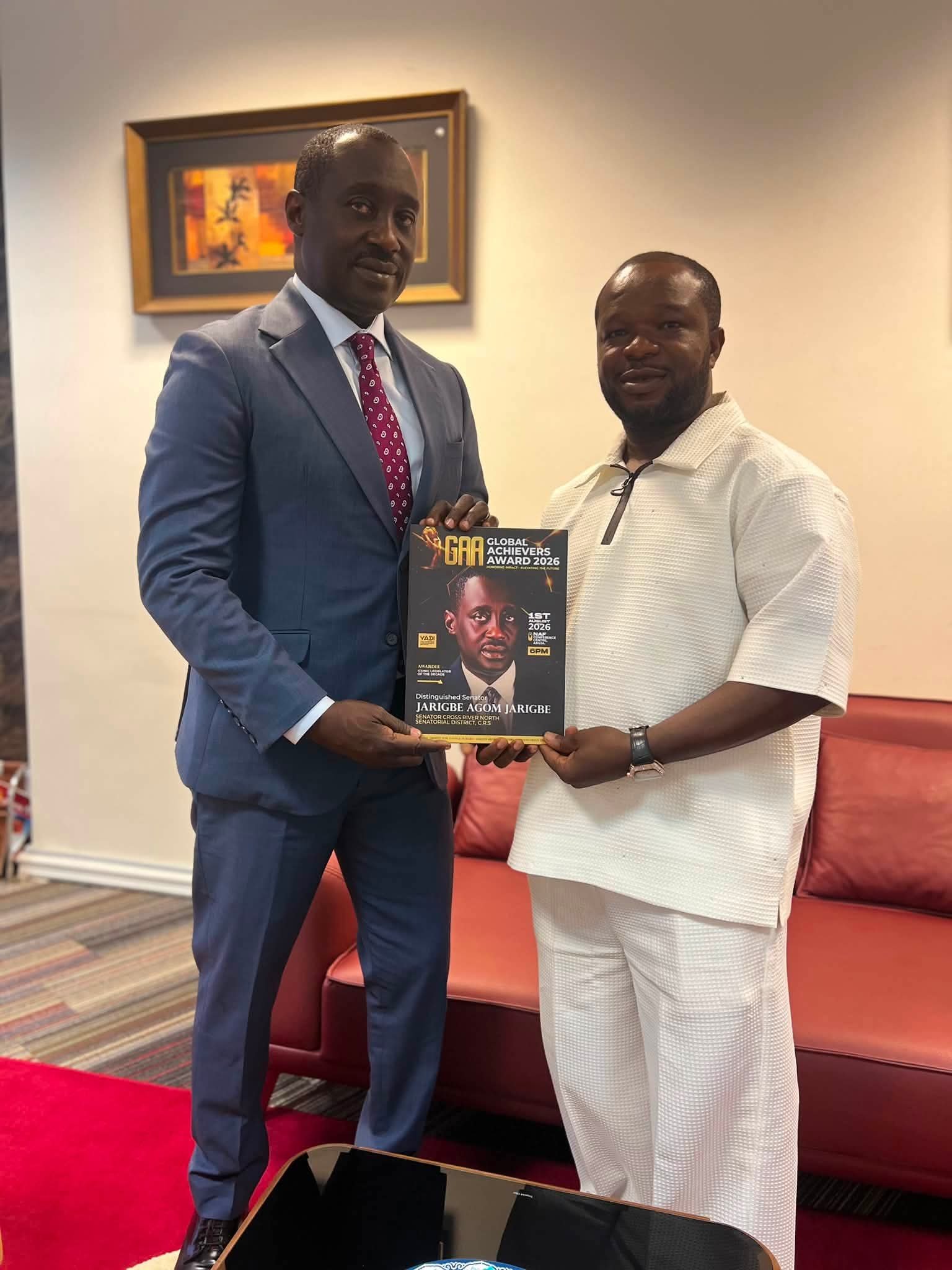
  • C’RIVER APC Chairman, Alphonsus Eba Welcomes Sen Jarigbe Agom To The Party

    C’RIVER APC Chairman, Alphonsus Eba Welcomes Sen Jarigbe Agom To The Party

    RE : DEFECTION TO APC

    This evening at my residence in Abuja, I received Sen Jarigbe Agom , Senator representing the good people of Cross River North.

    Senator Jarigbe said his mission was to intimate me of his intention to join us in the APC and strengthen the party with the objective of building a united APC in Cross River Northern Senatorial District and the State at large.

    He further informed me of his earlier visits to both President Asiwaju Bola Ahmed Tinubu GCFR and our Governor, H. E. Apostle Sen. Prince Bassey Otu to intimate them of same intention.

    As Chairman of the Ruling party APC, I welcomed him to my house and into the party as part of my political evangelical mission. I informed him that the APC is like a church and our doors are opened to everyone provided you abide by our rules and regulations.

    I took the opportunity to correct the false narrative being peddled by some persons that the Distinguished Senator was not welcomed by APC party leadership and stakeholders.

    I encouraged him to consult widely with the party leadership and critical stakeholders at the ward, chapter and state level to build cohesive political congeniality that engenders our core values of Peace, Love, Unity and Growth ( PLUG ) which is the pivot of my political evangelism and the nucleus of the fundamental objectives and directive principles of our administration.

    I wish to use this medium to appeal to all party faithful to avoid comments that breeds disunity.

    Once again, Sen. Jarigbe and everyone who is still in opposition but intends to join the APC is welcomed and I urge all ward chairmen to open the register of the party to enable everyone register pending our E registration exercise.

    Our focus on building a strong, united and indivisible party is for the common good of everyone.

    Long Live APC
    Long Live CRS
    Long Live FRN

    Signed

    Pol. Evg. Alphonsus Ogar Eba esq, JP.
    APC chairman, Cross River State