Category: Opinion

  • Aiming For Senate After Serving As Governor Is An Abuse Of Privilege BY ATTAHIRU BAFARAWA

    Aiming For Senate After Serving As Governor Is An Abuse Of Privilege BY ATTAHIRU BAFARAWA

    Why would you serve eight years as governor of a state and then you come again and take one part of the state and say you are going to the National Assembly? After serving for eight years, why don’t you allow others to go to the National Assembly? As a former governor, the only thing you can look forward to is the presidency. Anything less than that is an abuse of privilege.

    Out of 200 million people, you are one of the few chosen to become governor, and after two terms, you come back again and say you want to go to the Senate. What are you going to the Senate to do? As a former governor, ask somebody to go and represent the people there. Then you give the person your wisdom.

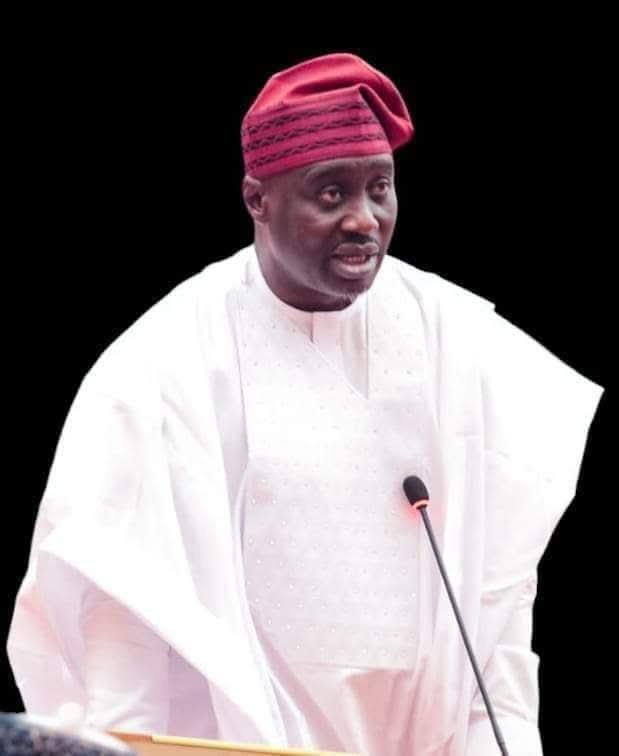
    Mallam Attahiru Bafarawa, Former Sokoto Governor


    Disclaimer: The opinion expressed in this article is strictly that of the author, Mallam Attahiru Bafarawa, and does not represent Theluminenews, its agent or the organisation the author works for.

  • What Brings God’s Attention To Us Is Not Our Money, Good Deeds Or Titles, But A Sincere And Humble Disposition Before God BY FR PETER OBELE ABUE

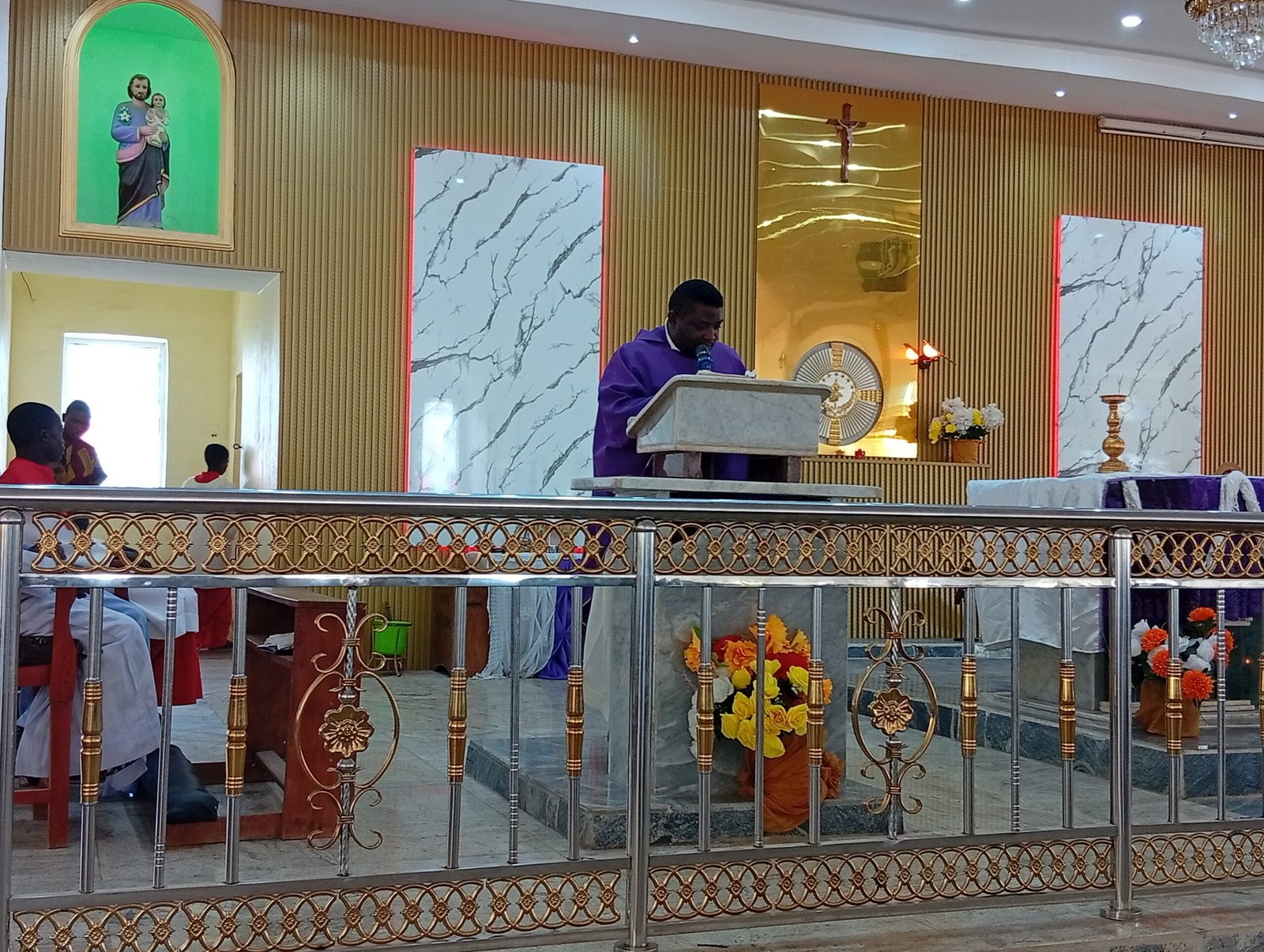
    What Brings God’s Attention To Us Is Not Our Money, Good Deeds Or Titles, But A Sincere And Humble Disposition Before God BY FR PETER OBELE ABUE

    PHARISEE
    (Religion of merits)

    The Pharisee was an upright and honest man. He kept God’s laws. He avoided all sins. He was not a thief, adulterous and unjust. In fact he did even more than was required of him. For example, the Law prescribed fasting once a year (Lev. 16: 29), but the Pharisee fasted twice a week. The farmer at harvest time was to give the tenth part of his main crops but the Pharisee would go beyond that and pay from his own pocket for other farmers (Deut. 14: 22-27). However, in spite of his moral integrity, the Pharisee takes up the wrong attitude in the sight of God (Luke 18: 9-14). What was his mistake? He went to the temple thinking wrongly that his good deeds would merit him a good standing before God.

    The Pharisee practiced a religion of merits; wrongfully thinking that because he was a man full of good deeds, he had an automatic ticket to salvation and that affected his prayer life. Anybody performing good deeds and relies solely on that to gain God’s attention, cannot merit anything in the sight of God. He must only be thankful to the God who helps him to stay on the right course to happiness. In other words, he must stay humble before God. What finally brings God’s attention to us is not our money, our good deeds, our titles, but a sincere and humble disposition before God; “For he is a God of justice who knows no favorites” (Sir: 35: 12).

    The Tax Collector on the other hand! He was not the meek man that we imagine. In fact, he was an experienced thief, a heinous exploiter, a jackal. He did not steal from the rich, he exploited the poor, forcing miserable peasants to pay exorbitant taxes. Jesus was not praising the Tax Collector at all, nor does he approve of his sin. He only says that he was taking the right attitude in the sight of God. At the end of the day, that’s what matters; our attitude in the sight of God especially at prayer because a sincere attitude can turn the devil into an angel. Scripture says: “the prayer of the lowly pierces the clouds; it does not rest till it reaches its goal…and the Lord will not delay” (Sir. 35: 16-18).


    Disclaimer: The opinion expressed in this article is strictly that of the author, Peter Obele Abue PhD, and does not represent TheLumineNews, its agent or the organisation the author works for.

  • Why Roads, Power And Local Tools Matter Most Than Foreign Schlolarshs BY MIKE UDAM

    Why Roads, Power And Local Tools Matter Most Than Foreign Schlolarshs BY MIKE UDAM


    Across Cross River North, the story is familiar. A farmer wakes before dawn, loads his cassava, and struggles through a 10-kilometre journey that takes three hours because the road is bad.

    Students still read under kerosene lamps. Women trek long distances to nearby streams to fetch water for drinking. These are not statistics. They are real people. Our people. And they need more than promises.

    Recently, some social media voices have argued that sending students abroad on scholarship is the best kind of empowerment. It sounds nice, but it tells only part of the story.

    Yes, Senator Jarigbe Agom Jarigbe has supported overseas scholarships for some constituents, and that is commendable. Education changes lives. But while a scholarship lifts one person, good infrastructure lifts a whole community.

    Education is good, but people need water first

    Imagine a young man who wins a scholarship abroad. His parents rejoice. But back home, his mother still treks for water and his siblings still study under a leaking roof. When he returns, the same broken road greets him.

    Development must start from the ground up. Scholarships are like rain on one farm; infrastructure is like rain on the whole village. Both are good, but if the village stays dry, no farm can thrive.

    Why basic infrastructure should come first

    It helps everyone. One road, one transformer or one borehole benefits hundreds.
    It keeps our best brains home. When jobs and opportunities exist locally, fewer young people will run abroad.
    It is fairer. A scholarship touches a few; a road or borehole touches all.
    It builds dignity. A tricycle, sewing machine, or mini tractor gives lasting value.
    It brings visible results. People can see and feel real development.
    Every Ward Has Felt the Touch

    There’s hardly any political ward in Northern Cross River State without a life-changing project facilitated by Senator Jarigbe. From transformers lighting up forgotten villages, to mini-tractors that ease farming, to tricycles, motorcycles, and farm inputs empowering women and youths—the evidence is everywhere.

    The senator’s focus is clear: to lift burdens and create broad-based empowerment, not just bless a few families. His projects are practical, visible, and life-changing. They speak louder than speeches.

    Finding a better balance

    This is not about stopping scholarships; it’s about balance.

    Let 80% of effort go to infrastructure and empowerment, and 20% to education. Let every scholar who studies abroad come back to serve locally. Let every LGA have a vocational centre where skills are taught and livelihoods created.

    Most importantly, let leadership remain transparent so people can see how their mandate is being used.

    Real leadership is measured by what stays

    A scholarship ends when a student graduates. But a road, a transformer, a borehole, or a market stall keeps serving long after the ribbon is cut.

    Senator Jarigbe’s real legacy lies in these burden-lifting projects that bring light, water, mobility, and dignity to rural communities.

    Because at the end of the day, the people’s real question is not “Who travelled abroad?” but “Do we have light? Do we have water? Can we sell our produce? Can our children learn in dignity?”

    Foreign scholarships are good. But roads, electricity, clean water, and small businesses are better foundations for lasting progress.

    Let’s build home before we build abroad.
    Let’s raise communities before we raise headlines.

    True leadership is not about sending people away.
    It’s about giving them a reason to stay.

    Disclaimer: The opinion expressed in this article is strictly that of the author, Mike Udam, and does not represent TheLumineNews, or agent or the organisation the author works for 

  • C’River Deputy Governor Peter Odey’s Northern Tour: When Government Listens BY FRED ABUA 

    C’River Deputy Governor Peter Odey’s Northern Tour: When Government Listens BY FRED ABUA 


    The Deputy Governor of Cross River State, His Excellency Rt. Hon. Peter Agbe Odey, PhD, has just concluded a five-day official tour across the five Local Government Areas of Northern Cross River- Bekwarra, Obanliku, Obudu, Ogoja, and Yala. The tour, held in commemoration of their 2025 New Yam Festivals, a cherished tradition in these agrarian Local Government Areas, wasn’t just a cultural visit, but it was empathy in action, a government willing to listen before acting.

    With a consistent message, “I have come to celebrate the new yam with you, and to listen, so government can meet your actual needs,” Dr. Odey moved from community to community, palace to palace, play ground to play ground, not with empty promises, but with real interventions and tangible impacts.

    While over #150 million was committed to support cultural celebrations across the five LGAs, the Deputy Governor brought more than just goodwill. He delivered life-changing interventions worth over #250 million, addressing core community needs – ultramodern boreholes for clean water, agricultural inputs, youth employment opportunities, and local development projects.

    In Obudu, for example, he responded immediately to a request from the women of Utukalu by donating ₦5 million for fertilizers and pesticides. It was a practical and timely response to a pressing agricultural need.

    Everywhere he visited, traditional rulers, critical stakeholders, youth groups, women, and people living with disabilities welcomed him warmly, expressing gratitude not just for the immediate support, but for the visible impact of the Senator Prince Bassey Otu-led administration—notably in rural infrastructure, electrification, agriculture, potable water, and job creation.

    Yet, the consistent refrain was: “We want more.” But this was not a complaint. It was a sign of trust, a belief that government is truly, ‘People First’ and capable of delivering beyond their expectations.

    Often underestimated because of his gentle demeanor, Dr. Peter Odey is a man of deep capacity, thoroughly prepared for leadership. With a background in law, sociology, international relations, and conflict management, he brings depth and intellect to leadership. His journey, from grassroots development work in the NGO sector to high-level public service-has been guided by a singular mission: uplifting his people.

    And during this tour, he was never alone. He was accompanied by a delegation of political leaders and stakeholders Northern Cross River, a strong signal of continued unity, respect, and shared vision.

    Among his entourage were LGAs was member representing Obudu Bekwarra and Obanliku in the Federal House of Representatives, Hon. Chief Peter Akpanke, LGAs Council Chairmen, State Chairman of the Party, Alphonsus Eba, serving and former members of the Cross River State House of Assembly, serving and former commissioners, Special Advisers, Directors-General, and other top government officials. Others were High Chief Higgins Peters, Chief Peter Ojie, Chief Dr. Tony Undiandeye, Ntufam Fidelis Ugbo, Signor Omang Idiege (Ada Bekwarra II), and critical stakeholders from the north.

    The love was massive, as evident in the large turnouts of community people at the various venues. Their message was unmistakable: Cross River State has a government that listens, and a Deputy Governor who delivers.

    Fred Abua, Esq.,
    Press Secretary to the Deputy Governor of Cross River State.
    03/09/2025

    Disclaimer: The opinion expressed in this article is strictly that of the author, Fred Abua Esq, and does not represent TheLumineNews, its agent or the organization the author works for.

  • Water for the People: Sen Jarigbe Agom’s Noble Intervention BY OGAR EMMANUEL OKO

    Water for the People: Sen Jarigbe Agom’s Noble Intervention BY OGAR EMMANUEL OKO


    In elementary science, we were taught that water is a universal solvent — capable of dissolving countless solutes. But its universality is not the crux of this piece; rather, it is water’s indispensability in the affairs of man.

    Again, in social studies, we were taught that water is one of the most important basic necessities of life, alongside food, clothing, shelter, security, healthcare, and education. One can survive without clothes, food, shelter, or even light for a while — but surviving without water is nearly impossible.

    Studies — or better put, common knowledge — show that a healthy adult can survive 30 to 60 days without food (provided there is access to water), but only 3 to 7 days without water.

    For those of us who lived in rural communities and experienced droughts, scarcity, and water shortages, it was a great relief when Senator Jarigbe Agom announced his intention to install 26 solar-powered boreholes across communities in the northern senatorial district. Back in the day, we trekked long distances to fetch water. And to get clean water, we often had to wake up before the cock crowed (around 4 a.m.) — the very hour our elders said spirits returned from their nightly activities.

    Today, in semi-urban areas like Igoli, Abakpa, Okuku, Yahe, Okpoma, and Obudu, most households still rely heavily on well water. In fact, there is no functional public water supply system or urban water scheme in the entire northern senatorial district. The dams in Ijegu and Obudu have become mere conduit pipes for financial embezzlement, while the water reservoir at Okpoma in Yala LGA has remained nonfunctional since inception.

    Currently, the main sources of water in the northern senatorial district are wells, ponds, brooks, streams, and rainwater ( most of which are seasonal). With the commissioning of 26 solar-powered boreholes later in the day, many communities will finally be freed from the manacles of water scarcity, gaining access to clean and safe drinking water.

    Sen. Jarigbe Agom deserves commendation for this noble project. No single individual has sunk as many boreholes as he has in Cross River State. By comparison, in the entire Calabar metropolis, the Niger Delta Development Commission (NDDC) has only seven solar-powered boreholes. Only four out of the seven are functional. The rest belong to the state government and corporate organizations. Again, the Senator was quite discretional for choosing solar powered boreholes over electric powered ones because of its cost effectiveness, reliability, durability, energy dependent, easy to maintain and sustainability.

    As I commend the Senator for this laudable initiative, let me, on behalf of my community Ijegu Ojor, humbly appeal that our community be considered in the next phase of this project.

    Comr. Ogar Emmanuel Oko
    Rabbit Punch
    Writes from Lekki

    Disclaimer: The opinion expressed in this article is strictly that of the author, and does not represent TheLumineNews, its agent or the organization the author works for.

  • Owan Enoh MSME Support Program – How The Beneficiaries Will Be Selected.. BY AGBA JALINGO

    Owan Enoh MSME Support Program – How The Beneficiaries Will Be Selected.. BY AGBA JALINGO


    Entries for the Owan Enoh MSME Support Program have swelled over 12,000. This demonstrates not just acceptance but also exposes the yawning desire for a helping hand by Cross Riverians.

    I am also sure that many Cross Riverians are already wondering how exactly will beneficiaries be selected from such a massive pool. Many who think some privileged assessors will grab their pens to tick as many names off and plant their favored winners, have been calling, chatting and texting to lobby, to no avail. But I want to give you an idea of the painstaking work that is ongoing behind the scenes by the team that is assessing the entries.

    Stage One: CATEGORIZATION

    The entries are all being categorized into 14 different sectors, namely: Agriculture, Construction, Creative Arts, Education, Energy, Fashion Designing, Financial Services, Healthcare, Hospitality, Manufacturing, Retail, ICT, Transportation, and Others. All these fourteen sectors have their drop down sub-sectors.

    Stage Two: ELIGIBILITY SCREENING

    This involves a general assessment using simple Yes/No responses. Any application that receives five (5) or more “No” responses will be automatically disqualified.

    Applications with more “Yes” responses will advance to the next stage.

    Some of the queries include:
    1. Residency / Location: Is the applicant or business based in Cross River State?
    ☐ Yes ☐ No

    2. MSME Definition:
    Does the business qualify as a micro, small, or medium enterprise (not a large enterprise)?
    ☐ Yes ☐ No

    3. Sector Fit:
    Does the business fall within target sectors (trade, industry, services, artisanship, agriculture, etc.)?
    ☐ Yes ☐ No

    4. Business Status:
    Is the business operational or is the business idea viable?
    ☐ Yes ☐ No

    5. Documentation:
    Has the applicant provided at least one proof of business (CAC registration, tax ID, cooperative membership, trade association ID, or any verifiable evidence)?
    ☐ Yes ☐ No

    6. Application Completeness:
    Is the application form properly completed (all required fields answered, supporting documents attached)?
    ☐ Yes ☐ No

    7. Previous Support:
    Has the applicant declared that they are not currently benefitting from another government MSME grant/loan that would make them ineligible for this fund?
    ☐ Yes ☐ No

    This stage is expected to reduce the number of entries to a manageable size of 3000-4000.

    Stage Three: APPRAISAL TEMPLATE

    This is the stage that involves the detailed scoring of each application. Applications are evaluated using the full scoring template. A 75% score serves as the cut-off mark for consideration.

    Each panel member independently scores the applications assigned to them and to ensure fairness and transparency, 15%–20% of each panelist’s assessment is randomly reassigned to another panelist for re-evaluation.

    This process helps us maintain integrity, fairness, and objectivity, ultimately leading to a near-perfect selection outcome.

    Some of the appraisal queries include:

    Business viability and feasibility, assess operations, sustainability
    (0-20).

    Clarity of concept, defined problem, feasibility, job creation and employment potential (0-15).

    Current and future staff, realistic market potential and growth prospects (0-15).

    Actual market performance, market research, identified customers, demand validation, financial management and sustainability (0-15).

    Cost structure, revenue model, funding strategy, social impact and inclusiveness (0-10).

    Intended or actual community/social benefits, innovation and creativity (0-10).

    Stronger emphasis for new business ideas: novelty, originality, problem-solving approach alignment with Owan Enoh MSME Fund objectives (0-10).

    CAC, Tax, NAFDAC, proposed business name readiness. Documentation and compliance (0-5)

    Total score, out of 100, will determine the final recommendation.

    Assessors have been duly briefed on prioritizing gender inclusion and urban-rural balance in the final selection to ensure fair spread between Calabar, other urban centers, and rural LGAs.

    Note again that no beneficiary in the formal sector will be given any cash. Whatever the applicants stated as the needs of their business will be procured and supplied to them. The same applies to the informal sector unless successful applicants who deal on perishable wares.

    Yours sincerely,
    Citizen Agba Jalingo.

    (more…)

  • Balance, Fairness Key To APC’s Renewed Push in C’River North BY INYALI PETER


    The Deputy Governor of Cross River State, Rt. Hon. Peter Odey, Ph.D. has taken some commendable steps to strengthen the All Progressives Congress, APC in Cross River North, acting on behalf of Governor Bassey Otu. His efforts are the vital spark the party has needed, as I noted in a recent article. Odey’s work is breathing new life into the APC’s presence in the senatorial district.

    He has once again shown why he’s the party’s most valuable asset in the senatorial district, not merely through the prestige of his office but through his conduct and commitment. While some leaders in the North dismiss others as less important, he’s always the first to reach out to aggrieved members and sustains his engagement, regardless the person’s status to keep them in the fold. When a prominent APC member recently defected to the PDP, Odey went to great lengths, even contacting the smallest intermediaries, to persuade him to stay. Even though it could not the change the politician’s mind but his commitment was undeniable, but he cannot do things alone.

    The government and the leaders of the APC in the North need to bring some balance to political offices and development sharing equation to help him maintain the momentum. Currently, the imbalance in the projects and political office patronage among the local governments in the North is one of the issues that if not urgently addressed may explode and undermine the gains of all his efforts. Cross River North comprises five local government areas, LGAs. Even though political appointments and projects have never been evenly distributed, with larger and stronger LGAs getting more, the gap has never been as wide as it’s been in the last ten years.

    The administration of former Governor Ben Ayade widened this gap greatly. When voices like mine called for fairness, we were blacklisted rather than heeded. During Ayade’s tenure, I advocated for fair representation across the LGAs, particularly during the APC state congress, arguing that Ogoja which the government had just tried to deny the Senate seat should not be left empty. I feared that, if APC fail to patronize Ogoja, it I’ll become a fertile ground for the opposition to feast on. My agitation was not out of disdain for Yala or doubt in its candidates but a conscious and strategic thought to prevent Ogoja from becoming an opposition stronghold. Mischief makers twisted my stance, but my warnings proved prescient.

    Ignored, Ogoja became the opposition’s hub in the North. This marginalization became evident when Ayade sought a Senate seat. When people tried to fight the nomination of Odey as the Deputy governorship candidate, Ayade rightly questioned what he could campaign on in Ogoja without it. My earlier position, which caused me trouble in some quarters, was vindicated during the governorship elections, where APC performed strongly in Ogoja, largely due to the decision to pick a running mate from there. For the Senate, it was too late because the people had made up their minds against Ayade and asked why they should go for one when they can actually have the two.

    Like a stubborn child who never learns, the APC seems to be repeating same mistakes. Since assuming office on the 29th of May, 2023, key appointments from the North have disproportionately favoured Yala. For instance, Yala holds three commissioners, while some LGAs have only one. The LGA has the highest number of federal and state appointments. The two last federal commissioners and the only ones to have come from the North went to the LGA. Even the focus on projects mirrors this imbalance.

    This opinion is not a call to strip Yala of its gains, as political patronage is fought for, not given. It is a plea for deliberate inclusivity across all LGAs. To achieve this, the party needs the support of Yala’s leaders, who must act as their brothers keepers, as Galatians 6:2 urges, “Bear one another’s burdens, and so fulfill the law of Christ.” In politics, it’s tempting to echo Cain’s defiance in Genesis 4:9, “Am I my brother’s keeper?” Yet, for the party’s unity and progress, Yala’s leaders should embody the love described in 1 John 4:20-21, which teaches that one cannot claim to love God without loving their brothers.

    Take Bekwerra, for example. Despite most of its political heavyweights aligning with APC, the opposition consistently wins elections there. The reason is simple; APC has not given Bekwerra’s leaders enough to campaign with. The same applies to Utukalu, the lesser served half of Obudu, which has two political blocs. While one bloc enjoys fair representation, Utukalu is left wanting.

    The people of Cross River North are more politically aware than ever and are embracing a “support who supports you” mentality. If elections were held today, Bekwerra and Utukalu would be the battlegrounds. While APC and PDP could perform well in Yala, Ogoja, Obanliku, and Obudu’s Bette bloc, the opposition retains a firm grip in Bekwerra and Utukalu; not out of loyalty to the opposition but because APC has not provided compelling reasons to win their support.

    Therefore, as the Deputy Governor continues his mission to endear APC to the North, the APC government should pay attention to Bekwerra and Utukalu. Without deliberate efforts to ensure government presence is felt in these areas, the party’s recent gains may be undone, like water poured into a leaky basket. Fairness in appointments and projects across all LGAs is not just a necessity but key to sustaining the party in the North.

    Inyali Peter, Ph.D.


    Disclaimer: The opinion expressed in this article is strictly that of the author, Inyali Peter, and does not represent TheLumineNews, its agent or the organization the author works for.

  • Concerns Over Governance and Forest Protection in Cross River State Forestry Commission: BY OKOI OBONO-OBLA 


    The employment of young people in Cross River State was initiated in 2024, following Governor Bassey Edet Otu’s approval in November 2023 to bolster the severely depleted workforce. Three hundred Forest Guards were recruited and documented; however, 14 months later, they remain undeployed and unpaid.

    Meanwhile, four commissioners have completely usurped the responsibilities of the professional staff of the Commission, arrogating those duties to themselves. The Commission has devolved into a cesspool of wheeling and dealing, with revenue accruing to the wrong quarters. As a result, our forests are ravaged by rampant illegal logging, leading to severe depletion and exposing both our State and the West African sub-region to the pernicious and deleterious consequences of climate change.

    The Afi Mountain Sanctuary in Boki Local Government Area has borne the brunt of this crisis, suffering extensive damage due to illegal logging and the blatant compromise and dereliction of duty by these four commissioners.

    Urgent reform and accountability are imperative to restore integrity, protect our forests, and safeguard the ecological future of Cross River State.

    @ Okoi Obono-Obla

    Disclaimer: The opinion expressed in this article is strictly that of the author, Okoi Obono-Obla, and does not represent TheLumineNews, its agent or the organization the author works for.

  • Strengthening Community Ties: Dr Peter Odey’s Strategic Tour of Northern LGAs BY FRED ABUA


    Rt. Hon. Dr. Peter Odey, Deputy Governor of Cross River State, recently embarked on a strategic tour of the five northern Local Government Areas (LGAs) of the state. The aim: to engage directly with citizens and better understand their needs and expectations. This initiative reflects a clear commitment to people-focused governance and aligns with Governor Bassey Otu’s People First agenda.

    Dr. Odey’s outreach signals a shift toward responsive, grassroots-based leadership. Rather than applying generic solutions to complex local issues, the tour provides an opportunity to design policies and programs that are tailored to the realities of each LGA. It addresses a long-standing challenge in governance—misdirected development efforts that result in underused or abandoned infrastructure due to the absence of proper needs assessments.

    By listening to community voices and responding directly to their concerns, the administration is laying the groundwork for more effective, sustainable, and inclusive development.

    So far, the tour has covered two of the five LGAs. During these visits, community leaders and stakeholders have openly shared their challenges and priorities. A recurring theme in their feedback has been widespread appreciation for Governor Otu’s rural development initiatives, particularly visible infrastructure projects that are transforming rural communities and revitalizing long-neglected public assets.

    Among these projects are the construction of the Yahe–Ebo–Wanokom–Benue Border Road in Ukelle, the Ndok Junction–Abakpa–Igoli–Moniaya Ring Road, and the Ndok–Mbube Road in Ogoja. These strategic developments have significantly improved road connectivity, expanded access to remote areas, and unlocked new economic opportunities.

    Governor Otu has also demonstrated a strong understanding of ‘government is a continuum’ by his commitment to building on inherited foundations and completing major projects initiated by previous administrations. A prime example in the north is the Obudu Cargo Airport, which has progressed to advanced stages of completion under his leadership.

    In Yala LGA, one stakeholder expressed deep appreciation, pledging total support for the Governor and his deputy ahead of the 2027 elections. He highlighted the administration’s magnanimity, particularly its inclusion of several Yala indigenes in key federal and state appointments. “The Yala people are committed to returning kindness for kindness,” he affirmed.

    As the tour continues across the remaining LGAs, it is clear that Dr. Peter Odey’s initiative is achieving more than administrative outreach. It is reinforcing trust, promoting inclusion, and reaffirming the principle that effective governance begins with the people.

    The Northern tour which was deliberately planned to coincide with the new yam festivals could not have been better timed; His Excellency’s entourage will be celebrating the festivals with fanfare in all the LGAs. He has doled out N15,000,000 to N25,000,000 to stakeholders of each LGA ranging from women and youths to traditional rulers.

    Today, in his Idum-Mbube community, the Deputy Governor is celebrating ‘Bitchong Ifife’ as the festival is called in the local parlance. This gesture is an indication of the government’s commitment to cultural heritage and community engagement. As Dr. Peter Odey immerses himself in the local culture, thankfully enjoying traditional delicacies like pounded yam with bansan soup and palmwine, it is clear that this tour will achieve more than just governance, it will lead to the building of stronger relationships and fostering a sense of community.


    Fred Abua Esq.


    Disclaimer: The opinion expressed in this article is strictly that of the author, Fred Abua Esq, and does not represent TheLumineNews, its agent or the organization the author works for.

  • From Propaganda to Reality – Ukelle Has Been Heard; The Practicality of a People-First Agenda BY PHYLO MODLIN ODU


    The Cross River State Government, under the administration of His Excellency, Prince Bassey Edet Otu, has demystified the long politicized Ukelle road with the near completion of Yahe–Wanokom–Wanikade-Wannihem-Benue border road.

    According to the people of Ukelle in Yala Local Government Area, they have carried for too long the burden of broken promises and endless propaganda. The Ukelle road has been a pawn on the chessboard of politics for many years. Every election season, politicians would troop to Ukelle, lamenting the condition of the road as though they were concerned, only to vanish after the elections.

    Governor Bassey Otu has broken this cycle of propaganda by prioritizing the people’s interests. The first phase construction of this road has already started to make significant impact on the welfare and livelihood of the people. Today, the Ukelle people speak of their road with pride and gratitude.

    Governor Otu’s intervention is more than concrete and asphalt; it is a statement of trust restored, hope renewed, and a people reconnected to the rest of the state. Ukelle will not forget those lost years of propaganda, but more importantly, they will remember the man who turned their symbol of neglect into one of progress.

    Modlin Philomena Odu
    SSA to the Governor,
    Tactical Media Research and Engagement.